
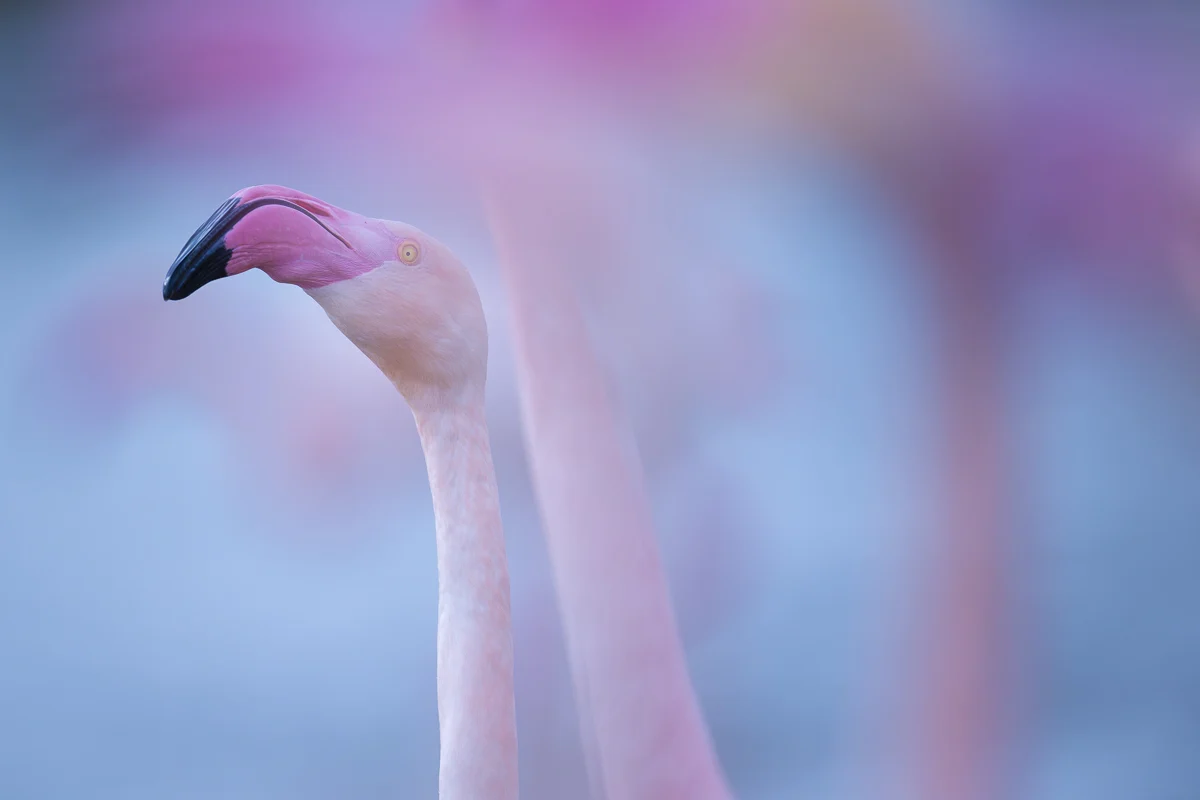
The integration of deliberate out-of-focus elements within the frame has emerged as a defining stylistic movement in contemporary wildlife photography, shifting the discipline from strict biological documentation toward a more interpretive, painterly art form. Long regarded by traditionalists as an optical flaw or an obstruction to be avoided, foreground blurring—often achieved through the strategic positioning of natural foliage, ambient light, or nearby topography between the camera lens and the primary subject—is now recognized by professional visual artists as a sophisticated storytelling tool. By obscuring portions of the scene without diminishing the visual weight of the animal, photographers are able to introduce layers of depth, emotional resonance, and environmental context that clinical sharpness alone frequently fails to convey.

Evolution of the Technique and Compositional Mechanics
The mechanics of foreground blurring rely on shallow depth of field, achieved by utilizing wide apertures and positioning intervening objects mere centimeters from the front element of the camera lens. This optical phenomenon renders the obstruction as a soft, translucent veil, transforming harsh geographical or botanical realities into atmospheric washes of color and texture.
According to optical analysis within the visual arts, introducing elements into the extreme foreground forces the human eye to navigate a layered visual path. Rather than confronting an isolated subject against a neutral backdrop, the viewer is placed in the position of an unseen observer peeking through natural cover—be it dense forest underbrush, high-altitude alpine grasses, or coastal sea spray. This spatial framing establishes an immediate sense of intimacy and authenticity, evoking the historical traditions of landscape painting where foreground framing devices were routinely employed to anchor composition and scale.

Historically, wildlife photography developed out of necessity as a scientific medium, heavily reliant on high shutter speeds, telephoto reach, and maximum sharpness to identify specific avian or mammalian species. However, as camera sensor technology and telephoto lens designs have advanced over the past two decades—yielding unprecedented low-light performance and autofocus tracking—creators have gained the technical headroom to prioritize mood over absolute clinical documentation. This paradigm shift has allowed photographers to reintroduce artistic subjectivity into their portfolios, turning common encounters with familiar fauna into novel visual experiences.
Environmental Variables and Field Methodology
Executing foreground blur in dynamic natural environments requires a meticulous understanding of animal behavior, light migration, and micro-topography. Field practitioners generally categorize these opportunities into two distinct operational frameworks: controlled environments and reactive field encounters.

In controlled or semi-controlled settings, such as established wildlife hides or feeding stations utilized for conservation monitoring, photographers possess the luxury of time and spatial manipulation. In these scenarios, static elements like fallen branches, frost-covered foliage, or localized snowdrifts can be deliberately arranged to frame a subject. Conversely, reactive photography—often described by field professionals as a "photographic hunt"—offers little to no opportunity for physical intervention. When documenting elusive species in remote landscapes, such as the Pyrenean capercaillie at its forest lek or migrating raptors along mountain ridges, the photographer must rely entirely on existing, unmanipulated environmental elements.
Experts emphasize that ethical considerations remain paramount during this process. The deliberate placement of foreign objects or the physical alteration of a habitat to achieve a desired blur can inadvertently stress wildlife, disrupt nesting sites, or alter natural foraging behaviors. Consequently, ethical guidelines within professional wildlife organizations dictate that photographers must work strictly with what is immediately accessible within the unperturbed environment, relying on patience, field craft, and optical positioning rather than habitat modification.

Technical Execution and Equipment Adaptation
Mastering the technique demands specific hardware configurations and an acute awareness of camera limitations. Modern telephoto prime lenses, possessing focal lengths ranging from 300mm to 600mm combined with wide maximum apertures (such as f/2.8 or f/4), naturally compress perspective, making it easier to render nearby obstructions into a smooth, creamy bokeh.
Despite the sophistication of modern mirrorless autofocus systems equipped with advanced animal-eye tracking, front-element obstructions frequently confuse phase-detection sensors. When a branch or blade of grass drifts directly across the optical path, autofocus algorithms often hunt frantically between the foreground element and the subject. To overcome this limitation, professional nature photographers routinely switch to manual focus, overriding the camera’s computer to lock focus onto the animal’s eye while allowing the foreground veil to remain permanently out of focus.

Furthermore, technical execution varies depending on the chosen structural approach:
- Look-throughs: Pointing the camera through a narrow, natural aperture in foliage or rock formations, creating an organic vignette that encircles the subject.
- Look-overs: Positioning low to the ground to utilize near-field grasses or terrain to fill the lower third of the frame with a soft, gradient wash.
- Full-frame veils: Allowing a dense, translucent element to wash entirely across the lens at high proximity, producing an abstract, minimalist aesthetic that prioritizes color and mood over crisp structural detail.
Industry Implications and Artistic Analysis
The growing mainstream acceptance of soft-focus nature imagery highlights a broader cultural re-evaluation of how humans consume environmental media. In an era dominated by hyper-detailed, high-definition digital imagery and ubiquitous smartphone documentation, audiences increasingly seek out photographs that evoke emotional reflection rather than mere informational data.

Artistic analysts note that minimalist wildlife portraits incorporating atmospheric blur invite viewers to project their own narratives onto the natural world. By leaving specific details of the habitat ambiguous, these images transcend regional specificity, transforming a localized sighting of a common species—such as a red kite, a fallow deer, or a song thrush—into a universal meditation on wildness, solitude, and the passage of time.
As this technique continues to be adopted by award-winning practitioners across international nature photography competitions, it signals a maturation of the medium. Wildlife photography is increasingly evaluated not merely by the rarity of the species captured or the mechanical reach of the equipment used, but by the artist’s capacity to translate the intangible atmosphere of the wild into a cohesive and evocative visual narrative.
