
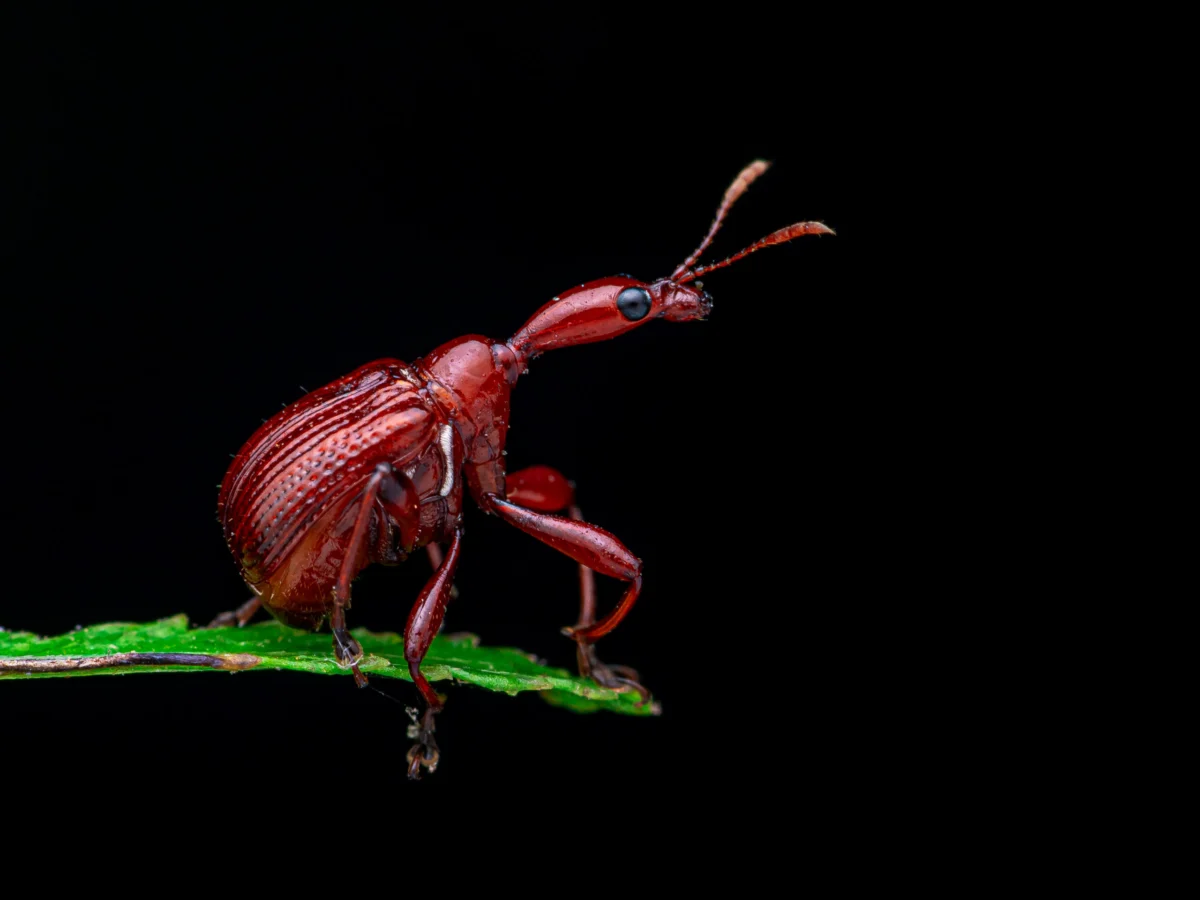
The intersection of macro photography and local biodiversity has gained international recognition following the success of nature photographer hailing from Goalpara, Assam, whose intimate documentation of invertebrate behavior earned high commendation at the prestigious 2025 Wildlife Photographer of the Year competition. What began in 2018 as a domestic hobby utilizing an entry-level Canon 1500D DSLR camera has since evolved into an internationally celebrated chronicle of the hidden ecosystems thriving in plain sight. This milestone highlights not only an individual artistic achievement but also the expanding frontier of macro photography as a vital tool for ecological awareness, bridging the gap between microscopic natural phenomena and global audiences.

The Genesis of a Microscopic Exploration
In 2018, the purchase of a standard entry-level DSLR camera fundamentally altered the perspective of the Goalpara-based photographer, who transitioned from an admiring observer of macro-landscapes to an active documentarian of micro-fauna. Initially drawn to conventional environmental features such as regional rivers, canopies, and avian life, the focus shifted dramatically upon reviewing a magnified digital capture of a common housefly. The resulting high-resolution image revealed an intricate architecture previously invisible to the naked eye: the geometric complexity of compound eyes, the microscopic structural distribution of sensory hairs, and the iridescent engineering of wing membranes.
This revelation catalyzed a systemic shift in photographic methodology. The immediate environment—ranging from residential gardens and damp soil patches to structural corners and domestic walls—was reevaluated as a dynamic biosphere. Leaves functioned as predatory hunting grounds, bamboo sticks served as intricate nesting colonies, and ordinary architectural surfaces hosted industrious insect architects. Rather than seeking out remote wildlife sanctuaries or distant reserves, the photographer realized that complex ecological narratives were unfolding continuously within immediate proximity to home.

The Mechanics of Patience: Methodology and Observation
Unlike fast-paced photojournalism or wide-angle landscape capture, macro photography operates on a temporal scale defined by extreme stillness and protracted observation. Industry standards within macro wildlife documentation often necessitate multi-day field studies to anticipate unpredictable animal behavior without disrupting natural routines.
Field documentation in Goalpara frequently required continuous observation blocks lasting five to six hours per day. This rigorous methodology allowed the photographer to decode the behavioral patterns of local invertebrates, ensuring that the final exposures captured authentic ecological interactions rather than startled reactions. The core technical challenge involved managing razor-thin depth-of-field parameters at high magnification, where a fraction of a millimeter of movement could render a subject entirely out of focus. Natural lighting constraints, wind interference, and the rapid, erratic movements of subjects like wasps and spiders demanded advanced technical proficiency and deep behavioral intuition.

The Award-Winning Subject: Potter Wasps and Behavioral Documentation
Among the myriad species documented across Assam, the potter wasp (subfamily Eumeninae) emerged as a primary subject of prolonged scientific and artistic inquiry. Potter wasps are recognized globally in entomology for their remarkable construction capabilities, utilizing moistened soil pellets to build intricate, urn-shaped mud nests. Furthermore, their predatory specialization—hunting specific caterpillars and sealing them inside nest cells alongside unhatched eggs to serve as provisions for larvae—represents a complex evolutionary strategy.
The critical turning point in the photographer’s career occurred when a solitary potter wasp established a nest directly on the frame of a hanging photograph inside his home. Recognizing a unique opportunity for longitudinal observation, the photographer initiated a systematic daily study of the insect’s provisioning flights. Over several days, the wasp returned repeatedly with green caterpillars significantly larger than its own body mass, meticulously inspecting the mud structure before depositing its prey.

This meticulous documentation culminated in a defining frame titled Special Delivery, which captured the potter wasp in mid-flight carrying a vibrant green caterpillar directly beneath its thorax. The technical execution demanded precise shutter speed calibration to freeze wing motion while preserving environmental context.
Global Recognition at the Wildlife Photographer of the Year 2025
The culmination of years of localized fieldwork materialized when Special Delivery was officially announced as a Highly Commended entry in the Behavior: Invertebrates category of the 2025 Wildlife Photographer of the Year competition, administered by the Natural History Museum in London.

The Wildlife Photographer of the Year is widely regarded as the most competitive and prestigious global platform for nature photography, drawing tens of thousands of entries from professional and amateur practitioners across nearly one hundred countries. Securing a place among the honorees places the Goalpara photographer alongside elite international conservation image-makers.
Reactions from regional supporters, family members, and peers underscored the cultural and communal significance of the achievement. For a local practitioner working independently with basic equipment in a non-traditional photography hub, international validation from the Natural History Museum demonstrated that rigorous, passion-driven natural history documentation transcends geographic barriers. The accolade served to amplify stories originating from the diverse ecological landscape of Northeast India on a world stage.

Ecological Implications and the Power of Micro-Conservation
Beyond artistic merit, macro photography serves an essential conservation function by reframing public perception toward frequently maligned or ignored organisms. Invertebrates constitute the vast majority of terrestrial biodiversity and form the foundational bedrock of global food webs.
- Pollination and Flora Maintenance: Solitary bees and various wasp species facilitate the reproductive cycles of countless flowering plants and agricultural crops.
- Population Regulation: Predatory wasps and spiders act as natural pest control agents, regulating herbivorous insect populations such as caterpillars that would otherwise destabilize local flora.
- Soil Aeration and Nutrient Cycling: Invertebrates participating in nest construction and decomposition accelerate nutrient turnover within forest and garden soils.
Despite these vital ecosystem services, insects often suffer from pervasive cultural indifference or aversion, driven largely by their microscopic scale and unfamiliar morphology. By utilizing high-magnification imagery to reveal the behavioral complexity, parenting dedication, and structural brilliance of these animals, macro photographers actively counteract this disconnect. The intended implication of such visual storytelling is to foster empathy and environmental literacy, encouraging viewers to recognize that ecosystem preservation relies as heavily on the protection of micro-habitats as it does on flagship megafauna conservation.

Broader Impact and Future Outlook
The trajectory of the Goalpara photographer—marked by subsequent publications and honors from prominent global institutions including Nature inFocus, National Geographic, BBC Wildlife, Discovery, and Sanctuary Asia—illustrates a broader shift in contemporary wildlife media. Modern audiences increasingly value authentic, hyper-local narratives that highlight the overlooked wonders of immediate environments over exotic, distant expeditions.
Industry analysts note that the democratization of digital photography equipment has enabled regional creators to contribute significantly to global biodiversity archives. Photographers working outside major metropolitan centers are uniquely positioned to document endemic species and shifting micro-behaviors influenced by regional climate variations.

As the photographer continues to explore the rich biodiversity of Assam through experimental lighting techniques—such as motion-trail captures of leafhoppers and detailed portraits of red weevils—the core philosophy remains unchanged. Technical awards and international publications provide valuable validation, but the primary driving force continues to be the foundational curiosity of discovering complex natural histories operating just beyond the threshold of human perception. For aspiring natural history documentarians, the overarching lesson remains clear: the natural world requires no manufactured spectacle; it demands only that observers slow down, look closer, and honor the intricate lives unfolding in the smallest corners of the earth.
