
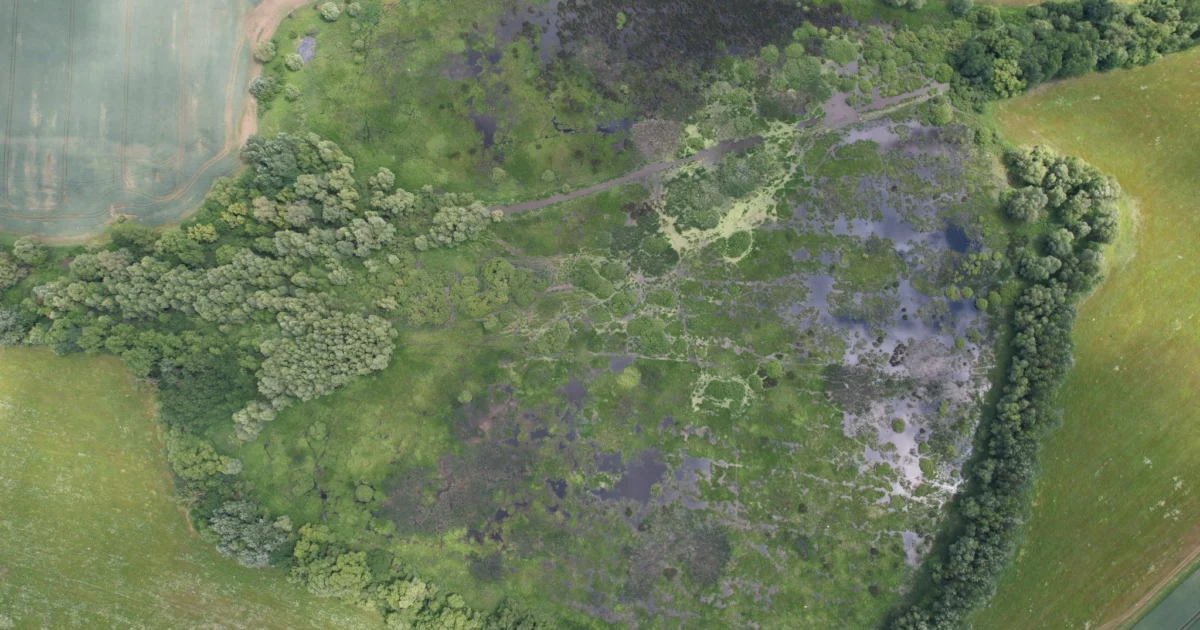
In the southern reaches of Paraguay, the San Rafael landscape stands as a defiant monument to biological diversity, existing as one of the last significant remnants of the Upper Paraná Atlantic Forest. Spanning 72,489 hectares of dense canopy and natural grasslands, this area is a critical sanctuary for 440 bird species, including seven that are found nowhere else on Earth. Yet, the existence of this forest is increasingly precarious. Hemmed in by decades of agricultural expansion, cattle ranching, and infrastructure development, San Rafael is a fragment of a once-vast biome that historically stretched across parts of Brazil, Argentina, and Paraguay. Today, it serves not only as a vital carbon sink and a regulator of water for downstream communities but as a frontline in the global battle against biodiversity loss.

The fragility of this ecosystem was laid bare in November 2020, when a series of catastrophic fires consumed approximately 33,000 hectares—nearly 45% of the reserve. While the landscape shows intermittent signs of natural regeneration, the ecological scars remain deep. Experts estimate that full biodiversity restoration will require 20 to 30 years, assuming the region is spared further environmental trauma. However, the threats are not merely climatic; the area faces a persistent loss of approximately 800 hectares annually due to illegal farming, underscoring the relentless pressure on the land.
The Structural Crisis of Conservation Finance
For over two decades, the organization Guyra Paraguay has acted as the primary steward of this landscape. Their efforts have been multifaceted: acquiring more than 7,000 hectares to form a private reserve network, partnering with Mbyá Guaraní indigenous communities to foster sustainable land management, and conducting rigorous biodiversity monitoring. Despite these achievements, the organization has faced a recurring, systemic hurdle: the limitation of time-bound project funding.

Conservation work is inherently long-term, yet the financial mechanisms supporting it are often short-term. International grants, while vital for initial interventions, rarely account for the decades required for forest restoration or the volatility of local land-use economics. In the case of San Rafael, the economic incentives for land conversion—such as clearing forest for soy—can be realized in a single season, while the ecological gains of protection are measured in generations.
The global context for this struggle is stark. Current estimates suggest a global biodiversity financing gap of between US$598 billion and US$824 billion annually. With public spending covering only roughly one-fifth of the required investment, conservationists are being forced to evolve. The prevailing sentiment among organizations like BirdLife International is that philanthropy must be complemented by local, sustainable economies that provide a direct financial stake in the health of the forest.

Tangará: A New Model for Landscape Stewardship
Launched in 2021, Tangará represents a shift in strategy. It is a social enterprise established by Guyra Paraguay designed to generate independent revenue from the very landscapes it aims to protect. The initiative does not seek to replace philanthropic funding, which remains essential for innovation and risk mitigation, but rather to create a self-sustaining financial stream that covers at least 30% of the reserve’s maintenance costs.
The core philosophy of Tangará is to monetize the standing forest without depleting its resources. By developing market-ready products that depend on a healthy, intact ecosystem, the enterprise aligns the financial interests of local producers with the ecological integrity of the forest. The project currently focuses on four key pillars: shade-grown organic yerba mate, honey production, petitgrain essential oil, and low-impact ecotourism.

Operational Chronology and Market Success
The progression of these revenue streams has been uneven, reflecting the complexities of building supply chains in remote, ecologically sensitive areas. The most significant success has been in the yerba mate sector. To date, Tangará has managed the production and export of over 110,000 kilograms of certified organic, Fair for Life yerba mate to the United States market. This achievement provides a tangible example of how conservation can provide a livelihood for the 132 families across eleven communities currently participating in the program.
Other streams, such as honey production, remain in the early stages of development, with 60 kilograms produced to date. While the disparity in output between products is significant, project managers view this as a natural reflection of market readiness. Ecotourism has also begun to gain traction, with the Kangüery Biological Station and model farms serving as educational hubs for over 180 international and local visitors.

The initiative has benefited from technical mentoring provided by BirdLife International’s Forest Impact Accelerator. This partnership has allowed Guyra Paraguay to transition from a purely scientific and conservation-focused entity into an organization capable of managing logistics, supply chain certifications, and international buyer relationships. Seed funding from the Hempel Foundation was instrumental in this transition, as it absorbed the financial risks associated with launching unproven commercial activities in a high-stakes environment.
Implications for Regional and Global Policy
The implications of the Tangará model extend beyond the borders of Paraguay. By stacking multiple revenue streams, the project reduces its vulnerability to market fluctuations or climate-related disasters that might jeopardize a single-commodity model. This "stacking" approach is increasingly seen as a blueprint for resilience in tropical landscapes worldwide.

However, experts caution that this model is not a panacea. The success of Tangará is inextricably linked to the unique history and institutional capacity built by Guyra Paraguay over the last 20 years. The ability to coordinate with indigenous communities, navigate complex land-use laws, and leverage international scientific networks are not easily replicated in regions lacking such deep-rooted presence.
Furthermore, the initiative faces the challenge of "valuation." Many of the benefits provided by the San Rafael forest—such as carbon sequestration, water cycle regulation, and habitat preservation—are not currently captured by market prices. As Fabricio Astudillo, Forest Program Manager at BirdLife International Americas, notes, the value of Tangará lies not in claiming to solve the funding gap entirely, but in demonstrating that conservation, local economic development, and landscape resilience are inherently connected.

Future Outlook and Scientific Integration
As the project moves into its next phase, Guyra Paraguay is working to integrate carbon finance into its strategy. Through the Forest Impact Accelerator, the organization is currently designing an Afforestation, Reforestation, and Revegetation (ARR) project linked to existing yerba mate agroforestry systems. If successful, this would provide a scalable, long-term revenue source tied to the measurable increase in forest cover.
The long-term objective is to scale the program to benefit 250 families, creating a robust, community-driven barrier against the agricultural encroachment that threatens the remainder of the Atlantic Forest. This transition is not without its difficulties. As Ana Barriga, Forest Program Coordinator for BirdLife International Americas, observes, forcing conservation organizations to think like businesses requires a fundamental shift in institutional culture. It necessitates a move toward holistic management where biodiversity science is balanced with logistics, market strategy, and administrative adaptation.

The ultimate test for Tangará will be its ability to attract impact investors who are willing to move beyond traditional grant-making and into the realm of sustainable development debt or equity. Rodrigo Zárate of Guyra Paraguay emphasizes that the goal is to prove that a conservation organization can become an institution that provides both environmental and financial returns.
A Systemic View of Resilience
The San Rafael landscape serves as a reminder that biodiversity protection is a systemic challenge. It requires a convergence of philanthropic innovation, scientific rigor, traditional ecological knowledge, and market-based solutions. While the forest remains under threat, the emergence of Tangará suggests that the path forward involves transforming the forest from an "object of protection" into a "partner in sustainability."

The global impact of such initiatives is underscored by the recent performance of the Forest Impact Accelerator, which has secured 1 million hectares of Key Biodiversity Areas and provided economic benefits to tens of thousands of local people. With the support of the Darwin Initiative and the UK government’s Biodiversity Challenge Awards, these lessons from the Atlantic Forest are now being scaled to secure even larger tracts of vital ecosystems.
In the final analysis, the story of San Rafael is one of cautious optimism. It is a story of an organization choosing to confront the volatility of the modern economy with the resilience of the forest itself. Whether this model can provide the long-term, sustainable protection necessary for the Atlantic Forest to survive the next century remains an open question, but the progress made thus far provides a compelling framework for future conservation efforts globally. As long as the forest stands, the opportunity for systemic change remains, and the people of San Rafael continue to demonstrate that the value of their home is not merely in what it provides, but in its very existence as a living, breathing, and recovering system.
