
The UN Environment Programme (UNEP) has issued a stark warning in its newly released Limiting Overshoot report, underscoring that current global policy trajectories are insufficient to keep the world within the 1.5°C temperature threshold. As of late September 2026, scientific data indicates that emissions projections for 2030 remain significantly above the levels required to avoid a climate "overshoot." This scenario—where global temperatures temporarily exceed the 1.5°C limit before potentially returning to lower levels—poses an existential risk to biodiversity and human stability. Experts warn that the longer this period of overshoot persists, the greater the likelihood of triggering irreversible ecological tipping points.
The report suggests that once ecosystems are fundamentally disturbed, their capacity for recovery is severely diminished. Species lost to local or global extinction during this period will not reappear, marking a permanent degradation of the planet’s biological heritage. This environmental instability is not a future projection but a present reality, with climate change already disrupting bird migration patterns, breeding cycles, and food availability on a global scale.
A Chronology of Environmental Stress
The urgency of the situation was highlighted throughout September 2026 during the quadrennial Partnership Meeting and the second Global Flyways Summit in Nairobi. These events served as a critical platform for the BirdLife International Partnership, representing NGOs across more than 120 countries, to synthesize the latest scientific data on the state of global ecosystems.
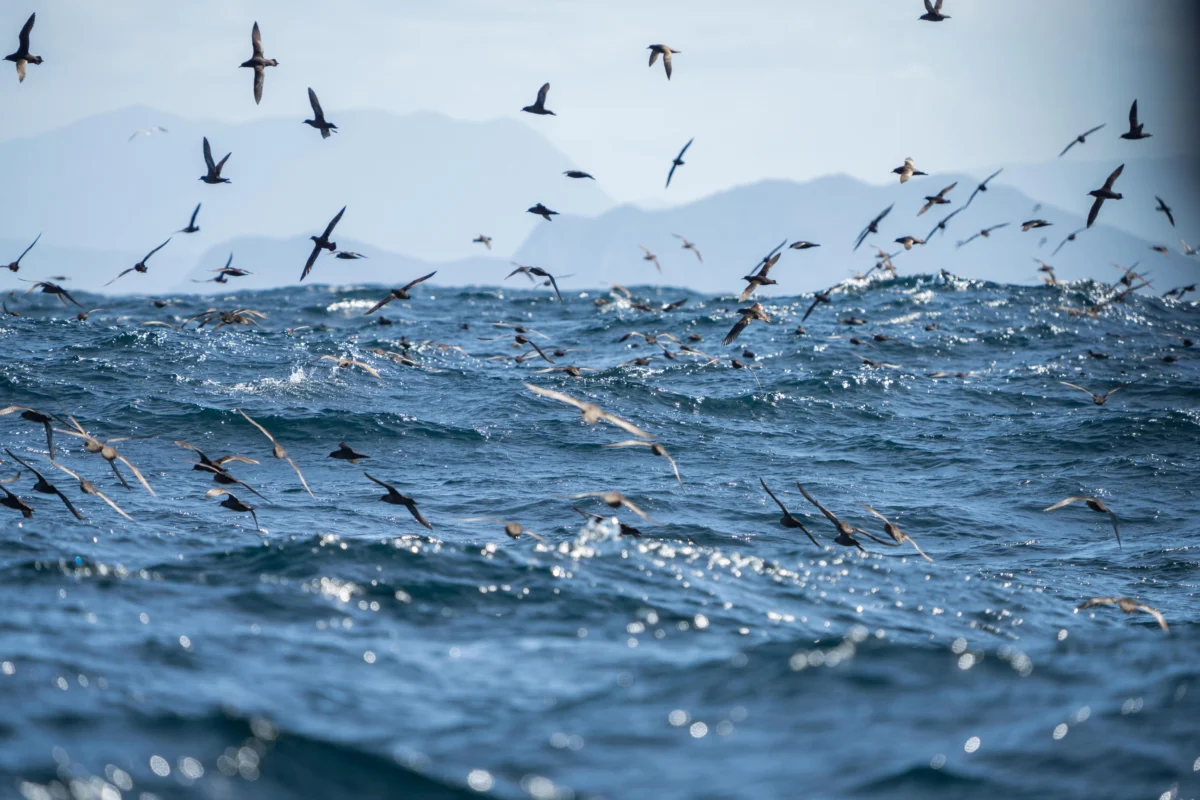
The timeline of recent environmental degradation is alarming. In 2023 and 2024, a single, extreme marine heatwave resulted in the mortality of over 600,000 seabirds, a catastrophe that underscores the fragility of marine food webs. Simultaneously, intensified El Niño events have placed unprecedented pressure on migratory species, forcing shifts in ranges and leading to "extirpations"—the local extinction of species in regions where they were previously abundant.
The human cost of this instability is equally profound. Data from a 2025 study revealed that heatwaves in Australia were responsible for more than 1,000 human deaths between 2016 and 2019, providing a grim indicator of how climate-induced systemic stress impacts public health, agriculture, and urban infrastructure.
The State of Migratory Birds: A Global Indicator
Birds are often referred to as the "canaries in the coal mine" for the global environment, and their current status is dire. According to the State of the World’s Birds report, launched at the Nairobi Summit, approximately one in nine migratory bird species is now threatened with global extinction. As these species travel across continents, they face a shrinking map of suitable landing sites, fueling a cycle of decline that threatens to unravel the ecosystems they help maintain.

The Nairobi Flyways Declaration, signed by participants at the summit, serves as a formal plea to translate international environmental commitments into concrete national action. The declaration specifically emphasizes the need for increased financial support for the conservation of "flyways"—the vast, transboundary aerial corridors that migratory birds rely upon for survival. Without coordinated international investment, these pathways, which connect the ecosystems of dozens of nations, are at risk of collapsing.
The Interconnectedness of Climate and Nature
The core message emerging from the Nairobi summits is that the climate crisis and the nature crisis are inextricably linked. The UN’s Limiting Overshoot report emphasizes that attempting to solve one while ignoring the other is a mathematical and physical impossibility. Efforts to achieve net-zero carbon emissions must be aligned with the Global Biodiversity Framework, which aims to halt and reverse nature loss by 2030.
Her Imperial Highness Princess Takamado, Honorary President of BirdLife International, noted during the proceedings that climate change is a common foe requiring unprecedented levels of international cooperation. "The challenges we face are shared, and protecting biodiversity requires people and institutions to work together rather than separately," she stated, reflecting the consensus among the summit’s attendees.
Strategic Solutions and Spatial Planning
To address the "overshoot" effectively, global policy must transition from high-level rhetoric to "smart spatial planning." This involves identifying exactly where infrastructure—particularly renewable energy projects—should be sited to maximize carbon reduction while minimizing harm to biodiversity.
BirdLife International has begun rolling out the AVISTEP (Avian Sensitivity Tool for Energy Planning) framework. This tool provides governments and international financial institutions with the data necessary to integrate biodiversity considerations into renewable energy development. By avoiding "avoidable trade-offs," nations can accelerate the transition to clean energy without inadvertently destroying the natural carbon sinks—such as coastal Key Biodiversity Areas—that are essential for long-term climate stability.
Financial Mobilization and Institutional Cooperation
Financial mechanisms are evolving to reflect these realities. BirdLife International has secured partnerships with major development banks, including the World Bank, the Asian Development Bank, and the Development Bank of Latin America and the Caribbean (CAF). These collaborations are designed to mobilize billions of dollars to support the conservation of migratory routes and the sustainable management of critical ecosystems.
The focus is not merely on protection but on active resilience. In the Pacific region, for example, the KIWA INSPIRE project uses invasive species management to bolster the resilience of coastal ecosystems against climate-induced stressors. By restoring these habitats, local authorities in nations like Fiji and Palau are effectively creating natural buffers against the impacts of a warming planet.

The Triple-COP Imperative: A Call for Synergy
As the global community approaches the end of 2026, the focus turns toward the "triple-COP" year, encompassing the Rio Conventions on climate change, biodiversity, and land degradation. There is a growing movement to force these three disparate processes to work in concert.
H.E. Murat Kurum, the COP31 President-Designate, has expressed strong support for a "Rio Synergies" approach. He argues that strengthening cooperation across these conventions provides a practical pathway to enhance policy coherence and mobilize more efficient investment. By aligning the implementation of Nationally Determined Contributions (NDCs) with National Biodiversity Strategies and Action Plans (NBSAPs), countries can create a mutually reinforcing framework for sustainable development.
The upcoming COP17 biodiversity summit and COP31 climate summit are seen as the final opportunities for this decade to solidify these synergies. The Belém Adaptation Indicators, which utilize the Red List Index to track the health of ecosystems and species, are expected to play a central role in how governments measure their success in the coming years.
Analysis of Implications
The shift toward an "overshoot, peak, and decline" pathway carries significant socio-economic implications. If the overshoot phase is prolonged, the costs of adaptation will skyrocket, potentially overwhelming the fiscal capacity of developing nations. The "cascading risks" identified by the UNEP—where the loss of a specific species impacts food security, which then destabilizes local economies and necessitates migration—represent a systemic threat to global order.
However, the integration of bird conservation into national planning offers a low-cost, high-impact strategy for climate resilience. Migratory birds act as functional links between disparate ecosystems; by preserving the flyways, nations are essentially maintaining the "infrastructure" of the natural world.
The path forward, as articulated by the BirdLife Partnership, requires a fundamental shift in how governments view environmental policy. It is no longer enough to set targets; governments must now prove their ability to implement these targets in a way that acknowledges the limits of ecological recovery. The data is clear: the window to avoid the most permanent impacts of the climate overshoot is narrowing. The next twelve months of intergovernmental negotiation will be the definitive test of whether the global community can move beyond isolated policy goals toward a unified, synergistic strategy for survival.
As the world prepares for the high-stakes negotiations at the upcoming COP summits, the message from Nairobi is one of cautious resolve: ambition is the starting point, but it is only through coordinated, transboundary implementation that the risks of an irreversible climate overshoot can be mitigated for the benefit of both nature and humanity.
