
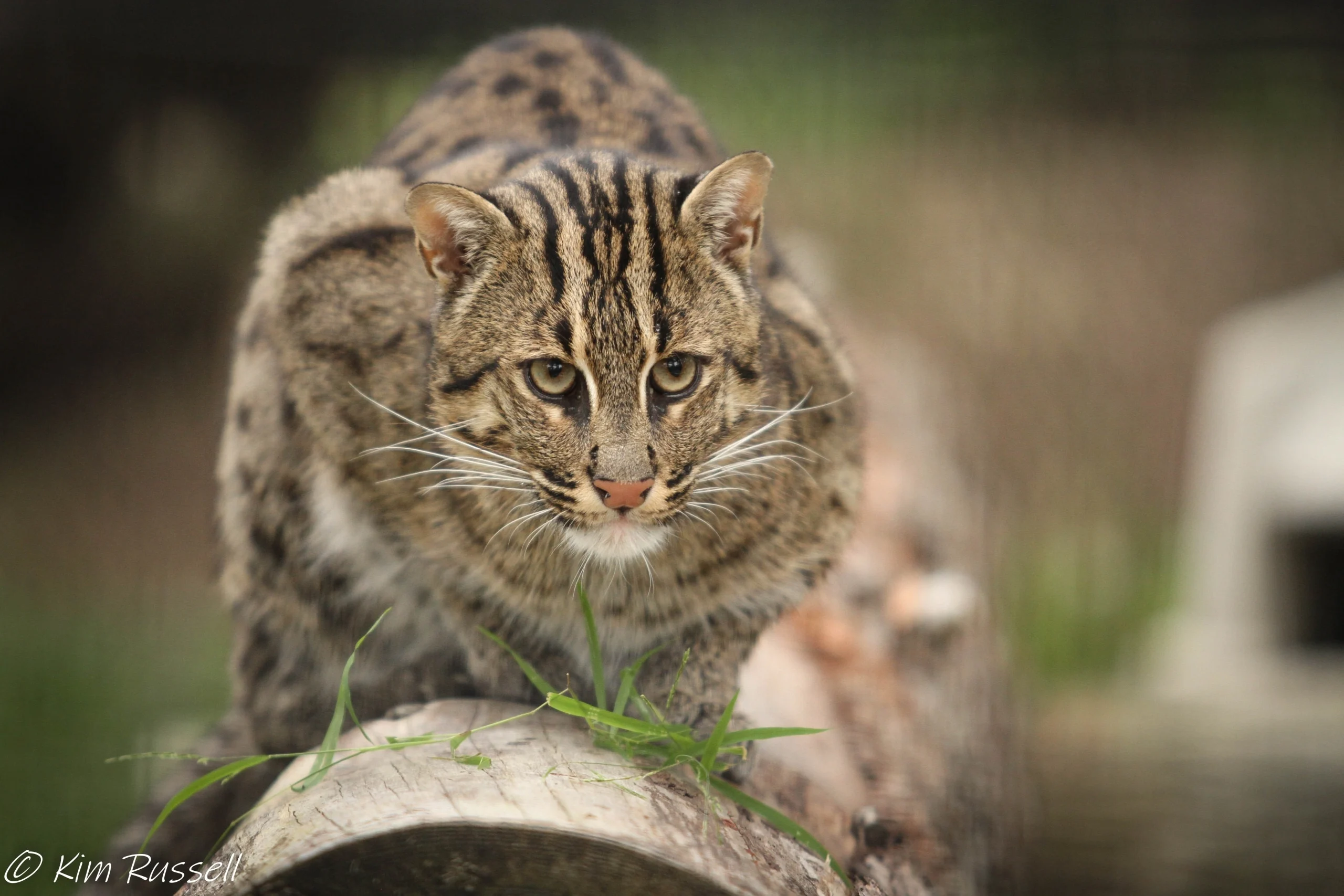
World Wildlife Day, observed annually on March 3, serves as a global platform to celebrate the diversity of life on Earth and address the urgent need for systemic conservation efforts. Established by the United Nations General Assembly in 2013, the date commemorates the adoption of the Convention on International Trade in Endangered Species of Wild Fauna and Flora (CITES). Each year, the event highlights a specific theme to focus international discourse; for the current cycle, the focus is "Partnerships for Wildlife Conservation." This theme underscores the necessity of collaboration between governmental bodies, non-governmental organizations, private landowners, and the scientific community to mitigate the ongoing loss of biodiversity.
At the heart of this year’s advocacy efforts is a unique intersection of captive animal care and field research, exemplified by River, a six-year-old fishing cat (Prionailurus viverrinus) residing at the Hawk Creek Wildlife Center. While her role is primarily that of an ambassador animal, her presence has become a cornerstone for researchers attempting to bridge the gap between captive observation and the protection of wild populations.
The Plight of the Fishing Cat: A Vulnerable Species
The fishing cat is a medium-sized wild feline native to South and Southeast Asia. Unlike most members of the Felidae family, which tend to avoid deep water, the fishing cat is uniquely adapted for an aquatic lifestyle. They possess partially webbed paws, which they use to scoop fish from riverbanks and shallow waters. Despite these specialized adaptations, the species is currently classified as "Vulnerable" on the IUCN Red List of Threatened Species.
Data from the IUCN indicates a precarious decline in population numbers over the past several decades. The primary drivers of this decline are habitat loss and degradation. Wetlands, which serve as the essential hunting grounds for the species, are frequently drained for agricultural expansion, aquaculture, and urban development. Furthermore, these cats face significant risks from retaliatory killings by local fishermen who view the animals as competitors for dwindling fish stocks.
Because of their elusive, nocturnal, and semi-aquatic nature, fishing cats are notoriously difficult to track in the wild. Consequently, population density estimates remain largely speculative, making them one of the least-studied small cat species in the world. This lack of data creates a "conservation visibility gap," where the species often receives less funding and policy attention than more charismatic or well-documented predators.
Bridging the Gap: The Role of Ambassador Animals
Hawk Creek Wildlife Center serves as a critical site for the study of these felines. River, the center’s resident fishing cat, acts as a living bridge between the public and the scientific community. Ambassador animals are defined as individuals housed in controlled environments that are trained to interact with researchers or the public to facilitate education and data collection.
The significance of River’s role was highlighted recently when the founder of the Fishing Cat Conservancy (FCC) visited the center to conduct an observational study. By utilizing high-resolution recording equipment and behavioral tracking, researchers were able to document the intricate mechanics of how River utilizes her specialized paws to manipulate water and capture prey.
For the scientific community, these observations are invaluable. Studying the biomechanics and behavioral patterns of a healthy, captive animal provides a baseline for what "natural" hunting behavior looks like. This data can then be cross-referenced with camera trap footage and environmental DNA (eDNA) samples collected in the wild to better understand how their wild counterparts navigate increasingly fragmented ecosystems.
Chronology of Conservation Efforts
The history of fishing cat conservation is a relatively recent development in the broader timeline of environmental protection.
- 2008: The IUCN Red List formally elevated the fishing cat from "Near Threatened" to "Vulnerable" due to the rapid disappearance of wetland habitats in South Asia.
- 2010–2015: Increased advocacy from independent researchers and small NGOs began to highlight the species as an "umbrella species"—meaning that by protecting the fishing cat’s habitat, other aquatic and terrestrial species within the same ecosystem are also protected.
- 2016–2020: The Fishing Cat Conservancy initiated localized projects focusing on private land management. Recognizing that a significant portion of fishing cat habitat exists outside of protected national parks, the organization began partnering with farmers and landowners to encourage "wildlife-friendly" agriculture.
- 2023–2024: The integration of technological tools, such as satellite collar tracking and collaborative research with institutions like Hawk Creek, marked a new phase in the methodology, focusing on behavioral modeling.
Analysis: Why Partnerships Matter
The "Partnerships for Wildlife Conservation" theme for this year is not merely a slogan; it represents a tactical shift in how environmentalists operate. In the case of the fishing cat, isolated research is insufficient. Effective conservation requires a multi-layered approach:
- Ecological Preservation: Collaborating with local governments to prevent the conversion of wetlands into industrial sites.
- Socio-Economic Integration: Working with local human populations to develop sustainable fishing practices that do not require the eradication of feline predators.
- Scientific Cooperation: Sharing data between zoos, wildlife centers, and academic institutions to standardize the understanding of the species.
Without these partnerships, the fishing cat risks local extinction in several of its range countries. The economic pressure on wetlands is immense, and without a concerted effort to incentivize conservation, private landowners have little reason to maintain the water-logged, swampy terrain that these cats require to survive.
Official Responses and Future Outlook
Representatives from the Fishing Cat Conservancy have emphasized that public awareness is the first step in a long-term recovery strategy. By donating to organizations like Hawk Creek, the public directly funds the maintenance of habitats and the logistics of field research.
"The goal is not to keep these animals in captivity, but to use the knowledge we gain from them to ensure they thrive in the wild," said an organizational spokesperson. "Every bit of information we glean from River helps us design better corridors for the wild cats in India, Bangladesh, and beyond."
The implications of this work extend far beyond the species itself. As a top predator in the wetland food chain, the fishing cat acts as an indicator of environmental health. A decrease in their population is a direct signal of water pollution, overfishing, and the loss of biodiversity in aquatic ecosystems. Conversely, the successful recovery of the fishing cat serves as a marker for restored, healthy riverine systems that support thousands of other species, including humans who rely on these waterways for clean water and food.
The Path Forward
As World Wildlife Day 2024 concludes, the challenge remains for the international community to sustain the momentum generated by these partnerships. The collaboration between Hawk Creek Wildlife Center and the Fishing Cat Conservancy serves as a scalable model for other endangered species.
Public engagement, while often overlooked in technical conservation reports, remains a critical component of the funding cycle. Through donations, public advocacy, and the support of organizations dedicated to species-specific research, individuals can play a direct role in the survival of the fishing cat.
Further information regarding ongoing projects, site-specific conservation, and educational resources can be found through the official portal of the Fishing Cat Conservancy at fishcat.org. As the global climate continues to shift and the pressure on natural habitats intensifies, the continued existence of species like the fishing cat will depend entirely on the strength and efficacy of the partnerships formed today. The work being done with River is more than an educational program; it is a vital link in the chain of survival for a species that is as elusive as it is essential to the health of the world’s wetlands.
