
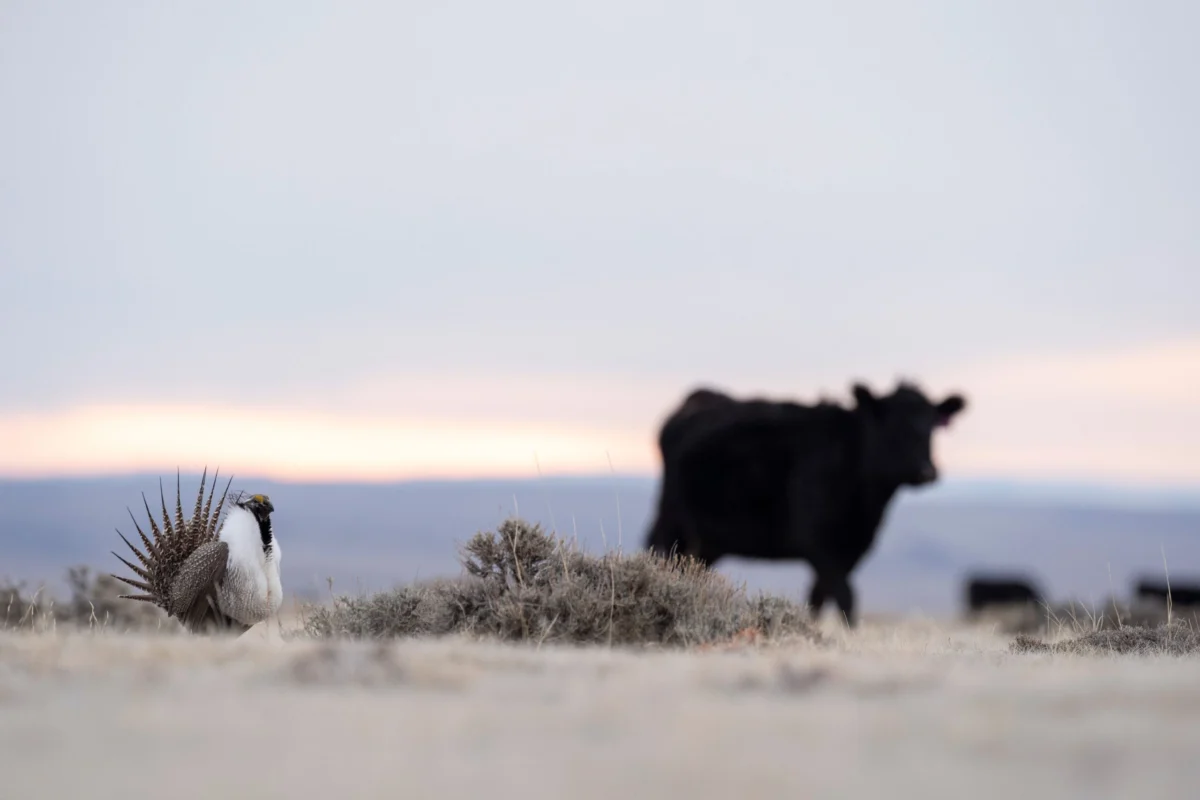
ALCOVA, WYO. (October 19, 2026) — The National Audubon Society has officially designated Pathfinder Ensign Ranches as an Audubon Certified Bird-Friendly property, marking a significant milestone in the ongoing effort to preserve the fragile ecosystems of the American West. This certification, granted under the umbrella of the Audubon Conservation Ranching (ACR) program, recognizes the ranch’s commitment to balancing large-scale beef and bison production with the rigorous ecological demands of habitat restoration and biodiversity protection. The inclusion of this expansive Wyoming property underscores a growing trend in private-public partnerships, where agricultural viability is increasingly linked to the long-term health of native grasslands.
The Evolution of a Wyoming Legacy
Pathfinder Ranch, historically recognized as a cornerstone of central Wyoming’s agricultural and cultural landscape, has long been associated with proactive land stewardship. Following its transition to ownership under Ensign Ranches, the property has undergone a strategic realignment of its management philosophy. While the ranch maintains its commercial production objectives, the new leadership has doubled down on the conservation initiatives established by its predecessors.
The history of this land is deeply intertwined with the development of the American frontier. Located in a region defined by the convergence of historic trails—including the Oregon, Mormon, and California Trails—the ranch serves as a living museum of Western expansion. Yet, its modern value lies not in its historical significance alone, but in its current role as a sanctuary for wildlife. With nearly 18,000 acres already protected under a conservation easement held by the Wyoming Stock Growers Land Trust, the property is legally shielded from future development, ensuring that its grasslands and sagebrush steppe remain intact for generations.
The Crisis of Grassland Biodiversity
The Audubon Conservation Ranching program was launched as a direct response to a mounting ecological crisis. Since 1970, data from the State of the Birds reports have consistently highlighted that grassland birds are suffering the most precipitous population declines of any terrestrial biome in North America. These species, which include the Mountain Plover, the Sage Thrasher, and the Brewer’s Sparrow, face an array of anthropogenic pressures, most notably habitat fragmentation, the encroachment of woody vegetation into formerly open plains, and the widespread application of chemical pesticides.
Because the majority of these birds reside on private property, the Audubon Society realized that traditional federal preservation efforts—which focus largely on public lands—were insufficient. By incentivizing ranchers to adopt "bird-friendly" protocols, the program turns private agricultural land into a critical safety net. The certification process is not merely an honorary title; it requires a scientific audit of the land, proof of animal welfare standards, and a demonstrable increase in habitat heterogeneity.
A Masterclass in Regenerative Land Management
The core of the certification at Pathfinder Ensign Ranches lies in its sophisticated application of rotational and regenerative grazing. Unlike traditional continuous grazing, which can lead to overgrazing and soil depletion, the ranch employs a strategic, high-intensity, short-duration grazing model. This technique mimics the historical movement patterns of wild bison herds that once roamed the Great Plains.
By controlling the timing and intensity of livestock movement, managers create a "mosaic" of habitat types across the landscape. Some pastures are grazed intensively, creating the short-stature grass cover required by ground-nesting birds such as the Horned Lark. Other areas are granted extended periods of rest, allowing for taller, denser vegetation that provides essential cover and nesting sites for the Greater Sage-Grouse and various passerines. This structural diversity is the linchpin of the ranch’s ecological success, fostering healthier soil microbiomes and more resilient plant communities that can better withstand the volatility of Wyoming’s climate.
Official Perspectives on the Partnership
The certification process involved months of collaboration between ranch management and Audubon’s team of range ecologists. Cidney Handy, a Range Ecologist for the Audubon Conservation Ranching program in Wyoming, noted that the ranch’s geography makes it a vital piece of the regional conservation puzzle. "The ranch sits in a key ecological transition zone," Handy remarked. "The way it is managed is incredibly beneficial for not only our grassland birds but other wildlife as well, as it provides a stable bridge between different ecosystem types."
Chris Robinson, CEO of Ensign Ranches, emphasized that the decision to pursue certification was as much a business strategy as it was an environmental commitment. "Regenerative management and targeted habitat restoration are built into our ranching strategy," Robinson stated. "Audubon’s certification helps assure and monitor the value of bird-friendly management. What’s good for birds is also beneficial for rangelands and the viability of our business. We want to support precious species in Wyoming, like the Greater Sage-Grouse, that rely on our land for breeding and foraging."
Regional Implications and the Sage-Grouse Mandate
The significance of the Pathfinder property is further elevated by its status as the nation’s first and largest Greater Sage-Grouse conservation bank. The Greater Sage-Grouse has long been a focal point of conservation debate in the West, as its population numbers serve as a primary indicator of the health of the sagebrush steppe. By securing habitat for the Sage-Grouse, Pathfinder Ensign Ranches inadvertently protects a suite of other species, including elk, deer, and pronghorn, which share the same landscape.
Moreover, the ranch’s collaboration with the Wyoming Game and Fish Department to reintroduce bighorn sheep into the Sweetwater Rocks represents a forward-thinking approach to biodiversity. By restoring a native population that had been absent for over a century, the ranch is demonstrating that agricultural operations can actively participate in ecological restoration rather than simply attempting to minimize their footprint.
Data at a Glance: The Scale of Conservation
The scale of this certification is noteworthy when compared to national trends. With the addition of Pathfinder Ensign Ranches, Wyoming now boasts the largest conservation footprint of any state participating in the Audubon program. Across the United States, more than 160 farms and ranches have achieved certification, collectively managing approximately 4.7 million acres.
In Wyoming, the impact is particularly profound:
- Total Certified Acreage in Wyoming: Exceeds 1.4 million acres.
- Total Participating Ranches: 13 major operations.
- Primary Conservation Targets: Greater Sage-Grouse, Mountain Plover, Horned Lark, Sage Thrasher.
- Management Focus: Regenerative grazing, riparian corridor protection, and invasive species management.
Analyzing the Future of Sustainable Ranching
The certification of Pathfinder Ensign Ranches signals a shift in how the agricultural industry interacts with consumer expectations. As public awareness of biodiversity loss grows, there is an increasing market demand for products that can verify their environmental impact. The Audubon Bird-Friendly Land Certification seal acts as a proxy for transparency, allowing consumers to make purchasing decisions that align with their conservation values.
However, the implications go beyond branding. By institutionalizing these practices, the Audubon Conservation Ranching program is effectively building a "climate-resilient corridor" across the American West. As temperatures rise and precipitation patterns shift, the soil health benefits derived from regenerative grazing will be essential for keeping these lands productive.
Looking Ahead
The transition of the Pathfinder property under new ownership could have been a moment of uncertainty for the region’s conservation goals. Instead, the commitment shown by Ensign Ranches suggests a new chapter in which large-scale, private, and profit-driven entities serve as the primary defenders of the Western landscape.
As the ranch moves forward, its continued enrollment in the Audubon program will likely serve as a model for other large landowners in the Rocky Mountain region. By integrating scientific research, adaptive management, and traditional ranching wisdom, Pathfinder Ensign Ranches is demonstrating that the future of the American range does not have to be a choice between productivity and preservation. Instead, it is a symbiotic relationship where the prosperity of the herd is inextricably linked to the vitality of the prairie.
For the National Audubon Society, the goal remains clear: to scale this model until the fragmentation of the American grasslands is halted and reversed. With properties like Pathfinder leading the way, the program is well-positioned to turn the tide for the hundreds of species that depend on these vast, open spaces for their survival.
