
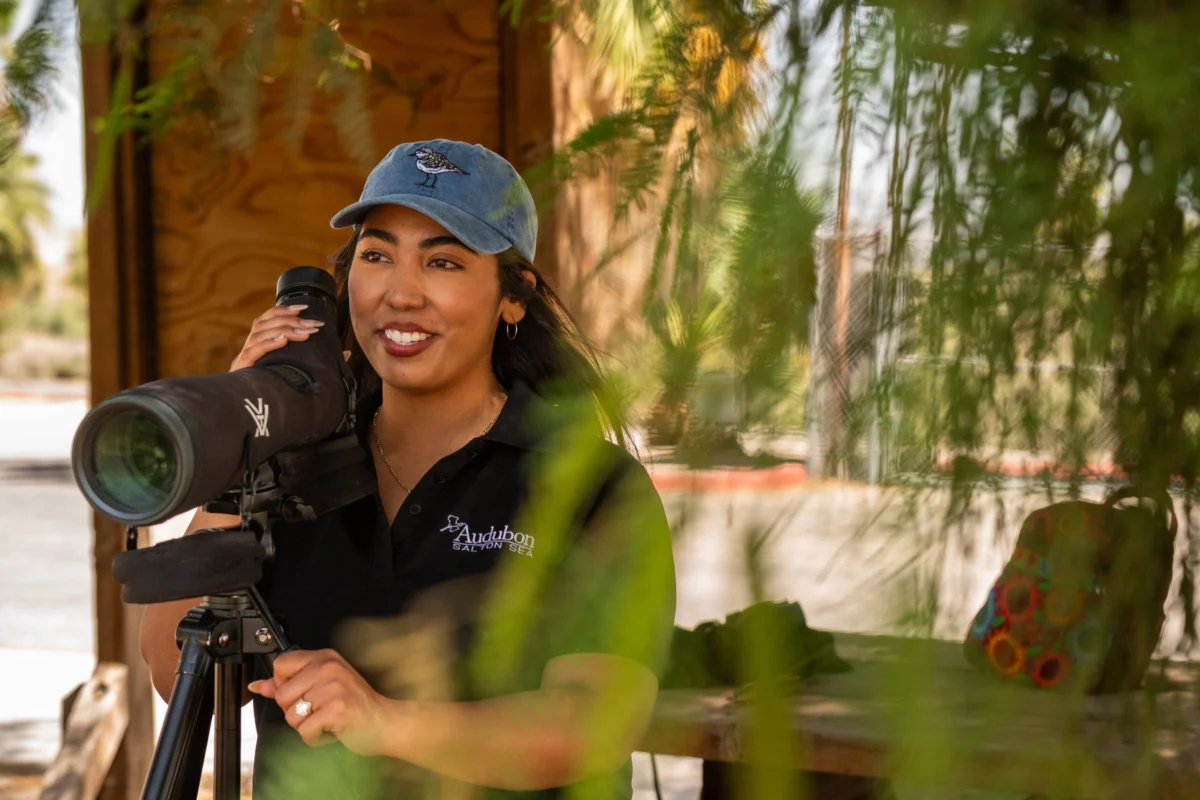
(April 13, 2026) Governor Gavin Newsom and California Natural Resources Agency (CNRA) Secretary Wade Crowfoot have officially announced the appointment of Camila Bautista, Audubon California’s Salton Sea & Deserts Program Manager, to the newly established Salton Sea Conservancy Board. This significant appointment represents a critical milestone in the long-term habitat restoration and public access goals for California’s largest and most imperiled lake. The Conservancy Board is tasked with the monumental responsibility of overseeing the progress of all conservation projects in the Salton Sea region, bringing a new era of focused governance and coordinated action to one of the state’s most complex environmental challenges.
A New Chapter for the Salton Sea: The Conservancy’s Mandate
The formation of the Salton Sea Conservancy Board underscores the state’s deepened commitment to addressing the multifaceted crisis at the Salton Sea. For decades, the Salton Sea has faced escalating ecological degradation, public health risks, and socio-economic challenges. This new board is designed to provide a dedicated, cohesive, and long-term strategic framework for restoration efforts, moving beyond piecemeal projects to a more integrated and sustainable approach. Its mandate extends to securing vital funding, facilitating critical habitat restoration, implementing dust suppression measures to safeguard air quality, and enhancing public access and recreational opportunities for surrounding communities.
Camila Bautista, as the Habitat Representative for the conservancy board, will serve as a crucial advocate for both the millions of migratory birds that depend on the Sea and the local communities grappling with its environmental impacts. Her role will involve championing conservation science, ensuring community voices are heard, and pushing for equitable and effective solutions. Her appointment is particularly noteworthy as Audubon California is the only environmental conservation nonprofit organization on the board, bringing decades of scientific expertise and on-the-ground restoration experience directly to the decision-making table.
"The Salton Sea is full of possibilities for the future and I’m honored to represent the vision of our communities and the needs of our incredible wildlife," stated Camila Bautista upon her appointment. She further elaborated on her deep connection to the region and her commitment to its future: "I’ve had the chance to meet with hundreds of our residents and I know that while we face undeniable challenges, we are a resilient region that holds so many opportunities. We’ve seen important conservation progress, with the Species Conservation Habitat Project and the Bombay Beach Wetlands restoration, and I look forward to expanding that work through deeper community engagement and broader public access. I’m grateful to Secretary Crowfoot, the CNRA, and Governor Newsom for their commitment to this special place and for championing nature for all."
The Salton Sea Crisis: A Decades-Long Challenge
To fully appreciate the significance of this appointment and the Conservancy’s mission, it is essential to understand the complex history and ongoing crisis of the Salton Sea. Formed accidentally in 1905 when the Colorado River breached an irrigation canal, the Salton Sea quickly became a vital stopover for over 400 species of migratory birds along the Pacific Flyway, supporting an estimated two-thirds of all bird species in California. For many years, it was a thriving recreational hub, attracting tourists for fishing and boating.
However, the Sea’s fate began to shift dramatically in the late 20th and early 21st centuries. Lacking a natural outlet, the Salton Sea has always been hypersaline, but the situation worsened critically with reduced agricultural runoff and the implementation of the Quantification Settlement Agreement (QSA) in 2003. The QSA, a landmark water transfer agreement, reduced the inflow of agricultural return flows from the Imperial Valley, which had historically sustained the Sea’s water levels. This reduction led to a rapid shrinkage of the lake, exposing vast expanses of playa—the dry lakebed.
The exposed playa releases fine particulate matter (PM10) laden with pesticides, heavy metals, and other contaminants into the air. This dust pollution poses severe public health risks to the surrounding communities, which are predominantly low-income and Latino, leading to elevated rates of asthma and other respiratory illnesses, particularly among children. Ecologically, the shrinking Sea concentrates salinity, threatening the remaining fish populations (like tilapia), which are a crucial food source for birds. The loss of habitat and food sources has led to significant declines in bird populations and put endangered species, such as the Yuma Ridgeway’s Rail, at further risk. The economic impacts have also been profound, with declining tourism and property values.
Chronology of State and Federal Interventions
Efforts to address the Salton Sea crisis have spanned decades, often characterized by ambitious plans facing significant funding and logistical hurdles.
- Early 2000s: Growing awareness of the impending crisis following the QSA. State and federal agencies begin to study potential solutions.
- 2007: The state issues the Salton Sea Ecosystem Restoration Program, outlining a broad vision for restoration but lacking dedicated funding mechanisms.
- 2014: Passage of Proposition 1, a state water bond that allocates initial significant funding (hundreds of millions of dollars) for Salton Sea restoration and other water projects.
- 2017: The state launches the Salton Sea Management Program (SSMP), an ambitious 10-year plan to construct 30,000 acres of habitat and dust suppression projects around the exposed shoreline. This marked a more concerted and funded effort.
- Ongoing SSMP Projects: Key initiatives under the SSMP include the Species Conservation Habitat (SCH) Project, a large-scale project aimed at creating shallow water habitat, and various smaller-scale efforts like the Bombay Beach Wetlands restoration. These projects aim to provide crucial habitat for fish and birds while also suppressing dust.
- Federal Engagement: Increased federal attention, with recent federal community project appropriations bringing millions of dollars of funding to projects like Audubon California’s Bombay Beach Wetland Enhancement Project.
- 2023-2025 (Inferred): Legislative efforts solidify the creation of the Salton Sea Conservancy Board, recognizing the need for a dedicated, long-term governing body to streamline and accelerate restoration efforts beyond the initial SSMP timeframe. This signals a shift from programmatic initiatives to a more permanent institutional framework.
- April 13, 2026: Official announcement of the Conservancy Board appointments, including Camila Bautista.
The establishment of the Conservancy Board represents a critical evolution in this timeline, signifying a more integrated, enduring, and hopefully, more effective approach to the Salton Sea’s future. It provides a formal structure to coordinate state, federal, and local efforts, and to engage diverse stakeholders more effectively.
Camila Bautista: A Profile in Science and Advocacy
Camila Bautista brings a powerful blend of scientific rigor, community advocacy, and deep local knowledge to the Salton Sea Conservancy Board. Born and raised in the Coachella Valley, her life has been intrinsically linked to the fate of the Salton Sea. This personal connection provides an invaluable perspective, ensuring that the human dimensions of the crisis are always at the forefront of the Conservancy’s work.
Her academic background is robust: a bachelor’s degree in Biology from UCLA and a master’s degree in Environmental Science from California State University, Los Angeles. This scientific foundation underpins her practical conservation work. Her master’s thesis, which earned the prestigious Farvolden Scholarship at the National Groundwater Association (NGWA) Groundwater Week 2023 conference, analyzed the intricate water sources sustaining the Bombay Beach Wetland Project through isotopic techniques. This highly specialized research demonstrates her capacity for detailed scientific inquiry directly applicable to Salton Sea restoration challenges. Furthermore, her contributions to a study on the increase of shorebirds at the Sea were published in the peer-reviewed journal Waterbirds, showcasing her direct impact on understanding the ecological dynamics of the region.
Beyond her scientific contributions, Bautista is a proven community advocate. She played a critical role in the Salton Sea Public Access Community study, an extensive engagement effort that gathered insights from more than 600 residents around the Sea, crucially including Spanish and Purépecha-speaking communities. The findings from this study were unequivocal, highlighting a clear community vision that prioritizes clean air, clean water, and safe, accessible opportunities to connect with the Salton Sea. This direct experience in community engagement ensures that the Conservancy’s plans will be informed by the lived experiences and urgent needs of those most affected by the Sea’s condition.
Andrea Jones, Vice President of California for the National Audubon Society, lauded Bautista’s appointment, stating, "Audubon California is deeply committed to the health and future of the Salton Sea, a vital refuge for birds and other wildlife, and has championed its importance for over 20 years. Camila’s appointment to the board is an important continuation of that work and a testament to her tireless advocacy, invaluable scientific expertise, and commitment to environmental justice."
Audubon California’s Enduring Commitment
As a long-term restoration partner with the state, Audubon California’s presence on the Conservancy Board, through Camila Bautista, is particularly impactful. For over two decades, Audubon California has been at the forefront of conservation efforts at the Salton Sea, advocating for its protection and working on practical solutions. Their work on the Bombay Beach Wetland Enhancement Project stands as a testament to their dedication, aiming to stabilize and expand important bird habitat while simultaneously addressing critical public health and access issues for the local community. This project has successfully attracted millions of dollars in funding, including recent federal community project appropriations, demonstrating Audubon’s capacity to leverage resources for tangible on-the-ground results.
Audubon California’s extensive research and monitoring programs provide invaluable data on bird populations, habitat needs, and the overall ecological health of the Salton Sea. This scientific expertise will be crucial for the Conservancy Board in making informed, evidence-based decisions for restoration strategies. Their advocacy also extends to ensuring that environmental justice principles are integrated into all restoration planning, recognizing the disproportionate impact of the Salton Sea crisis on vulnerable communities.
Broader Impact and Future Implications
The establishment of the Salton Sea Conservancy Board, coupled with Camila Bautista’s strategic appointment, signals a significant shift in California’s approach to this pressing environmental challenge.
- Streamlined Governance: The Conservancy is expected to provide a more focused and agile governance structure compared to the previously fragmented efforts across multiple agencies. This could accelerate project implementation and improve coordination.
- Long-Term Vision: The board’s mandate for long-term oversight ensures that restoration efforts will not be subject to short-term political cycles but will be sustained over the decades needed for meaningful recovery.
- Enhanced Funding Opportunities: A dedicated board with a clear mandate may be better positioned to attract and secure sustained funding from state, federal, and private sources, which is crucial given the estimated multi-billion-dollar cost of full restoration.
- Integrated Solutions: With a representative like Bautista, who champions both ecological and community needs, the Conservancy is poised to develop integrated solutions that address habitat restoration, dust mitigation, and public access simultaneously, rather than in isolation.
- Environmental Justice Focus: Bautista’s proven commitment to community engagement and environmental justice ensures that the concerns of local residents, particularly those from historically underserved populations, will be central to the Conservancy’s decision-making process. This can lead to more equitable outcomes and build greater trust between state agencies and local communities.
- Scientific Backing: The inclusion of a representative from a science-driven organization like Audubon California ensures that restoration strategies will be grounded in the best available scientific data and ecological understanding.
- Potential Model for Other Regions: The success of the Salton Sea Conservancy could serve as a valuable model for other large-scale, complex environmental restoration projects in California and beyond, particularly those involving multi-stakeholder challenges in arid and semi-arid regions.
While the formation of the Conservancy and Bautista’s appointment represent a hopeful turning point, significant challenges remain. Securing consistent and adequate funding will be an ongoing battle, as will navigating the complex engineering and environmental hurdles of restoring such a dynamic and degraded ecosystem. The impacts of climate change, particularly prolonged drought, will also continue to exert pressure on water availability, making innovative and resilient solutions paramount.
However, with dedicated leadership, robust scientific input, and a strong commitment to community partnership, the Salton Sea Conservancy Board, fortified by the expertise and passion of individuals like Camila Bautista, is poised to guide California towards a more sustainable and equitable future for its largest lake and the vibrant communities that call its shores home. The work ahead is immense, but the foundations for a new era of comprehensive and impactful restoration have now been firmly laid.
