
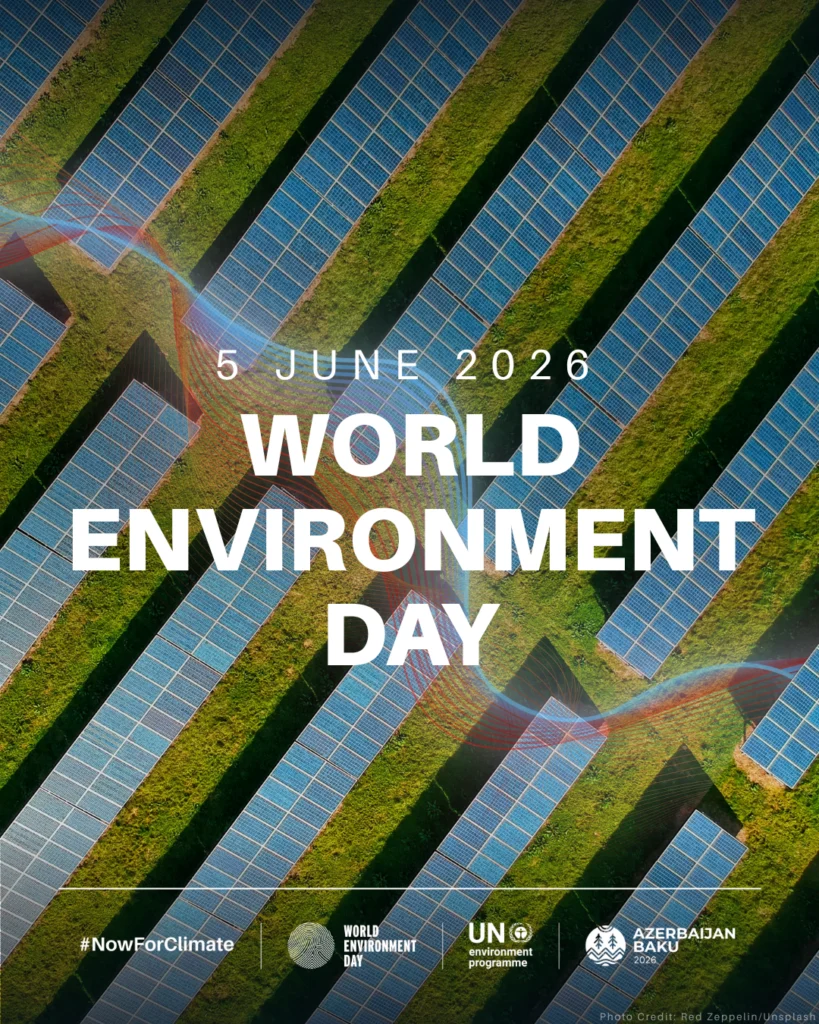
As the globe convenes to observe World Environment Day on June 5th, 2026, the United Nations Environment Programme (UNEP) has amplified a stark message that resonates with escalating urgency: the planet’s signals of distress are no longer subtle. Rising sea levels, unprecedented wildfires, prolonged heatwaves, and the accelerated melting of glaciers are undeniable manifestations of a climate in crisis. The scientific consensus that capped global warming at 1.5 degrees Celsius is being breached, a threshold long understood as critical for averting the most catastrophic impacts of climate change. For decades, the international community has grappled with a narrative of climate warnings, ambitious targets, and distant deadlines, often met with a frustrating mélange of delay, distraction, and outright denial. However, a counter-narrative is gaining momentum. Across the globe, innovative climate solutions are taking root, visible in the proliferation of solar panels adorning rooftops, wind turbines gracing horizons, cities being re-envisioned for human-centric sustainability, and extensive reforestation efforts. Amidst this evolving landscape, wetlands are increasingly recognized not merely as ecosystems, but as indispensable linchpins in the global strategy for climate mitigation and adaptation.
The intrinsic link between climate change and the planet’s water systems cannot be overstated. Escalating global temperatures have disrupted historical rainfall patterns, leading to a surge in extreme weather events, including devastating floods, prolonged droughts, and widespread wildfires. Wetlands, encompassing rivers, lakes, and peatlands, are the primary custodians of nearly all the world’s freshwater resources. They perform vital ecological functions, including water purification, natural water storage, effective flood mitigation, and crucial groundwater recharge. Their significance is so profound that the absence of healthy wetlands would equate to a world devoid of accessible freshwater. Yet, paradoxically, human activities have inflicted severe damage upon these vital ecosystems. The damming of rivers, the draining and degradation of peatlands, the pollution of lakes, and the destruction of mangrove forests have systematically undermined wetland health.
The consequences of this degradation have been starkly evident in recent times. The past year alone has witnessed a cascade of climate-related disasters directly linked to wetland loss. Iran experienced a record-breaking drought, exacerbating its existing air pollution crisis, a situation compounded by the loss of its wetland resources. India and the United Kingdom have grappled with severe flooding, with studies indicating that the shrinking of wetlands has directly contributed to the increased vulnerability of urban centers like Chennai and East London to extreme inundation. Furthermore, increased carbon emissions in China and Canada have been linked to the draining of peatlands, releasing vast stores of greenhouse gases into the atmosphere. These events underscore a critical vulnerability: the degradation of wetlands is not merely an environmental issue; it is a direct driver of climate instability and a threat to human security.
Wetlands: An Irreplaceable Solution for a Warming World
Wetlands possess a unique capacity to serve as powerful, nature-based solutions to the multifaceted challenges posed by climate change. Their role extends across mitigation, adaptation, and the broader concept of societal resilience, offering a holistic approach to environmental stewardship.
Wetlands for Mitigation: Harnessing Natural Carbon Sinks
Wetlands are among the most efficient natural carbon sinks on Earth. Peatlands, in particular, store an estimated one-third of the world’s terrestrial carbon, a reservoir far exceeding that of all the world’s forests combined. When healthy and intact, these ecosystems sequester vast quantities of atmospheric carbon dioxide, playing a crucial role in mitigating, halting, and even reversing the accumulation of greenhouse gases. For instance, the world’s peatlands store approximately 500 billion tonnes of carbon, equivalent to twice the amount of carbon currently in the atmosphere. The degradation of these ecosystems, through draining and burning, releases this stored carbon, contributing significantly to global emissions. Conversely, restoring and protecting peatlands can prevent these emissions and enhance carbon sequestration. Similarly, mangrove forests, coastal wetlands that thrive in saline and brackish water, are exceptionally effective at capturing and storing carbon. They can sequester carbon at rates up to five times higher than tropical rainforests, storing it in both their biomass and the sediment below. The protection and restoration of these vital "blue carbon" ecosystems are therefore paramount in global climate mitigation efforts.
Wetlands for Adaptation: Buffering Against Climate Impacts
Beyond their role in reducing emissions, wetlands are indispensable for helping communities adapt to the intensifying impacts of climate change. They act as natural buffers against the increasing frequency and severity of floods and droughts. Coastal wetlands, such as mangroves and salt marshes, provide critical protection for shorelines against storm surges and sea-level rise, absorbing wave energy and reducing coastal erosion. Inland wetlands, like floodplains and marshes, can absorb excess rainfall, slowing down the flow of water and reducing the risk of downstream flooding. During periods of drought, wetlands act as sponges, releasing stored water and maintaining water availability for ecosystems and human use. For example, the Everglades in Florida, a vast wetland ecosystem, plays a crucial role in managing water flow and preventing saltwater intrusion into freshwater aquifers, a vital function in the face of rising sea levels. The economic value of these adaptation services is substantial; a study by the World Wildlife Fund (WWF) estimated the annual value of water and freshwater ecosystems at USD 58 trillion, equivalent to 60% of global GDP, highlighting their critical role in maintaining economic stability.
Wetlands for Resilience: Foundations of Civilizations and Modern Societies
Wetlands have historically served as the bedrock of human civilization, providing the fertile grounds upon which early societies flourished. The great ancient civilizations – the Egyptians along the Nile, the Indus Valley civilization in Southern Asia, Mesopotamia between the Tigris and Euphrates, and the early Chinese dynasties along the Yellow River – all emerged in the fertile floodplains of major river systems. These environments offered abundant freshwater, nutrient-rich soils for agriculture, and abundant resources for sustenance and trade. This historical precedent continues today, with many of the world’s largest metropolises, including London, Kolkata, and Chicago, situated along riverbanks and benefiting from the services provided by associated wetlands. These ecosystems continue to provide clean water, support biodiversity, and offer recreational and economic opportunities. Their health is a direct indicator of the health of the societies that depend on them, underpinning the resilience of human populations against environmental challenges.
A Call to Action: Roles and Responsibilities in Wetland Conservation
Recognizing the multifaceted importance of wetlands, various stakeholders have critical roles to play in their conservation and restoration. Wetlands International, a leading organization in this field, is actively engaged in a range of initiatives worldwide. These include the restoration of degraded peatlands in Mongolia and Peru, community-based ecological mangrove restoration projects in Guinea-Bissau, Kenya, Senegal, the Philippines, and Indonesia, and efforts to enhance water security in Ethiopia, Brazil, Argentina, and across Europe. However, the scale of the challenge necessitates broader collaboration and a unified global effort.
Governments: Policy and Investment for Wetland Futures
Governments hold a pivotal position in driving systemic change. The integration of wetlands into national climate policies, specifically within Nationally Determined Contributions (NDCs) and National Adaptation Plans (NAPs), is paramount. Wetlands International provides specific policy guidance for the inclusion of mangroves in NDCs, emphasizing their role in climate mitigation. Ambitious initiatives like the Mangrove Breakthrough, the Freshwater Challenge, and the forthcoming Peatland Breakthrough offer crucial frameworks for countries to commit to tangible wetland action. These governmental commitments are essential for redirecting financial flows towards nature-based solutions for climate change and away from subsidies that perpetuate environmental degradation. By prioritizing wetland conservation and restoration in national budgets and policy frameworks, governments can unlock significant climate finance and foster a transition towards sustainable economies.
Businesses: Transforming Practices for a Wetland-Positive Economy
The private sector has historically been a significant contributor to wetland degradation, with industries such as agriculture, mining, dredging, palm oil cultivation, and infrastructure development often impacting these sensitive ecosystems. However, businesses also possess the immense potential to drive sustainable economic growth. The transition towards a "wetland-positive economy" requires a fundamental shift in corporate practices. This involves adopting sustainable land-use planning, implementing responsible sourcing policies, investing in nature-based solutions within their operational footprints, and ceasing activities that directly or indirectly harm wetlands. Engaging with organizations and initiatives that promote wetland stewardship can help businesses identify opportunities for both environmental benefit and long-term economic viability.
Financiers: Mobilizing Capital for Restoration and Conservation
The financial sector plays a crucial role in mobilizing the capital necessary for large-scale wetland restoration and conservation efforts. Institutional investors, including pension funds and insurance companies, possess substantial wealth and the capacity for long-term investment horizons. By channeling investments towards wetland projects and sustainable businesses, these entities can generate both financial returns and significant environmental and social benefits. This requires a deeper understanding of the economic value of wetlands and the integration of environmental, social, and governance (ESG) factors into investment decision-making. Shifting investment portfolios away from environmentally damaging activities and towards nature-positive ventures is a critical step in ensuring the long-term health of our planet’s vital water systems.
As World Environment Day 2026 dawns, the call for urgent and decisive action echoes louder than ever. The signals from the planet are undeniable, and the solutions, though often overlooked, are within our reach. Wetlands, with their profound capacity to mitigate climate change, help us adapt to its impacts, and build resilient societies, stand as a testament to the power of nature. The question remains for those with the power, ability, and vested interest to enact widespread change: are you ready to act for wetlands #NowForClimate? The future of our planet, and indeed our own, hinges on the collective commitment to protect and restore these invaluable ecosystems.
