
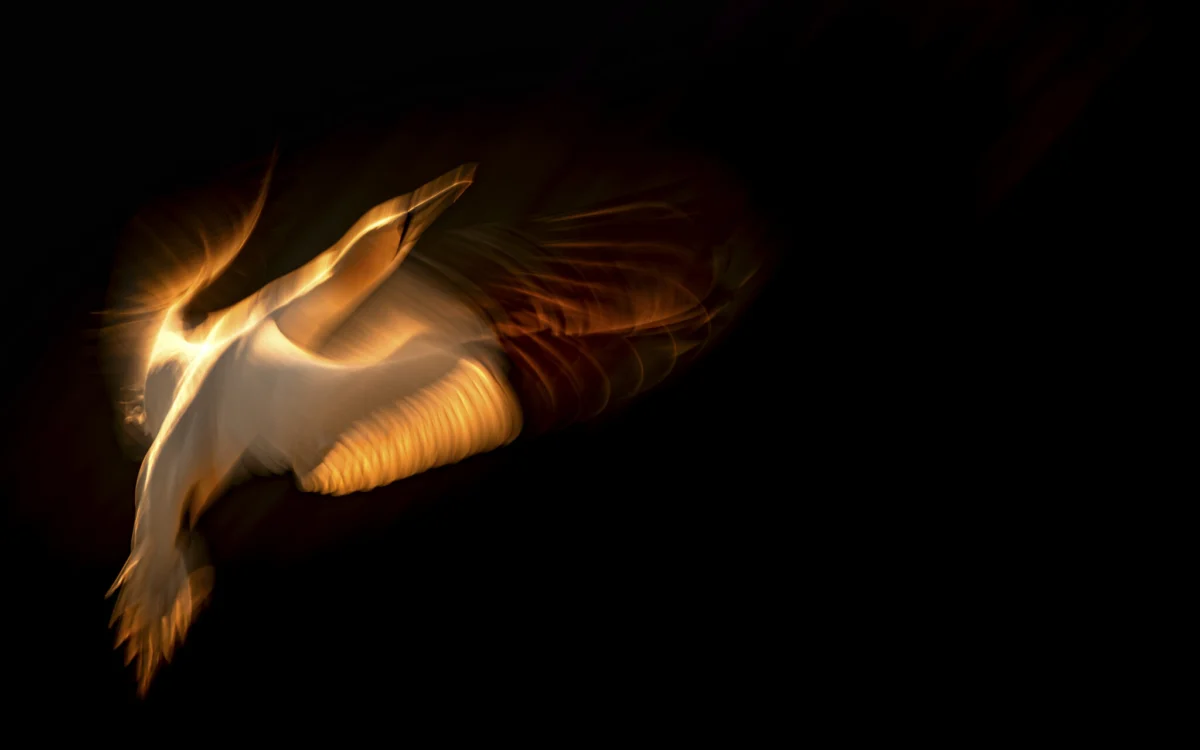
A transformative approach to wildlife photography, championed by artist Rachel Bigsby, is shifting the paradigm from mere documentation to profound emotional resonance, emphasizing "natural artistry" as a means to convey the deeper essence of the natural world. Bigsby’s philosophy posits that true wildlife photography transcends technical perfection, instead striving to capture the inherent drama, beauty, and authentic experience of being present with wild subjects, particularly seabirds. This perspective underscores photography as an act of witnessing and translating nature’s intricate language, rather than simply recording images.
The Philosophy of "Natural Artistry"
At the core of Bigsby’s methodology is the concept of "natural artistry," a term she uses to describe an inherent aesthetic quality in nature that photographers are tasked with revealing, not imposing. This contrasts sharply with traditional wildlife photography’s often rigid adherence to sharp focus, clean backgrounds, and textbook compositions. Bigsby argues that such pursuits, while technically proficient, can sometimes lead to images that are competent but ultimately forgettable, showing what a bird looks like but failing to convey what it is.

For Bigsby, natural artistry manifests in the fluid grace of a seabird riding the wind, the delicate interplay of light on feathers, the stillness preceding a dive, or the dynamic chaos of a bustling colony. It is not merely about capturing beauty, but the "essence" – the deeper narrative of a species expressed through a careful consideration of light, movement, texture, color, behavior, environment, and perspective. The ultimate goal is not to photograph seabirds as inanimate objects, but to evoke the visceral experience of being near them, allowing viewers to feel the scene. This artistic stance aligns with a growing movement within nature photography that seeks to connect audiences emotionally with environmental narratives, fostering empathy and a deeper appreciation for biodiversity.
A Lifelong Immersion in the Wild
Rachel Bigsby’s profound connection to the natural world predates her photographic journey, rooting deeply in childhood experiences and mentorship. Her late grandfather, a naturalist and fisherman, instilled in her not just observation skills but a profound sense of reverence for nature. He taught her to "truly see," emphasizing attention over mere factual accumulation. This early grounding was further solidified by her involvement with the Scout Association from age six, where weekends were spent navigating rugged trails, fostering an intimate relationship with the land until it ceased to be mere scenery and became a living companion.
Photography entered her life more subtly. An iPod camera became her first tool for small experiments, capturing the intricate patterns of dewdrops or the stark silhouette of a dandelion. This nascent interest deepened significantly with a pivotal encounter: observing a Northern Fulmar gliding effortlessly along cliffs. This moment sparked an intense curiosity, leading her to research the species and its connection to the legendary albatross, a creature of childhood dreams. From that point, seabirds transitioned from being a photographic subject to becoming the central axis of her world.

Her path to professional wildlife photography was characterized by dedication and hands-on experience. Saving for her first DSLR camera opened new horizons, leading to exploration of new species and colonies. Crucially, Bigsby embraced volunteering, exchanging labor for access to remote islands. This involved tasks ranging from scrubbing compost toilets and scything bracken to repairing weather-beaten structures. These periods of immersion, often extending from day work into dusk, provided invaluable time to observe and understand seabird behaviors, biology, and ecology without the immediate pressure to photograph. This deep, experiential knowledge forms the bedrock of her credibility, allowing her to anticipate and truly understand her subjects.
Beyond Technical Perfection: The Power of Emotion
Bigsby challenges the conventional wisdom that technical perfection defines a powerful wildlife photograph. She recounts a seminal experience with an image of an Atlantic Puffin in flight. Despite being "imperfect" by traditional standards—soft focus, slow shutter speed, cluttered background—the golden light piercing its delicate wings, combined with the blur of motion, created a "whisper of motion" that dissolved into atmosphere. This image, she notes, resonated deeply because it conveyed a feeling, not just a fact. It solidified her belief that photography is a medium for storytelling and emotion, not solely documentation.
The natural world, Bigsby argues, is rarely pristine or organized for human convenience. Seabirds are governed by the raw forces of weather, tide, hunger, fear, devotion, and instinct. Their lives are chaotic, fluid, and intensely alive, demanding an photographic approach that reflects this reality rather than imposing an artificial ideal. She describes a week volunteering on a fog-shrouded, rain-swept island, initially feeling disheartened by the "bad weather." However, this experience became a turning point. She realized the conditions were not a problem to overcome but an integral part of the birds’ existence. By embracing the fog as a "blank page" and the whiteness as a "canvas," she inadvertently developed a signature high-key imagery style, demonstrating that authentic response to the environment often yields the most meaningful results. This experience underscored that powerful images often emerge when photographers stop demanding specific conditions and instead become attuned to what is already present.

Elements of Natural Artistry: Light, Shape, Texture, Environment
Bigsby meticulously employs various photographic elements to evoke emotional depth:
- Light as Emotional Spine: For Bigsby, light is far more than a technical setting; it is the emotional core of an image. She recalls a morning in Shetland where the first light dramatically illuminated a single gannet lifting from shadow against a dark cliff, transforming it into a "brushstroke." This experience taught her that light is not merely clarity but drama and visible mood.
- Color as Emotional Tone: She uses color thoughtfully, prioritizing its ability to support the emotional tone of a scene. For example, the subtle, stormy tones of Northern Fulmars are often complemented by chalk-white cliffs or dark grey rock, allowing their inherent mood to resonate. When color distracts from the core message, she intentionally employs monochrome, directing attention to the fundamental elements of shape, light, and texture.
- Texture and Shape for Tangibility and Intent: Texture makes a photograph tangible, allowing viewers to almost feel the salt in the air. Shape provides intentionality, transforming wildlife into design through curves, arcs, symmetry, and contrast. These elements move the viewer beyond a simple recognition of the subject to an appreciation of the inherent aesthetic order in nature.
- Environment as Character: A critical aspect of her work is the integration of environment, which she views not as a mere backdrop but as an essential component of the subject’s character. A bird without context, she notes, is "just" an animal; a bird honestly placed within its world becomes a narrative of scale, struggle, intimacy, resilience, or fragility. This holistic approach acknowledges the complex realities of the natural world, including difficult truths where beauty and grief, life and loss, coexist. Her photography seeks to portray this complexity truthfully, respectfully, and intentionally.
Patience, Presence, and the Language of Birds
Bigsby emphasizes that patience in wildlife photography is not passive waiting but an informed anticipation derived from understanding behavior. This "language of birds" allows her to recognize patterns and cues, making the wild more readable and transforming photography from a game of chance into an act of intention. Countless hours spent observing seemingly ordinary actions—preening, shifting, calling, settling—reveal subtle signals that precede significant moments. This deep observation fosters a different relationship between photographer and subject, one of listening rather than merely taking.

Through this attentive presence, Bigsby is often gifted with intimate moments: reunion rituals, courtship exchanges, synchronized movements, or moments of unexpected softness amidst colony chaos. These are not merely behaviors but profound stories of devotion, endurance, and survival played out on the windswept edges of the world. Seabirds, in particular, symbolize freedom and resilience for Bigsby, sculpted by time and tide, inhabiting places that feel like the very edge of existence. Their presence, she explains, offers a sense of liberation.
Implications for Conservation and Artistic Expression
Bigsby’s approach carries significant implications for both environmental conservation and the broader field of artistic expression. By moving beyond purely scientific documentation, her "natural artistry" creates an emotional bridge between human audiences and the wild. In an era where biodiversity loss is a critical concern—with global seabird populations having declined by an estimated 70% since the mid-20th century, largely due to factors like climate change, pollution, and overfishing (as reported by studies in journals like PLOS ONE)—evoking empathy through art becomes a powerful tool for advocacy. Images that convey the feeling of a species’ existence are more likely to inspire protective action than those that simply catalog its form.
Furthermore, Bigsby’s work pushes the boundaries of wildlife photography as an art form. By prioritizing emotional impact, authenticity, and an acceptance of "imperfection," she joins a lineage of artists who have sought to interpret, rather than just represent, the natural world. This artistic evolution encourages other photographers to explore personal vision and emotional depth, fostering a more diverse and expressive photographic landscape. The message resonates within the photographic community that while technical proficiency provides the "scaffolding," it is the photographer’s unique perspective, feeling, and connection that infuse an image with soul.

An Invitation to Authentic Vision
Ultimately, Rachel Bigsby’s work serves as an invitation to a more authentic and heartfelt engagement with both photography and nature. She challenges the prescriptive "rules" often prevalent in the field, arguing that truly memorable images are born not from convention, but from honesty and emotional resonance. Her call is for photographers to create work that matters to them, even if it deviates from established expectations. The world, she contends, does not need more formulaic wildlife photographs, but rather images crafted with heart—photographs that educate through their inherent beauty and honor the wild by truthfully portraying its complexity.
Her concluding advice to fellow photographers encapsulates this philosophy: "Go gently. Look closely. Wait longer than you think you should. Let the weather shape the frame rather than ruin it. Photograph the world not only as it is, but as it feels. No one else sees like you do." This ethos champions individual vision, deep respect for subject, and an unwavering commitment to conveying the living, breathing essence of the wild, offering a powerful blueprint for the future of nature photography.
