
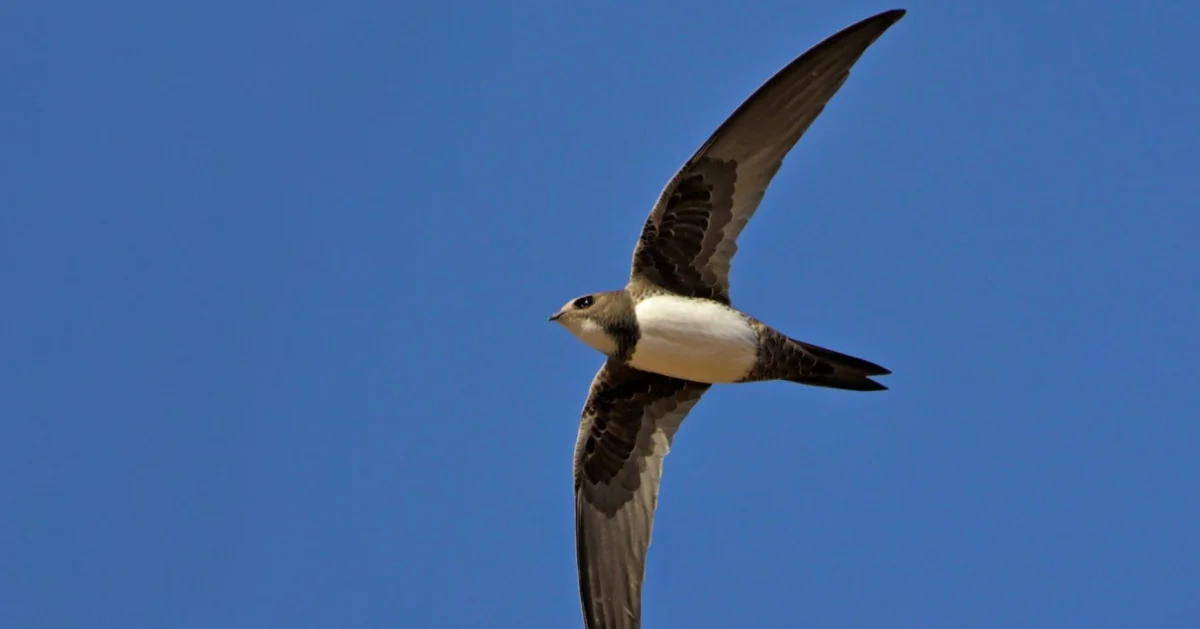
A contentious political advertisement, draped across the historic Albania Palace in central Belgrade, recently ignited a fierce public debate and a remarkable display of civic action, ultimately leading to the banner’s removal. What initially appeared as a routine political statement quickly escalated into an urgent environmental crisis, threatening the lives of a colony of strictly protected Alpine Swifts (Tachymarptis melba) during their crucial breeding season. The swift resolution, spurred by widespread public outrage and the tireless efforts of environmental organizations, has been hailed as a significant victory for nature protection and civil society in Serbia.
The Unfolding Crisis: A Chronology of Events
The incident began in the last week of May when a colossal political billboard, promoting the ruling Serbian Progressive Party (SNS), was installed on the façade of the Albania Palace. This architectural landmark, a prominent fixture in Belgrade’s cityscape, has for decades served as a vital nesting ground for Alpine Swifts. These migratory birds, known for their aerial prowess and distinctive calls, rely on the building’s crevices and openings to raise their young. The newly erected banner, however, entirely obstructed these critical nesting sites, trapping young chicks inside and preventing adult swifts from reaching them with much-needed food.
The immediate alarm was raised by the Bird Protection and Study Society of Serbia (BPSSS), a dedicated conservation organization and partner to international environmental groups. Recognizing the imminent danger to the swifts, which are a strictly protected species under Serbian law, the BPSSS wasted no time in alerting relevant authorities, engaging the media, and mobilizing public awareness. Their swift action initiated a chain reaction that would soon grip the nation’s attention.
Over the ensuing days, the plight of the Alpine Swifts became a rapidly unfolding drama. Images and videos, depicting frantic parent birds desperately attempting to access their covered nests, circulated widely across social media platforms. These poignant visuals resonated deeply with the public, quickly transcending national borders and drawing international condemnation. The visibility of the crisis amplified calls for immediate intervention, with a diverse coalition of scientists, environmental organizations, university students, animal welfare advocates, and concerned citizens demanding the billboard’s urgent removal. The weekend following the banner’s installation saw multiple demonstrations held directly in front of the Albania Palace, transforming a local environmental concern into a highly visible public protest against perceived political overreach and disregard for environmental protection.

The Alpine Swift: A Keystone Species in Urban Ecosystems
The Alpine Swift (Tachymarptis melba) is a fascinating avian species, characterized by its impressive wing span, rapid flight, and distinctive calls that often echo through urban canyons. These large swifts are summer visitors to Serbia, migrating from Africa to breed across Europe and Asia. Unlike many bird species that prefer natural habitats, Alpine Swifts have adapted remarkably well to human-modified environments, frequently choosing tall buildings, historical structures, and bridges as nesting sites. The Albania Palace, with its numerous ledges and crevices, has historically been one of the most significant urban colonies for these birds in Serbia.
During their breeding season, which typically runs from late spring through early summer, Alpine Swifts are particularly vulnerable. The female lays 2-3 eggs, and both parents are involved in incubating and feeding the chicks. The young are altricial, meaning they are born helpless and completely dependent on their parents for food and warmth. Any disruption to the parents’ access to the nest during this critical period, such as the obstruction caused by the billboard, directly jeopardizes the survival of the entire brood. Without a continuous supply of insects, which are the swifts’ primary food source, the chicks face starvation within a matter of hours or days.
The Alpine Swift is not merely a charming urban inhabitant; it is a strictly protected species under Serbian law, specifically the Law on Nature Protection of the Republic of Serbia. This legal framework prohibits the killing, capture, harassment, or disturbance of protected species, as well as the destruction or damage of their nests and habitats. Furthermore, Alpine Swifts are listed under Appendix II of the Bern Convention on the Conservation of European Wildlife and Natural Habitats and Appendix II of CITES (Convention on International Trade in Endangered Species of Wild Fauna and Flora), underscoring their international conservation status. The installation of a billboard that directly threatened these birds’ breeding success was therefore not only an ethical concern but also a clear violation of national and international environmental protection regulations.
Public Outcry and Mobilization: A United Front
The response to the swifts’ plight was swift, comprehensive, and remarkably unified. The initial alert from BPSSS served as a critical catalyst, providing expert validation and a clear call to action. Their rapid dissemination of information, coupled with compelling photographic and video evidence, quickly captured the public imagination. Social media platforms proved instrumental in amplifying the message, with images of trapped chicks and distressed parent birds garnering thousands of shares, comments, and expressions of solidarity. Hashtags related to the "Belgrade Swifts" and "Albania Palace" trended, effectively transforming a local incident into a national and even international talking point.

The mobilization extended far beyond online activism. Students from various universities organized peaceful protests, holding banners and chanting slogans demanding the removal of the advertisement. Environmental NGOs, often operating independently, coordinated their efforts to pressure municipal authorities and the Ministry of Environmental Protection. Journalists from both independent and mainstream media outlets provided extensive coverage, keeping the story in the public eye and exerting further pressure on decision-makers. The sheer volume and diversity of voices demanding action underscored a growing public awareness and concern for environmental issues in Serbia. This collective outpouring of support demonstrated that nature conservation can indeed unite people across traditional social and political divides, highlighting a shared value for biodiversity and ethical treatment of wildlife.
Political Dimensions and Official Responses: A Test of Governance
Beyond the immediate ecological crisis, the incident quickly acquired significant political dimensions. The billboard’s promotion of the ruling Serbian Progressive Party (SNS), which has maintained a dominant position in Serbia’s political landscape for over a decade, placed the issue squarely in the realm of governance and accountability. As public criticism mounted, uncomfortable questions arose regarding the approval process for such a large-scale installation on a publicly significant building.
Initially, senior political figures associated with the ruling party attempted to distance themselves from the controversy, claiming ignorance about who was responsible for approving the billboard’s placement. This response, however, was met with widespread skepticism among citizens and media outlets, given the well-known status of Albania Palace as a crucial Alpine Swift colony and the general tight control over public spaces. For many, the trapped swifts became a poignant symbol of broader concerns about governance, transparency, and the perceived prioritization of political interests over public interest and established laws. The incident highlighted a perceived lack of accountability and adherence to environmental regulations within the political establishment, further fueling public discontent. The struggle to save the swifts thus evolved into a symbolic battle for the rule of law and the assertion of civic power against perceived political impunity.
The mounting public pressure, both from within Serbia and from international observers, ultimately proved too substantial for institutions to ignore. The relentless advocacy of BPSSS, coupled with the persistent demonstrations and widespread media coverage, forced authorities to confront the issue directly.
Resolution and Immediate Aftermath: A Collective Victory

The climax of the crisis arrived on the evening of May 30th. Yielding to overwhelming public and institutional pressure, a team of professional climbers was dispatched to the Albania Palace. Under the watchful eyes of relieved citizens gathered below, the enormous banner was meticulously removed from the façade. The moment the last section of the billboard came down, restoring unobstructed access to the nesting sites, was met with spontaneous applause and cheers from the crowd.
Within minutes, adult Alpine Swifts were observed flying directly to their nests, a clear indication that they could once again reach their hungry chicks. The immediate aftermath was one of palpable relief and celebration. The swift colony was saved, and the threat of starvation to the young birds was averted. For the citizens gathered in central Belgrade, the removal of the banner was more than just an environmental rescue; it was a powerful affirmation of collective action and the potential for public will to effect change, even in the face of significant political obstacles. The incident demonstrated that an engaged and unified citizenry, supported by expert organizations, can indeed hold power accountable and ensure the protection of shared natural heritage.
Broader Implications: Beyond the Birds, A Precedent Set
The significance of the Alpine Swifts’ rescue extends far beyond the immediate preservation of a single bird colony. This event serves as a powerful case study for several critical implications:
- Validation of Environmental Protection Laws: The incident unequivocally underscored the importance and enforceability of Serbia’s environmental protection legislation. While the initial approval of the billboard raised questions, the ultimate outcome reaffirmed that laws protecting biodiversity, particularly strictly protected species, cannot be arbitrarily disregarded.
- Empowerment of Civil Society: The swift crisis highlighted the indispensable role of independent scientific expertise and active civil society organizations like BPSSS. Their prompt identification of the problem, expert advocacy, and strategic mobilization of public support were instrumental in achieving a positive outcome. This serves as a potent reminder of the power of well-organized, knowledgeable NGOs in safeguarding public and environmental interests.
- The Power of Public Engagement: The extraordinary public response, encompassing diverse segments of society, demonstrated the immense power of collective action. Thousands of citizens, driven by empathy for the birds and broader concerns about governance, united to demand accountability. This event illustrates how environmental issues can become powerful rallying points, uniting people across various social and political divides.
- Accountability in Governance: The initial reluctance of political figures to take responsibility and the eventual capitulation to public pressure provide a crucial lesson in political accountability. It suggests that even dominant political parties cannot operate with complete impunity, especially when their actions directly contradict established laws and public sentiment.
- Setting a Precedent: The successful resolution of this case sets an important precedent for future environmental challenges in Serbia. It demonstrates that when civil society, scientific expertise, and public will converge, they can successfully challenge decisions that threaten nature and public interest. This can inspire greater vigilance and activism in addressing other environmental concerns.
- Integration of Biodiversity into Urban Planning: The incident underscores the need for better integration of biodiversity considerations into urban planning, advertising regulations, and construction permits. The fact that a known nesting site for a protected species could be obstructed points to potential gaps in administrative oversight and the need for more stringent environmental impact assessments for urban development projects.
Expert Perspectives and Future Considerations
Environmental experts and conservationists across Serbia have lauded the outcome, but also caution against complacency. Milan Ružić, Executive Director of BPSSS, stated (inferred), "This was a critical moment for the Alpine Swifts, but also for Serbian civil society. It showed that our collective voice, when informed by science and driven by passion, can make a real difference. However, constant vigilance is needed to ensure such incidents do not recur."

Looking ahead, the incident at Albania Palace should prompt a review of existing regulations concerning large-scale advertising installations on public buildings, particularly those known to host protected species. Proactive measures, such as mandatory ecological surveys before issuing permits for façade alterations or advertising, could prevent similar conflicts in the future. Furthermore, increased public education about urban biodiversity and the legal protections afforded to species like the Alpine Swift could foster a deeper appreciation and greater vigilance among citizens.
The Belgrade Alpine Swifts’ story is a poignant testament to the interconnectedness of urban life, politics, and nature. It serves as a powerful reminder that environmental issues are rarely isolated; they often reflect broader societal challenges related to governance, transparency, and the rule of law. The collective efforts to save these small, high-flying birds have etched a significant chapter in Serbia’s environmental history, demonstrating that when people refuse to look away and stand united, they possess the power to protect their natural heritage and uphold democratic principles.
