
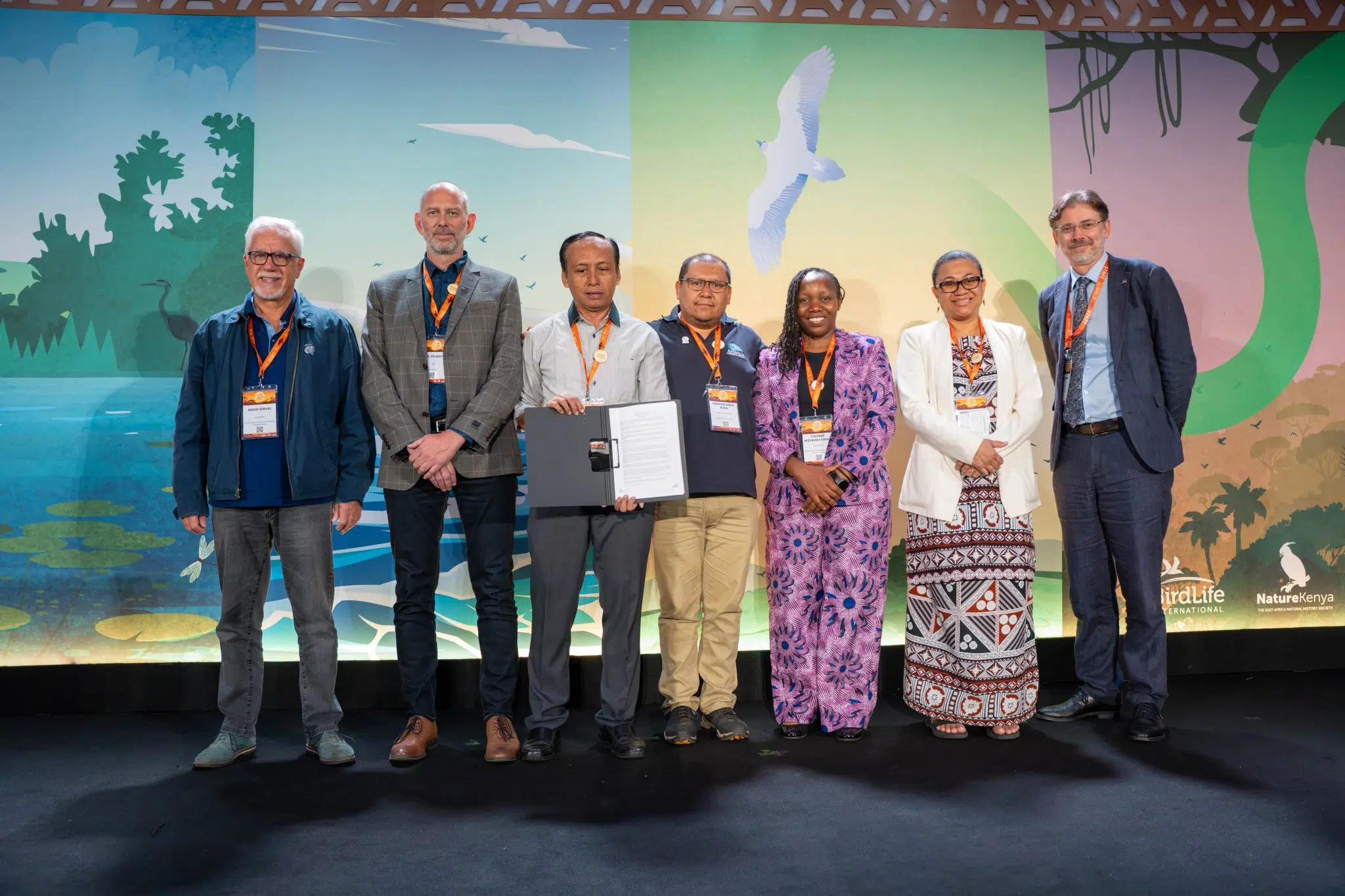
The Safari Park Hotel in Nairobi served as the epicenter of global conservation efforts from September 7–12, 2026, as BirdLife International hosted its quadrennial Global Partnership Meeting (GPM) alongside the inaugural Global Flyways Summit. The gathering, which brought together 125 national partners from around the world, marked a pivotal shift in how the international community approaches the protection of migratory species, moving from localized conservation efforts toward a more cohesive, flyway-scale strategy.

The event was characterized by a synthesis of high-level policy, scientific rigour, and a deeply human element, acknowledging that the survival of migratory birds is inextricably linked to the resilience of the communities along their routes.

The Chronology of a Global Movement
The week commenced with a strong emphasis on governance and strategic alignment. Nature Kenya, the continent’s oldest environmental society, acted as the primary host, setting a tone of local empowerment. On Wednesday, September 9, the Partnership officially adopted a refreshed strategy leading to 2030, a roadmap designed to prioritize high-impact interventions in an increasingly volatile global environment.

The afternoon of the first day provided a sensory highlight with the premiere of the Global Birdsong Initiative. This project, which involved capturing unique avian sounds from over 100 countries, was masterfully woven by musicians Tim Arinaitwe and Axel Wild into a rhythmic anthem that served as a sonic reminder of the global nature of the Partnership.

By Thursday, the agenda transitioned to thematic workshops. These sessions addressed critical contemporary challenges, including the integration of artificial intelligence in monitoring migratory patterns, the implications of the High Seas Treaty, and the essential role of community and Indigenous leadership in land stewardship. The atmosphere was one of urgent collaboration, as representatives from vastly different political and ecological landscapes sought consensus on complex issues like grassland management and forest financing.

The week culminated on Friday, September 11, with the formal launch of the Nairobi Flyways Declaration and the announcement of the Flyways Nature Bond Framework. This final day shifted the focus outward, engaging multilateral development banks and government representatives in a dialogue about the financial mechanisms necessary to support large-scale conservation.

Scientific Foundations and the State of the World’s Birds
Central to the week’s proceedings was the unveiling of the sixth edition of the "State of the World’s Birds" report, specifically focused on migratory species. The findings, presented by Chief Scientist Dr. Stuart Butchart, provided a sobering reality check for the delegates. The report assessed 1,843 migratory species and revealed that 45% are in decline. Perhaps most alarmingly, one in nine species is now threatened with extinction, with shorebirds and seabirds experiencing the most rapid population losses.

The data also highlighted the tragic loss of the Slender-billed Curlew, marking the first global bird extinction in mainland Eurasia and Africa in recent centuries. However, the report was not without glimmers of optimism. It provided evidence that conservation efforts yield results when sustained; for instance, the protection of key migratory sites has increased from 11% in 1980 to 49% today. The recovery of the European Turtle-dove, which saw a 47% increase in western Europe following a coordinated hunting moratorium, served as a case study for the effectiveness of cross-border cooperation.

Financial Innovation: The Flyways Nature Bond Framework
A defining moment of the Summit was the introduction of the Flyways Nature Bond Framework, a collaboration between BirdLife International, the National Audubon Society, and the Development Bank of Latin America and the Caribbean (CAF). This framework represents a significant advancement in environmental finance. By embedding bird science into the earliest stages of project selection, the initiative ensures that infrastructure projects—from renewable energy installations to urban development—are designed to be bird-friendly.

This methodology shifts the paradigm from reactive mitigation to proactive, science-led investment. Alicia Montalvo of CAF emphasized that such frameworks are essential for aligning economic development with the preservation of the natural systems that provide ecosystem services, such as carbon storage and flood mitigation. This mechanism aims to protect 10% of the populations of representative migratory bird species by 2050, demonstrating a long-term commitment to biological integrity.

The Nairobi Flyways Declaration
The Nairobi Flyways Declaration acts as the political cornerstone of the week. Signed by governments, international organizations, and civil society groups, the document formalizes the understanding that flyways are "connective tissue" that no single nation can manage in isolation.

The declaration mandates four specific objectives:

- Quantifying the value of flyways to both humanity and nature.
- Enhancing cross-border and cross-sector cooperation.
- Translating international environmental commitments into concrete national policy.
- Securing immediate, scalable funding for conservation at the flyway level.
The document’s significance lies in its inclusivity. By gathering signatures from Indigenous communities alongside multilateral banks, the declaration acknowledges that successful conservation requires a multi-stakeholder approach where economic, social, and ecological interests are aligned.

Broader Implications and Legacy
The legacy of the 2026 Nairobi gathering will likely be measured by the successful implementation of these frameworks. The commitment of a $10 million endowment by the Isdell Family Foundation in memory of Pamela Isdell underscores the vital role of private philanthropy in supplementing public and institutional funding. This endowment is specifically earmarked for critical habitat protection and the strengthening of grassroots leadership in Africa, ensuring that the work initiated in Nairobi persists long after the conference banners are removed.

Furthermore, the "Global Flyways" film series, a 21-country project produced in partnership with Content With Purpose, serves as a vital educational tool. By highlighting the human stories behind migration—from Cree elders in James Bay to farmers in Kagera—the project aims to build public support for the policies discussed during the Summit.

As delegates returned to their respective countries, the sentiment echoed by Honey Kohan remained the defining takeaway: the event was not an end in itself, but a necessary gathering at a "resting site" along a much longer journey. The consensus reached in Nairobi indicates that while the threats to migratory species are intensifying, the infrastructure—scientific, financial, and political—is finally being built to address these challenges at the required scale.

The success of the week rests on the ability of the BirdLife Partnership to maintain this momentum. As Dr. Lesley Dickie noted, saving flyways is a "moonshot" challenge, requiring constant vigilance and sustained action. For the 125 partners who departed Nairobi, the next four years will be defined by the transition from the commitments made in the Jambo hall to tangible improvements in the survival rates of the species that bridge the planet’s hemispheres.
