
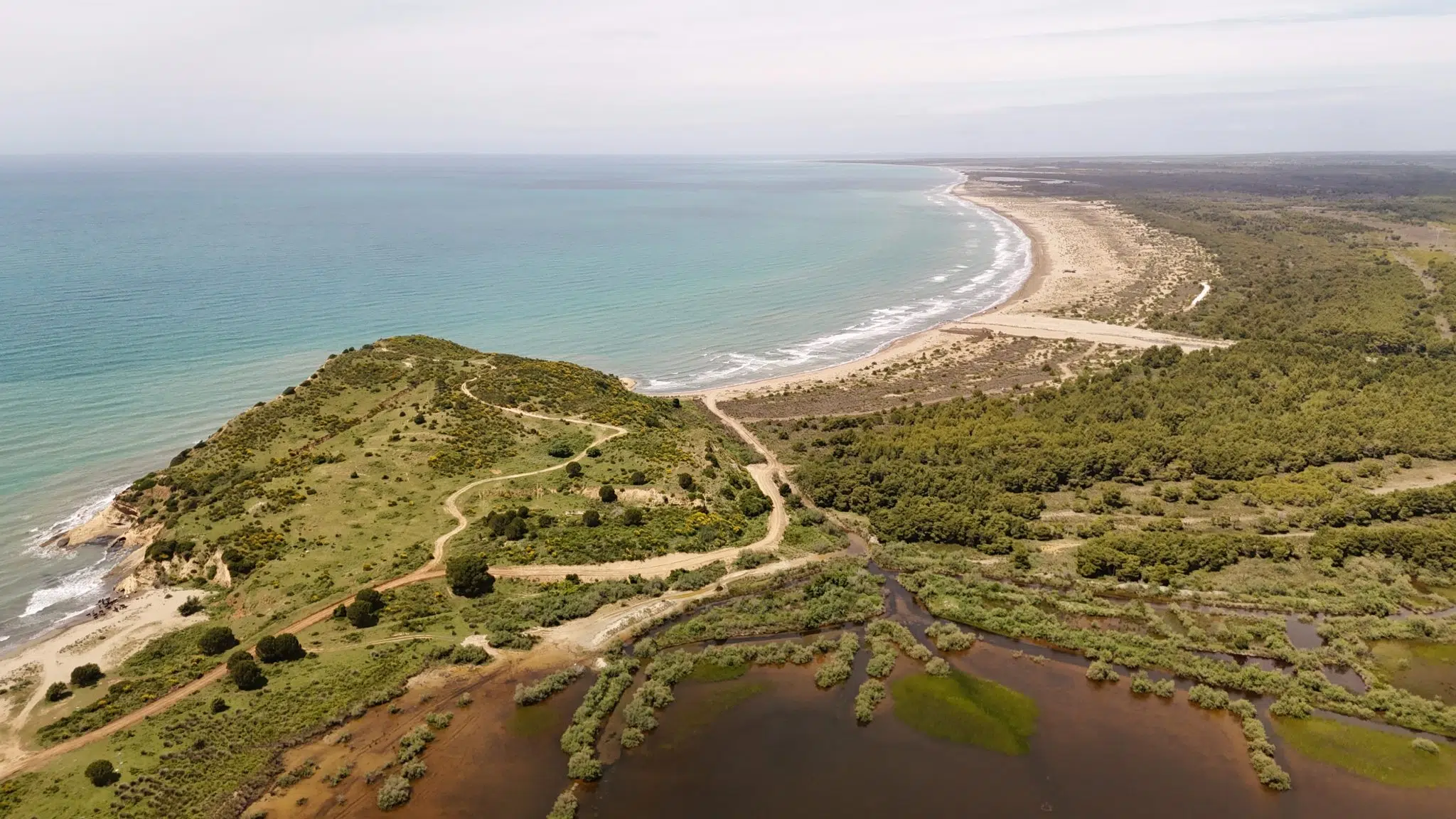
Since late April, one of Europe’s most ecologically vital coastal habitats, the Pishë Poro–Narta Protected Area within the Vjosa–Narte Protected Landscape, has been subjected to extensive and systematic destruction by heavy machinery. This devastating activity has proceeded without the requisite permits, devoid of an environmental impact assessment (EIA), and critically, under a veil of false explanations provided by the Albanian government to its parliament. The ongoing obliteration of this critical natural reserve, a key component of the Vjosa River delta, Europe’s last wild river, has drawn sharp condemnation from environmental organizations and ignited widespread public protests, raising profound questions about governance, the rule of law, and Albania’s commitment to its international environmental obligations and its aspirations for European Union membership.
The Ecological Catastrophe Unfolds
The Pishë Poro–Narta Protected Area is not merely a stretch of coastline; it is a biodiversity hotspot of global significance. This unique ecosystem shelters over 70 endangered species and more than 200 bird species, including iconic Flamingos and the critically endangered Dalmatian Pelicans. Its strategic location on the Adriatic Flyway makes it an indispensable migration corridor for millions of birds journeying between Africa and Europe annually. Beyond avian life, the surrounding marine waters serve as one of the last Mediterranean refuges for the Mediterranean Monk Seal, one of the world’s most imperiled marine mammals, and provide crucial nesting grounds for the Loggerhead Sea Turtle. According to PPNEA (Protection and Preservation of Natural Environment in Albania), BirdLife International’s Albanian Partner, the scale of destruction witnessed is unprecedented, representing the worst ever recorded within Albania’s protected areas.
The ecological damage inflicted is severe and, in many instances, already irreversible. Ancient sand dunes, which are formally designated as Natural Monuments under Albanian law, have been obliterated by vast quantities of dumped gravel. Scientists estimate that the repair and natural restoration of these delicate formations could take hundreds of years, if ever fully possible. Furthermore, the construction activities have physically blocked one of the two vital openings connecting the Narta Lagoon to the sea. This blockage has effectively severed the natural tidal exchange, triggering immediate and cascading negative consequences for the lagoon’s delicate ecosystem. Fish populations, dependent on these tidal movements for breeding and feeding, are directly impacted, leading to a ripple effect that threatens bird species and, ultimately, the entire food chain within the lagoon. Environmental experts warn that every day this blockage persists, the damage deepens, pushing the ecosystem closer to a point of no return.
A Priceless Ecosystem Under Threat: The Vjosa River Delta
The Vjosa–Narte Protected Landscape is intrinsically linked to the Vjosa River, often hailed as Europe’s last wild river. Spanning over 270 kilometers from Greece to the Adriatic Sea, the Vjosa flows unimpeded, its natural course and untouched floodplains supporting an extraordinary array of flora and fauna. Its delta, where it meets the Adriatic, forms the Pishë Poro–Narta area, a mosaic of lagoons, wetlands, sand dunes, and coastal forests. This area is recognized under Albanian law as a Protected Landscape and holds international designations, including being a Ramsar site (a wetland of international importance) and a candidate Natura 2000 site, highlighting its critical role in European biodiversity conservation. The pristine nature of the Vjosa and its delta stands in stark contrast to the vast majority of European rivers, which have been dammed, channelized, or otherwise altered by human activity. The destruction occurring here therefore represents not just a local tragedy but a loss of immense continental significance, jeopardizing a natural heritage that scientists and conservationists have fought for decades to preserve. The area’s status as a critical stopover on the Adriatic Flyway further underscores its irreplaceable role in global avian migration patterns, making its degradation a matter of international concern.
The Regulatory Labyrinth: Permits, EIAs, and Legal Amendments
The core of the controversy lies in the blatant disregard for established legal and environmental protocols. Construction has proceeded without any public permits and, crucially, without an Environmental Impact Assessment (EIA). An EIA is a fundamental requirement under both Albanian law and international conventions, designed to evaluate the potential environmental consequences of a proposed project before it commences, allowing for mitigation strategies or, if impacts are too severe, project rejection. The absence of such an assessment in a designated protected area is a grave violation of environmental governance.
Further compounding the issue, the Albanian government amended the Law on Protected Areas in February 2024. This legislative change significantly weakened environmental safeguards, effectively opening the door for luxury resort construction in zones that had previously enjoyed strict protection. Critics argue that this amendment was a deliberate move to facilitate large-scale tourism developments at the expense of environmental preservation, directly undermining the spirit and letter of national and international conservation commitments. The timing of the destruction, immediately following this legislative change, suggests a calculated effort to exploit the relaxed regulations, bypassing due process and public scrutiny.
Albania is a signatory to numerous international environmental agreements, including the Bern Convention on the Conservation of European Wildlife and Natural Habitats and the Ramsar Convention on Wetlands of International Importance. The actions observed at Vjosa-Narta directly contravene the principles and obligations enshrined in these treaties, tarnishing Albania’s international reputation and raising questions about its credibility as an aspiring EU member state.
The Shadow of Luxury Development: A Controversial Connection
The unfolding environmental disaster at Pishë Poro–Narta is directly linked to ambitious luxury resort development plans. Notably, a project backed by Jared Kushner, son-in-law to former US President Donald Trump, has been publicly associated with the area. While Kushner and his wife Ivanka Trump have revealed plans to transform the uninhabited island of Sazan into an elite tourist destination, the Albanian Prime Minister Edi Rama has confirmed that the ongoing construction at Vjosa-Narta is directly connected to broader development ambitions in the region. This connection adds a layer of international scrutiny and political complexity to the issue, as foreign investment in high-profile projects often carries significant political weight and influence within host countries. The perception that powerful international figures are benefiting from, or are associated with, environmentally destructive practices in a protected area has fueled public outrage and intensified calls for accountability. The promise of economic growth through high-end tourism often clashes with the imperative of environmental protection, particularly in developing nations where regulatory frameworks may be weaker or more susceptible to political pressure.
Government Responses and Public Outcry
When pressed in parliament regarding the unpermitted construction, the Albanian government offered a highly questionable explanation. Officials claimed that the blockage of the Narta Lagoon’s opening was necessary to build a road for "environmental surveying." This justification is widely disputed by observations on the ground, which reveal extensive construction activities inconsistent with mere surveying and clearly aimed at large-scale infrastructure development. This apparent attempt to misrepresent the facts to the legislature further erodes public trust and raises concerns about governmental transparency and accountability.
In response to the escalating destruction and perceived governmental deception, Albanian citizens have mobilized. Thousands have taken to the streets of Tirana, the capital, in peaceful protest, demanding an immediate halt to the devastation and the protection of their natural heritage. However, these peaceful demonstrations have reportedly been met with violence, and public access to the coastline has been physically blocked by barbed wire. This suppression of dissent and restriction of public access to what should be shared natural resources further underscores the contentious nature of the development and the government’s determination to push it through. The protests are a clear manifestation of a growing environmental consciousness within Albanian civil society and a deep-seated frustration with the perceived prioritization of private profit over public good and ecological integrity.
A Chronology of Contention
- February 2024: The Albanian government amends the Law on Protected Areas, significantly weakening protections and allowing for luxury resort development in previously strictly safeguarded zones. Environmental groups warn of the severe implications.
- Late April 2024: Heavy machinery begins operating within the Pishë Poro–Narta Protected Area, initiating extensive construction activities, including the dumping of gravel on sand dunes and the blocking of the Narta Lagoon’s sea connection. These activities proceed without public permits or an Environmental Impact Assessment.
- May-June 2024: Environmental organizations, notably PPNEA and BirdLife Europe, raise alarm, documenting the destruction and highlighting its unprecedented scale and severe ecological consequences. They issue urgent calls for intervention.
- Ongoing: Public protests erupt in Tirana and other parts of Albania, with thousands demonstrating against the destruction. Peaceful protestors reportedly face violence, and public access to the affected coastline is restricted by barbed wire.
- Ongoing: The Albanian Prime Minister Edi Rama confirms a direct connection between the construction and broader luxury resort development plans, including those associated with Jared Kushner.
- Ongoing: The Albanian government, when questioned in parliament, provides explanations that are contradicted by on-the-ground observations, claiming the construction is for "environmental surveying."
Voices from the Frontlines: Environmental Advocates Speak Out
Anouk Puymartin, Head of Policy at BirdLife Europe and Central Asia, articulated the gravity of the situation: "Barbed wire cannot silence people. Thousands have taken to the streets of Tirana to defend Vjosa-Narta from destruction driven by private profit. A protected landscape of global importance is under attack, and people are demanding an end to the devastation. Nature belongs to everyone, not a handful of investors. The horrendous situation in Vjosa-Narta shows why laws are crucial to protect both people and nature. But those protections mean little if governments fail to uphold them." Her statement emphasizes the universal right to nature and the critical failure of governance.
Aleksandr Trajçe, Director of PPNEA, expressed profound concern about the long-term implications: "By the time the law on protected areas is brought back in line with EU standards, we fear that very little will remain to be protected. What is happening here is unprecedented. We have never seen anything like this in Albania’s protected areas." Trajçe’s words highlight the urgency of the situation, suggesting that irreversible damage may occur before regulatory frameworks can be reformed or enforced. The fear is that the "protection" offered by law will become a hollow promise if the ecosystems they are meant to safeguard are already destroyed. These voices collectively underscore a deep frustration with the government’s actions and a determination to resist the ecological degradation.
Broader Implications: Rule of Law, EU Aspirations, and International Scrutiny
The events unfolding at Vjosa-Narta carry profound implications extending far beyond environmental damage. They represent a significant challenge to the rule of law in Albania, demonstrating a willingness by the government to circumvent its own regulations and international commitments. The lack of permits, the absence of an EIA, and the alleged provision of false information to parliament are serious breaches of democratic governance and transparency.
For Albania, an official candidate for European Union membership, these actions pose a substantial obstacle to its integration process. Adherence to EU environmental acquis – the body of common rights and obligations that are binding on all EU member states – is a fundamental requirement for accession. The systematic destruction of a protected area, especially one with international designations, directly contradicts the core principles of EU environmental policy, including the Birds and Habitats Directives and the Natura 2000 network. The EU places a high premium on robust environmental governance, transparent decision-making, and public participation in environmental matters. The suppression of peaceful protests and the disregard for legal procedures at Vjosa-Narta send a concerning signal to Brussels about Albania’s commitment to these values.
International scrutiny is mounting, with environmental organizations appealing directly to the European Commission. The credibility of Albania’s environmental protection framework, its commitment to international conservation agreements, and its democratic practices are all under assault. The perception that powerful international investors can operate with impunity, bypassing environmental safeguards, risks deterring responsible investment and damaging Albania’s global standing. The conflict also highlights a global tension between economic development and environmental conservation, particularly in regions rich in biodiversity but economically developing.
Calls for Action and the Path Forward
BirdLife Europe and Central Asia, along with its partners, is issuing an urgent call to Albanian institutions to:
- Immediately halt all illegal construction activities in the Pishë Poro–Narta Protected Area.
- Initiate a comprehensive and transparent investigation into the violations of environmental laws and regulations.
- Hold accountable all individuals and entities responsible for the destruction.
- Reinstate and strengthen the Law on Protected Areas to align with EU standards and international best practices.
- Ensure the protection of peaceful protestors and uphold citizens’ rights to public access and expression.
Furthermore, BirdLife Europe and Central Asia is calling on the European Commission to unequivocally state that the destruction of a protected habitat, the repression of peaceful protest, and the provision of false information to parliament are incompatible with the fundamental requirements for EU membership. The European institutions, with their significant leverage, have a clear responsibility to act decisively.
Albania’s wild coast, its commitment to the rule of law, and its citizens’ fundamental right to protest are all currently under severe assault. The international community, particularly the European Union, must now demonstrate that it has both the leverage and the moral responsibility to intervene and ensure that environmental protection and democratic principles are upheld in a region striving for European integration. The future of Vjosa-Narta, and indeed Albania’s environmental legacy, hangs precariously in the balance.
