
Last week, a seemingly routine political advertisement transformed into a potent symbol of environmental negligence and a catalyst for widespread public mobilisation in Belgrade. A massive billboard, promoting the ruling Serbian Progressive Party (SNS), was installed on the historic façade of the Albania Palace, a prominent landmark in the heart of the Serbian capital. What initially appeared to be standard political messaging quickly escalated into an urgent ecological crisis when it became clear that the installation directly obstructed the nesting sites of Alpine Swifts (Tachymarptis melba), a species strictly protected under Serbian law. During their critical breeding season, the barrier prevented adult swifts from reaching their vulnerable chicks, leaving them desperate for food and facing imminent starvation. This incident rapidly transcended a simple environmental concern, evolving into a broader discourse on governance, accountability, and the power of civil society in Serbia.
The Unfolding Crisis: A Threat to Protected Life
The Albania Palace, an architectural icon of Belgrade, has for years served as a vital urban sanctuary for one of the city’s most significant colonies of Alpine Swifts. These magnificent migratory birds, known for their impressive aerial acrobatics and distinctive calls, typically arrive in Serbia in late spring to breed, utilising the crevices and openings of tall buildings as their nesting grounds. The breeding season, which usually spans from May to August, is a delicate period when both parent birds tirelessly forage for insects to feed their rapidly growing young. Any obstruction to their nests during this time can have catastrophic consequences for the survival of the chicks and, by extension, the local population.
The installation of the billboard, covering numerous such openings, was a direct and immediate threat. Images and videos soon emerged, depicting adult swifts frantically attempting to navigate the enormous banner, their desperate efforts to reach their trapped offspring a poignant testament to the unfolding tragedy. The Alpine Swift, Tachymarptis melba, is afforded stringent protection under the Law on Nature Protection of the Republic of Serbia, which prohibits the disturbance, injury, or killing of these birds and the destruction of their nests. This legal status underscores the national importance of their conservation and the severity of the billboard’s impact. Beyond national legislation, Serbia, as a signatory to international conventions like the Bern Convention on the Conservation of European Wildlife and Natural Habitats, is obligated to protect such species. The obstruction of nesting sites for a strictly protected species represents a clear violation of these commitments.

A City Mobilizes: The Role of Civil Society and Public Engagement
The gravity of the situation was immediately recognised by the Bird Protection and Study Society of Serbia (BPSSS), a leading non-governmental organisation dedicated to ornithological research and conservation. Upon discovering the blocked nests, BPSSS promptly alerted relevant authorities, initiated a public information campaign through various media channels, and leveraged social media to highlight the plight of the swifts. Their rapid response proved pivotal in transforming a local incident into a national and even international cause.
The public’s reaction was swift and overwhelming. Within hours of the initial alerts, a broad coalition of stakeholders began to form. Scientists offered expert opinions on the ecological damage, environmental organisations mobilised their networks, students joined the chorus of protest, and animal welfare advocates decried the cruelty. Journalists, sensing the unfolding drama and its broader implications, provided extensive coverage, amplifying the calls for action. Crucially, thousands of ordinary citizens, moved by the images of distressed parent birds and trapped chicks, joined the movement. Social media platforms became a powerful conduit for disseminating information, with videos of swifts struggling against the billboard going viral and drawing attention from beyond Serbia’s borders. The incident resonated deeply with a public increasingly concerned about environmental degradation and perceived governmental indifference.
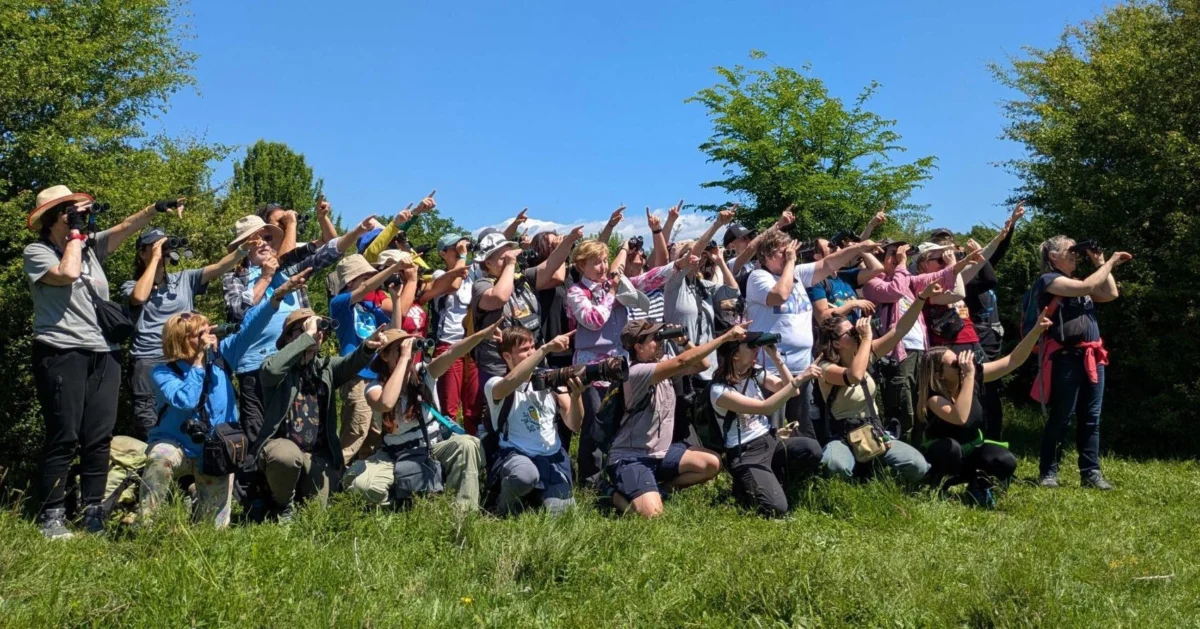
Over the course of a single weekend, the collective outrage translated into tangible action. Multiple demonstrations were organised spontaneously in front of the Albania Palace, with protesters demanding the immediate removal of the banner. These gatherings, characterised by a mix of environmental activism and broader civic discontent, served as a powerful visual representation of public sentiment, putting immense pressure on decision-makers.
Chronology of Confrontation and Resolution
The events unfolded rapidly, illustrating the escalating tension between environmental protection and political messaging:

- Early Last Week (Approx. May 20-24): A large political billboard, promoting the ruling Serbian Progressive Party (SNS), is installed on the façade of the Albania Palace in central Belgrade. The exact date of installation is not widely publicised but occurs in the days leading up to the public outcry.
- Mid-Week (Approx. May 25-26): Members of the Bird Protection and Study Society of Serbia (BPSSS) discover that the billboard covers numerous openings used as nesting sites by Alpine Swifts, which are currently in their critical breeding season. BPSSS immediately alerts relevant authorities, including environmental inspectorates and urban planning departments, and launches a public awareness campaign through local media and social media platforms. Initial reports highlight the immediate danger to swift chicks, unable to receive food from their parents.
- Late Week (Approx. May 27-28): The story gains significant traction across Serbian media outlets and rapidly spreads on social media. Images and videos of distressed adult swifts attempting to reach their nests behind the billboard go viral, sparking widespread public outrage. Environmental organisations, animal welfare groups, and prominent individuals issue statements condemning the action and demanding the billboard’s removal.
- Weekend of May 29-30: Public pressure intensifies dramatically. Thousands of citizens, galvanised by the plight of the birds, gather for multiple demonstrations in front of the Albania Palace. These protests draw significant media attention and serve as a focal point for broader concerns about environmental protection and governmental accountability. International media also begin to pick up the story, highlighting the unique nature of the protest and its ecological urgency.
- Monday, May 30th (Evening): Faced with overwhelming public condemnation, national and international scrutiny, and persistent calls from civil society, authorities finally yield. Climbers are dispatched to the Albania Palace façade. Under the watchful eyes of a gathered crowd, the giant banner is meticulously removed, piece by piece.
- Immediate Aftermath: As the billboard comes down, adult swifts are observed immediately flying to their previously obstructed nests, resuming the vital task of feeding their young. Citizens gathered in the centre of Belgrade erupt in applause and relief, celebrating not only the rescue of the swift colony but also a significant victory for collective action and environmental advocacy.
Beyond the Birds: Political Undercurrents and Governance Concerns
While the immediate crisis concerned the welfare of a protected bird species, the incident quickly broadened into a more significant political and social narrative. The billboard’s promotion of the ruling Serbian Progressive Party (SNS), which has maintained a dominant position in Serbia’s political landscape for over a decade under President Aleksandar Vučić, placed the issue firmly within the realm of governance and accountability.
The Albania Palace itself is not merely a building; it is a historical and architectural landmark, one of Belgrade’s first skyscrapers, built in the 1930s. Its prominent location and historical significance made it an unusual choice for a large-scale political advertisement, especially given its well-known status as an Alpine Swift colony. As public criticism mounted, pointed questions arose about the approval process for such an installation. Who authorised it? Was an environmental impact assessment conducted? Were regulations regarding protected species considered?
The initial responses from some senior political figures, claiming ignorance regarding who was responsible for the billboard’s installation, were met with widespread scepticism and indignation by the public. For many citizens, this perceived lack of transparency and accountability from the ruling party became a flashpoint. The trapped swifts, in this context, transformed into a powerful symbol, representing broader concerns about the erosion of the rule of law, the disregard for public interest in favour of political expediency, and the perceived impunity of those in power. The incident highlighted a public frustration with governance that seemed detached from citizens’ everyday concerns and legal frameworks.
Legal Frameworks and Environmental Protection in Serbia
Serbia possesses a legal framework designed to protect its natural heritage, including strictly protected species like the Alpine Swift. The Law on Nature Protection (Zakon o zaštiti prirode) is the primary legislative instrument, complemented by various bylaws and regulations. These laws are intended to safeguard biodiversity, prevent habitat destruction, and ensure sustainable use of natural resources. Critically, Article 88 of the Law on Nature Protection explicitly prohibits activities that could harm strictly protected species or their habitats, including disturbance of nests during breeding season. Violations can lead to significant fines and even criminal charges.

Furthermore, as a candidate country for European Union membership, Serbia is in the process of harmonising its legislation with the EU acquis, including the Birds Directive (Directive 2009/147/EC on the conservation of wild birds). This directive mandates stringent protection for all wild bird species naturally occurring in the EU territory, particularly during their breeding and rearing periods. The incident at Albania Palace underscored the critical need for effective enforcement of existing laws and proactive measures to prevent such environmental infractions, especially by state or state-affiliated entities. The fact that a political party’s advertisement could be installed in such a manner, seemingly without proper permits or environmental checks, raised serious questions about the integrity of urban planning processes and environmental oversight within Belgrade and Serbia at large.
The Power of Collective Action: A Victory for Nature and Civil Society
The successful removal of the billboard on May 30th was more than just the rescue of a single bird colony; it represented a profound victory on multiple fronts. It powerfully demonstrated the critical importance of independent scientific expertise, exemplified by the prompt action of BPSSS in identifying the threat and mobilising data. It showcased the indispensable role of active civil society organisations in monitoring environmental compliance and advocating for nature. Most significantly, it underscored the immense power of public involvement and citizen activism.
The incident at the Albania Palace proved that environmental issues possess a unique ability to unite people across various social, economic, and political divides. The plight of the Alpine Swifts resonated with a diverse cross-section of Serbian society, bringing together environmentalists, academics, students, and ordinary citizens who might otherwise hold differing political views. This collective refusal to "look away" from an injustice, even one concerning wildlife, created an irresistible force that compelled institutions to act where initial bureaucratic inertia or political considerations might have led to prolonged inaction. The applause and relief that greeted the billboard’s removal were not just for the birds but for the affirmation of civic power and the principle that public interest, including environmental protection, should prevail over narrow political or commercial interests.
Future Implications and Lessons Learned
The events surrounding the Albania Palace billboard offer crucial lessons for Serbia and beyond. Firstly, they highlight the necessity for stricter enforcement of existing environmental protection laws and urban planning regulations. Permitting processes for large-scale installations, particularly on historic buildings or in areas known for biodiversity, must incorporate rigorous environmental impact assessments and consultations with relevant expert bodies. This pre-emptive approach could prevent similar conflicts in the future.

Secondly, the incident reaffirmed the vital role of a vigilant and active civil society. Non-governmental organisations, backed by scientific expertise and grassroots support, serve as essential watchdogs, holding authorities accountable and giving voice to environmental concerns that might otherwise be overlooked. Strengthening these organisations and ensuring their operational independence is paramount for democratic governance and environmental sustainability.
Finally, the Belgrade swift crisis serves as an inspiring example of how sustained public pressure can lead to positive change. It underscores that when citizens are informed, mobilised, and united by a common cause, they possess the agency to influence policy, challenge perceived abuses of power, and ultimately protect their shared natural heritage. The Alpine Swifts of Albania Palace not only survived thanks to human intervention but also became an unlikely symbol of a society demanding greater accountability, transparency, and respect for both nature and the rule of law. The challenge now lies in translating this singular victory into systemic improvements that ensure such conflicts are prevented rather than merely reacted to in the future.
