
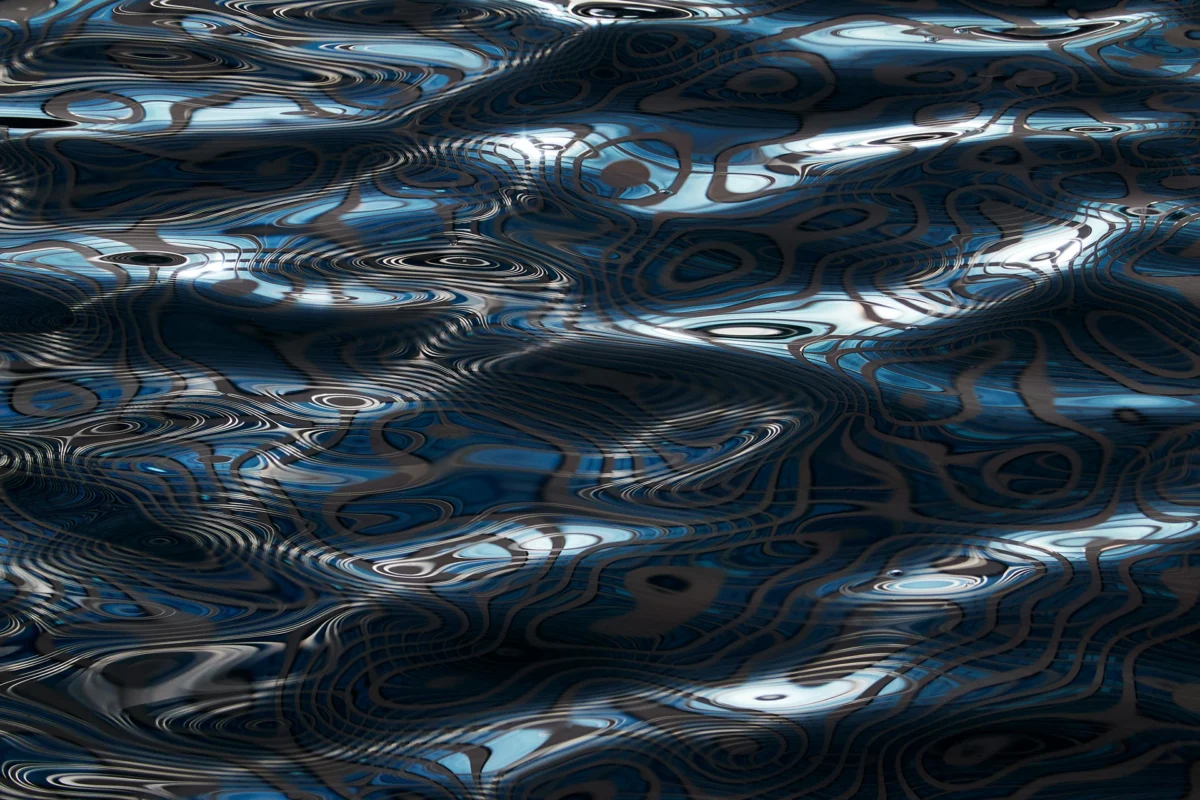
For more than a decade, a single square mile of water and towering architecture within London’s Canary Wharf financial district has served as an unlikely laboratory for abstract nature and urban photography. What began as an exercise in localized observation has matured into an acclaimed, multi-volume body of work titled Fleeting Reflections. Created entirely in-camera through the interplay of natural light, glass facades, steel structures, and the shifting surface of the docks, the project challenges conventional assumptions about where compelling nature and abstract photography can be produced. In an era dominated by digital manipulation and the pursuit of remote, exotic landscapes, this protracted undertaking demonstrates that profound artistic output often relies less on geographical distance and more on structural pillars: accessibility, repeatability, and deep-seated patience.

The Anatomy of the Craft and the Rejection of Digital Trickery
When observers encounter images from the Fleeting Reflections series for the first time, the immediate assumption is frequently that the vibrant, painterly compositions are the product of heavy digital editing suites such as Adobe Photoshop. The reality, however, is grounded strictly in traditional photographic principles captured in real time. The visual elements—ranging from fluid ribbons of color to sharp, fractured geometries reminiscent of waveform art—are the result of light bouncing off towering office blocks, breaking across undulating water surfaces, and recorded directly through the camera lens.
Technical execution involves a combination of single frames and carefully orchestrated in-camera multiple exposures. High-speed burst rates are frequently utilized to freeze micro-moments of fluid dynamics before surface tension collapses. Post-processing is intentionally restricted to global adjustments in software like Capture One—such as levels, clarity, sharpness, and contrast—avoiding any synthetic manipulation of shapes. This methodological constraint is both philosophical and aesthetic, serving to preserve the unvarnished truth of an urban-natural ecosystem in motion.

Chronology and Project Evolution: A Ten-Year Timeline
The genesis of Fleeting Reflections can be traced back more than ten years, arising from the photographer’s routine proximity to the London docks. Rather than launching with a definitive commercial goal, the initiative developed organically through a protracted timeline of experimentation and refinement:
- 2010–2016: The formative phase. Years of localized, repetitive visits to Canary Wharf spent observing how varying weather conditions—from hard midday sun to persistent drizzle—altered the visual characteristics of the water. During this period, the methodology of relying on in-camera multiple exposures and high-frame-rate captures was thoroughly tested and refined.
- 2017: The release of the debut monograph, Fleeting Reflections, published by Triplekite Publishing, marking the formal transition of the private project into the public sphere. This milestone was accompanied by a prominent solo exhibition at the Greenwich Gallery in London.
- 2019: Expansion of the project’s public footprint through an exhibition at the Anise Gallery in London, drawing critical attention from contemporary art and photography critics who praised the blurring lines between urban architecture and fluid abstraction.
- 2023: The publication of the second volume, Fleeting Reflections II, consolidating the decade-long study and demonstrating the enduring capacity of a single geographic location to yield novel artistic perspectives.
Pillar One: Accessibility over Remote Exploration
A prevailing myth within contemporary nature photography posits that impactful imagery requires travel to distant, untouched, or dramatic wilderness areas. The Fleeting Reflections project directly refutes this premise. By focusing exclusively on a localized urban environment—the docks surrounding Canary Wharf—the creator eliminated the logistical burdens of long-distance transit, permits, specialized expedition gear, and rigid scheduling.

Geographic accessibility enables frequency of contact. Being able to reach a subject within minutes allows a photographer to visit during unconventional hours, inclement weather, or periods dismissed by conventional standards as poor lighting conditions. Rain transforms the water’s surface into the visual equivalent of hammered metal; high winds fracture structural reflections into abstract linear patterns. Without physical accessibility, building the intimate familiarity necessary to see past obvious, postcard-style compositions remains statistically improbable.
Pillar Two: Repeatability and the Behavior of Light
The concept of repeatability forms the second foundational element of the work. It requires selecting a subject that resists static categorization, continuously changing and offering new compositional possibilities upon every subsequent visit.

The London docks provide this dynamic variability in abundance. Calm mornings yield elongated, glassy pools of muted color. Gusty afternoons shatter the mirrored office towers into jagged lines, while passing maritime traffic smears reflections into hand-drawn gestures. Furthermore, transient chemical phenomena, such as microscopic traces of diesel creating brief iridescent interference patterns on the water, introduce unrepeatable anomalies that reward persistent observation.
Rather than treating the architecture as a static backdrop, the project treats the water-surface ecosystem as a living behavioral subject. This endless variability allows a creator to photograph the seemingly identical physical location thousands of times while continuously producing entirely novel visual data.

Pillar Three: Patience as an Active Methodology
Patience in professional photography is frequently mischaracterized as a passive virtue—the simple act of waiting for a desired weather window. In the context of the Fleeting Reflections body of work, patience is defined as an active, physically demanding discipline.
Field sessions frequently extend up to four hours at a single vantage point, during which a photographer may capture upwards of 3,000 individual frames of what a casual passerby perceives as an unchanging scene. The objective is to remain present for the fractional second when color, rhythm, structural tension, and fluid dynamics spontaneously align.

This rigorous discipline extends directly into the post-production workflow. Reviewing thousands of nearly identical source files requires ruthless selectivity. The rejection rate for the project is exceptionally high, ensuring that only frames meeting strict aesthetic and philosophical thresholds are selected for final presentation. The resulting portfolio stands not merely as a collection of pleasant images, but as documented evidence of sustained attention and rigorous self-editing.
Broader Implications and Industry Analysis
The success and critical reception of the Fleeting Reflections series offer several broader lessons for the contemporary photographic community. As digital camera technology becomes increasingly democratized and sophisticated, technical perfection is no longer a differentiator. Instead, artistic distinction increasingly relies on depth of vision, conceptual rigor, and sustained engagement with a specific subject matter.

Art critics and photography educators have noted a growing fatigue with "bucket-list" landscape photography—images captured hurriedly by visiting photographers aiming to replicate known social media viewpoints. Projects like Fleeting Reflections point toward a sustainable alternative: micro-geography. By demonstrating that profound artistic expression can be extracted from ordinary, highly accessible environments, the work encourages practitioners worldwide to look closer to home, fostering deeper connections with local ecosystems, urban spaces, and everyday natural phenomena.
Ultimately, the enduring legacy of the Canary Wharf dock project lies in its inversion of traditional photographic values. It illustrates that masterpieces do not require the ends of the earth; rather, they require the deliberate application of time, a willingness to listen to an environment through repeated visits, and the discipline to honor the unmanipulated reality of the physical world.
