
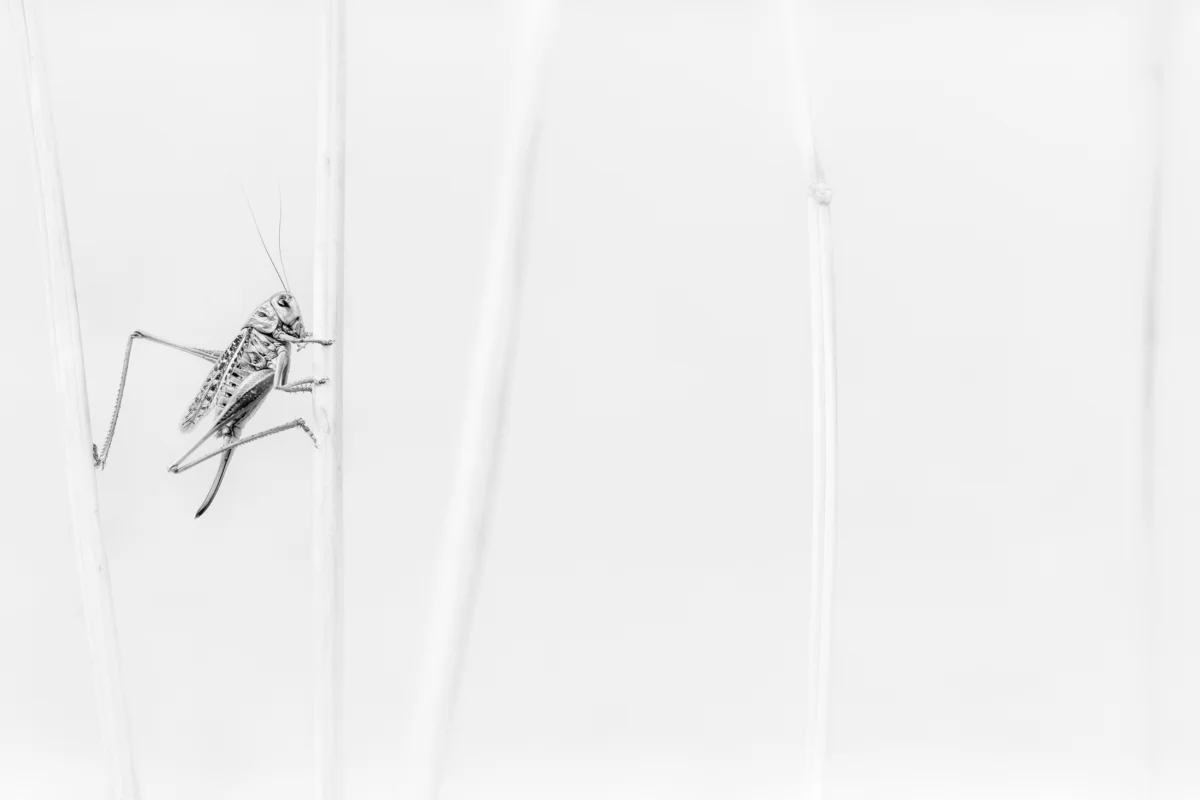
The contemporary visual landscape is overwhelmingly saturated. Driven by algorithmic enhancements, high-definition digital sensors, and accessible mobile editing suites, modern imagery relies heavily on hyper-vivid pigments to command fleeting attention spans. Yet, away from the digital arms race of hyper-colorization, a dedicated segment of nature photographers is moving in the exact opposite direction. By stripping away chromatic distractions, artists working in monochrome macro photography are revealing a more structural, intimate, and evocative portrait of the natural world—focusing specifically on the complex, often misunderstood kingdom of arthropods.

This artistic evolution bridges ancient human fascination with insects and modern photographic technique. For centuries, insects have occupied a precarious psychological space in human culture. Simultaneously admired for their ecological indispensability and despised for their proximity or destructive capabilities, these creatures have long inspired painters, sculptors, and scientists. Today, contemporary macro photographers like Elisa Confortini are utilizing the deliberate absence of color to challenge viewers to look past superficial brilliance and confront the raw, unadorned geometry of the micro-universe.
The Genesis of a Monochrome Practice
The journey toward monochrome macro photography rarely begins in black and white. For most practitioners, the discipline starts as a standard exploration of color. Arthropods—comprising insects, arachnids, myriapods, and crustaceans—represent the most diverse group of organisms on Earth, accounting for over 80% of described animal species. Because they are ubiquitous, accessible even in urban backyards, and endlessly varied in form, they serve as the primary gateway for macro enthusiasts.

Over years of field observation, however, photographers often encounter the limitations of a color-centric approach. Natural environments are inherently chaotic. A vibrantly colored beetle or mantis is frequently embedded within a visually noisy background of competing botanical hues, dappled sunlight, and erratic vegetation. While color can be a powerful descriptive tool, it can also act as a visual trap, drawing the viewer’s eye away from the true subject and its behavioral nuances.
Transitioning to black and white is rarely an accidental afterthought; it represents a deliberate aesthetic and stylistic choice. Historical context reveals that monochrome photography was born out of technical necessity in the 19th century, but in the digital era, it has transformed into a sophisticated vehicle for emotional expression. By removing hue and saturation, the photographer forces both themselves and the audience to translate the natural world into a continuous scale of grays, highlighting tones, textures, structural contrasts, and deep shadows.

Methodologies and the Philosophy of Reduction
Mastering monochrome macro photography requires a fundamental shift in perception. Human vision is naturally tuned to color differences, making it challenging to visualize a dew-drenched meadow or a vibrantly patterned butterfly entirely in tonal gradients. Professional photographers typically employ one of two primary workflows to bridge this perceptual gap.
The first approach involves standard shooting, maintaining an underlying awareness of which scenes possess strong graphic qualities that will translate effectively during post-processing. The second, more immersive method involves configuring the camera’s electronic viewfinder to a monochrome preview mode. This forces the photographer’s brain to abandon color metrics and begin thinking strictly in terms of luminance, contrast, and edge definition.

While in-camera monochrome settings offer immediate compositional feedback, many advanced practitioners prefer a hybrid workflow: shooting in raw color and executing the conversion during post-production. This methodology grants granular control over individual color channels during the desaturation process. By manipulating luminance sliders—such as darkening a blue channel to deepen a shadowed background or brightening a yellow channel to emphasize a subject’s carapace—photographers can sculpt light and shadow with a precision unattainable through direct monochrome capture.
Furthermore, this technique provides a reliable safeguard against technical limitations. High-ISO shooting in low-light forest understories often introduces chromatic noise, which can ruin a color photograph. In a black-and-white conversion, however, digital grain can be repurposed intentionally, transforming technological artifacting into an atmospheric, film-like grain that enhances the mood of the piece.

Minimalism, Abstraction, and Compositional Rigor
One of the primary advantages of monochrome macro photography is its innate synergy with minimalism. By eliminating color clutter, the photographer can isolate the subject through pure silhouette and form. Arthropods exhibit an astonishing array of structural designs, ranging from the rigid geometric symmetry of an orb-weaver spider’s web to the organic, irregular curves of a moth’s resting wings.
Without color to define boundaries, composition becomes the ultimate arbiter of success. Practitioners of this art form frequently rely on several advanced visual strategies:

- Shallow Depth of Field: Utilizing wide apertures to isolate a single sharp focal point—such as the compound eye of a dragonfly—while the rest of the frame dissolves into an elegant, monochromatic blur.
- Negative Space: Allowing expansive areas of shadow or uniform gray tones to surround a tiny subject, emphasizing its isolation and vulnerability within a vast ecosystem.
- Textural Accentuation: Highlighting the micro-sculptures of chitinous exoskeletons, hairy setae, and delicate membranous wings that might otherwise blend into a similarly colored background.
- Intentional Abstraction: Cropping tightly or utilizing techniques like intentional camera movement (ICM) to move away from pure scientific documentation, transforming an insect into an abstract study of line and tone.
Rather than serving as a corrective tool for poorly exposed or uninspired color photographs, monochrome conversion is reserved for frames that already possess inherent structural strength. Archival re-evaluation is a common practice among seasoned macro photographers, who frequently revisit older portfolios to discover that images dismissed in color take on an entirely new dramatic weight when rendered in grayscale.
Ecological Implications and Scientific Documentation
While monochrome macro photography is primarily an artistic pursuit, it intersects meaningfully with public perception of biodiversity. Arthropods play irreplaceable roles in global ecosystems, functioning as primary pollinators, decomposers, and foundational prey items for larger vertebrates. Yet, despite their ecological value, many species face severe population declines driven by habitat fragmentation, intensive agriculture, and pesticide use.

Traditional wildlife photography often relies on the charismatic appeal of vibrant colors—such as the bright warning hues of monarch butterflies or metallic jewel beetles—to garner public conservation support. Monochrome photography offers a different psychological engagement. By stripping away sensory distractions, it invites a deeper, more contemplative form of observation. Viewers are encouraged to look past their innate, culturally conditioned aversions to certain arthropods, such as spiders, scorpions, or centipedes, and appreciate their biological design as works of natural engineering.
This shift in perspective mirrors broader trends in environmental communication, where aesthetic appreciation is increasingly linked to ecological literacy. When an insect is presented not merely as a colorful specimen, but as an architectural entity navigating a dramatic landscape of light and shadow, the viewer’s empathy is subtly re-engineered.

The Continuing Evolution of the Medium
As digital sensor technology continues to advance, offering ever-higher resolutions and wider dynamic ranges, the temptation to capture hyper-realistic, technicolor representations of nature grows stronger. Yet, the enduring popularity of monochrome macro photography suggests a counter-movement toward intentional restraint.
For photographers choosing to work in grayscale, the medium is not about capturing reality as the human eye casually perceives it, but rather about uncovering a hidden layer of truth beneath the surface. By reducing the natural world to its fundamental elements of light, shadow, and form, artists continue to open a window into a universe that is simultaneously familiar and deeply alien—proving that sometimes, to truly see a subject for the first time, you have to turn off the color.
