
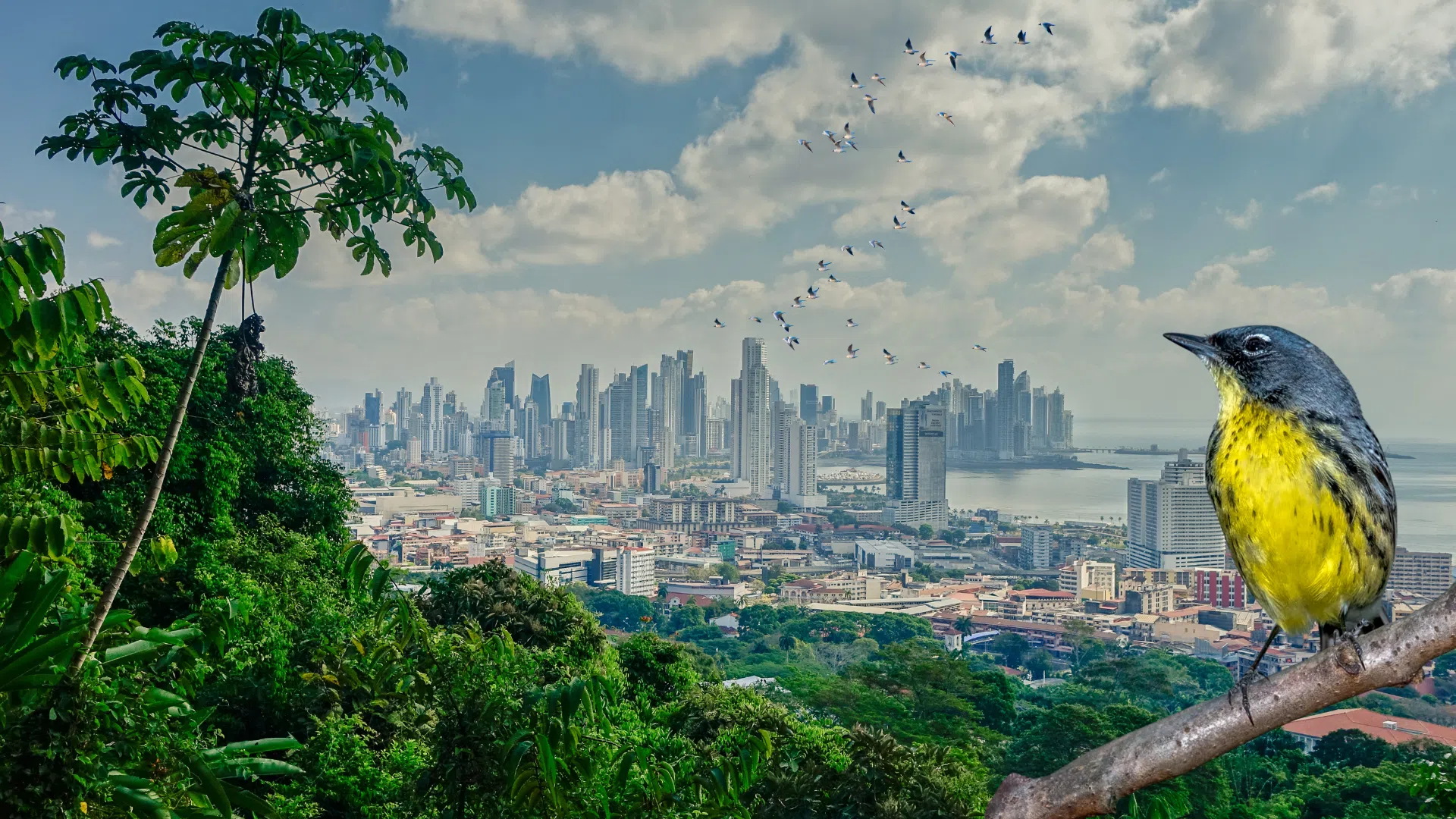
Every year, the skies above the Americas transform into a vast, bustling highway system as billions of birds undertake arduous journeys between their breeding and non-breeding grounds. These migratory birds serve as critical indicators of ecosystem health, connecting continents and landscapes through their survival. However, as human urbanization expands, these ancient flyways increasingly intersect with modern infrastructure. In Panama City, a significant convergence point for these aerial corridors, a pioneering project known as Hub Norte—the new regional headquarters for the Development Bank of Latin America and the Caribbean (CAF)—is setting a new global benchmark for how urban development can harmonize with biodiversity.
The initiative is a direct output of the Americas Flyways Initiative (AFI), a strategic partnership between CAF, BirdLife International, and the National Audubon Society. By integrating applied conservation science into the heart of financial and architectural planning, the AFI seeks to mitigate the risks that glass-heavy modern architecture poses to avian populations.

The Ecological Stakes: A Silent Crisis in Urban Landscapes
The threat posed by modern infrastructure to migratory birds is profound. Studies conducted by conservation groups, including BirdLife International, estimate that billions of birds perish annually due to collisions with man-made structures. The danger is twofold: transparent glass allows birds to see through a building, while reflective surfaces create mirages of the sky or surrounding vegetation. For species like the Western Sandpiper, which relies heavily on stopover sites like Panama Bay, a city landscape is fraught with hidden hazards.
Historically, architects and developers have prioritized structural integrity, energy efficiency, and aesthetic appeal. Biodiversity, by contrast, was rarely a consideration in the early design phases of infrastructure projects. The Hub Norte project, however, challenges this status quo by demonstrating that bird-friendly design is not a luxury or a prohibitive cost, but a manageable and necessary component of responsible engineering.
Chronology of a Collaborative Shift
The genesis of this shift began with the formalization of the Americas Flyways Initiative, a hemispheric effort to bridge the gap between financial investment and ecological preservation. The collaboration was established to ensure that large-scale development projects—those funded or managed by institutions like CAF—do not inadvertently compromise the environmental systems they operate within.

Following the project’s inception, the design phase of Hub Norte incorporated a series of rigorous scientific assessments. Engineers and architects worked in tandem with ornithologists to map out "high-risk" zones on the building’s façade. By 2025 and 2026, as the building progressed toward completion, these assessments dictated specific technical requirements, such as the application of specialized bird-friendly glazing treatments on approximately 24% of the building’s total façade area. This systematic approach moved biodiversity from a "late-stage adjustment" to a foundational element of the building’s architectural DNA.
Data-Driven Design: The Economics of Biodiversity
A common criticism of sustainable infrastructure is the perceived cost barrier. However, the experience of the Hub Norte project provides a counter-narrative. With a total façade area of nearly 5,000 square meters, the investment required for bird-friendly glazing was calculated at roughly USD $46.5 per square meter of treated glass. When analyzed against the total capital expenditure of the project, this represents a marginal fraction of the budget, yet it provides a massive, long-term reduction in mortality risk for local and migratory species.
The project highlights a crucial lesson for urban planners: the cost of mitigation is significantly lower when biodiversity is considered during the initial design phase. Retrofitting existing buildings is far more expensive and technically complex than incorporating bird-safe design during the architectural drafting stage. By selecting materials that satisfy both energy performance requirements and avian safety standards, the Hub Norte project has successfully neutralized the "trade-off" narrative between sustainable development and ecological protection.

Official Perspectives: A New Mandate for Financial Institutions
Luisa Plaza Urrutia, a civil engineer and executive at CAF’s Directorate of Corporate Infrastructure Management, has been central to the project’s success. Her perspective underscores a paradigm shift within the institution: "Good infrastructure should go beyond technical performance. It should create lasting value for people, institutions, and the environment."
According to Plaza Urrutia, the collaboration with organizations like the National Audubon Society and BirdLife International was not merely advisory; it was operational. It allowed the engineering team to interpret complex ecological data and translate it into practical construction protocols. For CAF, which has positioned itself as a "green bank" for Latin America and the Caribbean, this is a strategic move. By setting a precedent with Hub Norte, the bank is signaling to other regional stakeholders that future infrastructure investments must align with international sustainability and biodiversity standards to remain viable in an increasingly climate-conscious global market.
Broader Implications: Beyond the Building
The success of Hub Norte serves as a blueprint for the future of urban design in the Americas. If these practices become industry standards, the impact on flyway connectivity could be monumental. The "bird-friendly" movement is already influencing how architects approach lighting, building orientation, and the use of green spaces within urban centers.

Furthermore, the project highlights the importance of institutional partnerships. The involvement of global conservation giants like BirdLife International provides a level of scientific validation that local contractors often lack the resources to achieve on their own. This creates a feedback loop: as more projects like Hub Norte are completed, the demand for bird-friendly materials increases, which in turn encourages manufacturers to innovate, lower costs, and expand their product lines.
However, the transition is not without challenges. The primary obstacles remain awareness and technical literacy within the engineering and construction sectors. As Plaza Urrutia noted, "Bird-friendly design is still relatively new to many architects, engineers, developers, and contractors." Achieving a widespread transformation will require consistent advocacy, the development of standardized certification frameworks, and a willingness among policymakers to mandate biodiversity protections in new construction codes.
Future Outlook and Conclusion
The Hub Norte project stands as a testament to the fact that progress and nature-positive outcomes are not mutually exclusive. As urban centers continue to densify, the pressure on migratory corridors will only intensify. The model pioneered by CAF and its partners offers a pragmatic path forward: one that respects the technical rigors of civil engineering while acknowledging that every building is a participant in a larger, global environmental system.

As we look toward the next decade of infrastructure development, the success of this initiative will be measured not just by the efficiency of its heating or cooling systems, but by its ability to exist in a landscape that it shares with other living creatures. The integration of bird-friendly design at Hub Norte is more than just an architectural feature; it is an acknowledgment of our collective responsibility to ensure that our cities remain compatible with the natural rhythms of the planet. For the millions of birds crossing the Americas every year, this change in design philosophy may well be the difference between a successful journey and a fatal interruption. The precedent has been set, and the blueprint is now available for the rest of the world to follow.
