
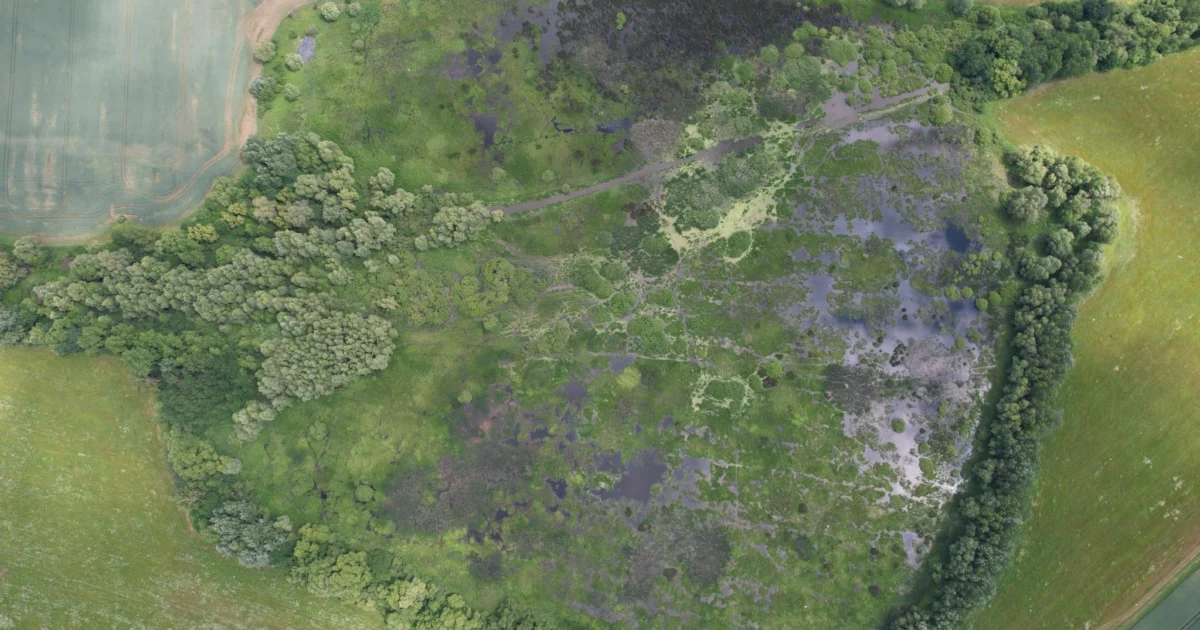
In the southern reaches of Paraguay, the San Rafael landscape stands as a defiant monument to biological resilience. This 72,489-hectare expanse, one of the last significant fragments of the Upper Paraná Atlantic Forest, operates on a razor’s edge. While it serves as a critical refuge for 440 bird species—seven of which exist nowhere else on Earth—the reserve is simultaneously a battleground of competing economic interests. Facing the relentless pressures of cattle ranching, infrastructure expansion, and illegal land conversion, the forest has long been maintained through the stop-start nature of philanthropic grants. Now, an innovative social enterprise known as Tangará is attempting to pivot the model of conservation from one of dependence to one of economic self-sufficiency.

The Anatomy of a Fragmented Landscape
The Atlantic Forest was once a vast, contiguous ecosystem spanning across Paraguay, Brazil, and Argentina. Over the last century, however, it has been systematically reduced to isolated pockets of greenery amidst a sea of agricultural development. San Rafael, officially designated as a Reserve for a National Park, is the most prominent of these fragments in Paraguay. Its ecological value is staggering: it acts as a primary water regulator for downstream human settlements and serves as a massive carbon sink that has sequestered atmospheric emissions for centuries.
Despite its protected status, the reality on the ground is stark. A significant portion of the park is held in private hands, and the state’s enforcement capacity is perpetually hampered by limited budgets and administrative gaps. The vulnerability of the region was laid bare in November 2020, when a series of catastrophic, large-scale fires consumed approximately 33,000 hectares—nearly 45% of the total reserve. This event served as a clarion call for environmental organizations, signaling that traditional, passive conservation methods were insufficient to mitigate the risks posed by climate-induced fires and land-use encroachment.

Chronology of a Conservation Pivot
The evolution of San Rafael’s protection strategy has been a decades-long endeavor. For over 20 years, Guyra Paraguay, a prominent environmental NGO, has been the primary steward of the area. Their work has historically focused on the acquisition of land—securing over 7,000 hectares to form a private network of reserves—and the fostering of deep, trust-based relationships with local Mbyá Guarani indigenous communities.
The transition toward a commercial, enterprise-based model began in 2021 with the official launch of Tangará. Recognizing that the global biodiversity financing gap—estimated to be between US$598 billion and US$824 billion annually—cannot be bridged by philanthropy alone, Guyra Paraguay sought to integrate sustainable economic activity directly into the forest’s management. This strategic shift was facilitated by BirdLife International’s Forest Impact Accelerator, which provided the technical mentorship necessary to transition from a pure-NGO model to a hybrid social enterprise structure.

The Four Pillars of Revenue
Tangará was engineered to address a specific structural flaw in conservation: the disconnect between ecosystem health and economic output. Its objective is to generate at least 30 percent of Guyra Paraguay’s reserve maintenance costs through four distinct business lines, each meticulously designed to require an intact forest canopy for viability.
- Shade-Grown Yerba Mate: As the most mature revenue stream, this operation has exported over 110,000 kilograms of certified organic, "Fair for Life" yerba mate to the United States. Unlike monoculture plantations that require clearing, this method relies on the existing forest structure, providing farmers with a financial incentive to maintain forest cover.
- Petitgrain Essential Oil: By collaborating with more than 50 local producers, Tangará has established a supply chain that provides high-value essential oils to international cosmetics companies like Lush, linking local livelihoods directly to the forest’s botanical resources.
- Ecotourism: Though in its nascent stages, the program has already hosted over 180 international visitors, with curated tours that include stops at the Kangüery Biological Station and model farms operated by the Kaá Kaaguy Association.
- Apiculture (Honey Production): While currently smaller in scale—producing 60 kilograms of honey to date—this sector represents a critical diversification strategy, protecting the project from the volatility of any single commodity market.
Official Perspectives and Institutional Support
The project has attracted significant attention from international donors who recognize the need for long-term sustainability in conservation finance. The Hempel Foundation provided the crucial catalytic seed grant, allowing the project to absorb early-stage operational risks. Casper Thulstrup, Head of Strategic Development at the Hempel Foundation, noted that the value of the initiative lies in its "potential to explore new forms of resilience," where ecological and economic systems reinforce each other.

Fabricio Astudillo, Forest Program Manager at BirdLife International Americas, emphasizes that Tangará should not be viewed as a panacea, but rather as an essential laboratory. "Ecosystems require long-term protection, but funding cycles are often temporary," Astudillo stated. "Tangará is valuable because it explores how conservation, local economies, and landscape resilience can become more connected over time."
This sentiment is echoed by local practitioners. Lalo Baez, a yerba mate producer in the Oga Ita community, noted the change in his personal relationship with the land: "Before, the forest was just there. Now it’s what feeds my family. If the forest goes, so does everything we’ve built."

Broader Impact and Economic Implications
The implications of the Tangará model extend far beyond the borders of San Rafael. As global markets begin to demand more sustainable supply chains, projects that offer traceability and verified forest-positive outcomes become increasingly valuable. For Guyra Paraguay, the goal is to reach 250 families within the next few years, creating a localized economy that acts as a human buffer against illegal deforestation.
However, the path forward is not without challenges. The organization must navigate the complexities of managing four distinct supply chains while simultaneously engaging in complex environmental advocacy. Furthermore, the need to quantify the non-financial benefits of the forest—such as carbon sequestration and water regulation—remains a persistent hurdle. Current efforts, supported by the Darwin Initiative, are now looking toward developing Afforestation, Reforestation, and Revegetation (ARR) carbon projects to stack onto existing agroforestry systems.

Rodrigo Zárate of Guyra Paraguay views the current phase as a step toward attracting impact investors. "The goal is to show that a conservation organization can become the kind of institution that investors want to go back to," Zárate said. "We want to build a proposition that allows us to take on debt to scale operations across our entire reserve network."
The Future of Conservation Finance
The success of the Forest Impact Accelerator, which has now benefited 38,000 people and improved protection for 400 threatened species across 1 million hectares, suggests that the hybrid model is gaining traction. The recent £4,978,335 Darwin Initiative grant is a testament to the confidence international bodies have in these localized, high-impact strategies.

Yet, the proponents of this model are careful to avoid overstatement. Tangará remains an "unfinished bet." It acknowledges that it cannot replace the essential role of philanthropy, especially in regions where economic volatility is high and the threat of land conversion is constant. Instead, it proposes a symbiotic relationship: philanthropy acts as the shock absorber for innovation, while commercial enterprise provides the steady pulse of funding required for generational ecological recovery.
As climate change accelerates, the survival of the Atlantic Forest will depend on the ability of local institutions to evolve. In San Rafael, the forest is currently standing, sustained by a complex, multi-layered system of indigenous knowledge, scientific monitoring, and a nascent, yet promising, economic engine. If this experiment continues to yield results, it may provide a viable blueprint for other critical biodiversity hotspots around the world, proving that when the forest becomes a partner in human prosperity, it stands a far better chance of enduring for generations to come.
