
For dedicated nature photographers, the pursuit of the ultimate landscape—characterized by pristine lighting, carefully scouted locations, and ideal weather conditions—remains the gold standard of the discipline. However, temporal constraints, unpredictable weather patterns, and the demands of everyday life frequently obstruct these grand ambitions. In response to these operational limitations, a growing segment of the amateur and professional photography community is redefining what constitutes a successful outing. Rather than viewing uncooperative weather or lack of travel time as a failure, practitioners are increasingly turning to spontaneous macro photography and micro-landscapes as a vital alternative methodology.
This shift in perspective not only sustains creative momentum during otherwise unproductive periods but also fosters advanced technical adaptability. By pivoting from sweeping vistas to the hidden ecosystems existing directly beneath their feet, photographers are discovering that compelling visual narratives do not require rare subjects or exotic locales. Instead, modern field practitioners are leveraging macro lenses, unconventional optics, and improvised lighting techniques to extract profound artistic value from ordinary suburban environments.

The Operational Reality of Modern Nature Photography
Statistical assessments of outdoor recreation and hobbyist photography reveal a persistent challenge: time scarcity. According to demographic surveys within specialized arts communities, more than 75% of amateur photographers cite scheduling conflicts and limited daylight hours as the primary deterrents to executing fully planned landscape shoots. Consequently, waiting indefinitely for optimal atmospheric conditions often leads to prolonged periods of inactivity, diminishing both technical proficiency and creative enthusiasm.
To combat this stagnation, photographers are establishing structured contingency workflows, informally known as "Plan B" sessions. These impromptu outings are characterized by a lack of advanced scouting and a heavy reliance on immediate environmental improvisation. Rather than traveling hours to coastal vistas or alpine peaks, practitioners redirect their focus to local parks, neighborhood gardens, and urban green spaces.
Industry analysts note that this constrained approach yields significant psychological and technical benefits. Working within confined settings forces photographers to exercise rigorous compositional discipline. Without the grandeur of a vast horizon to carry an image, the emphasis shifts entirely to subject isolation, lighting manipulation, and textural contrast.

Technical Adaptability and Field Improvisation
The core of impromptu macro photography lies in the immediate problem-solving required when specialized studio gear is absent. When photographers venture out without pre-packed external flashes, diffusers, silver-and-white reflectors, or specialized macro rails, they must rely on optical physics and readily available ambient elements.
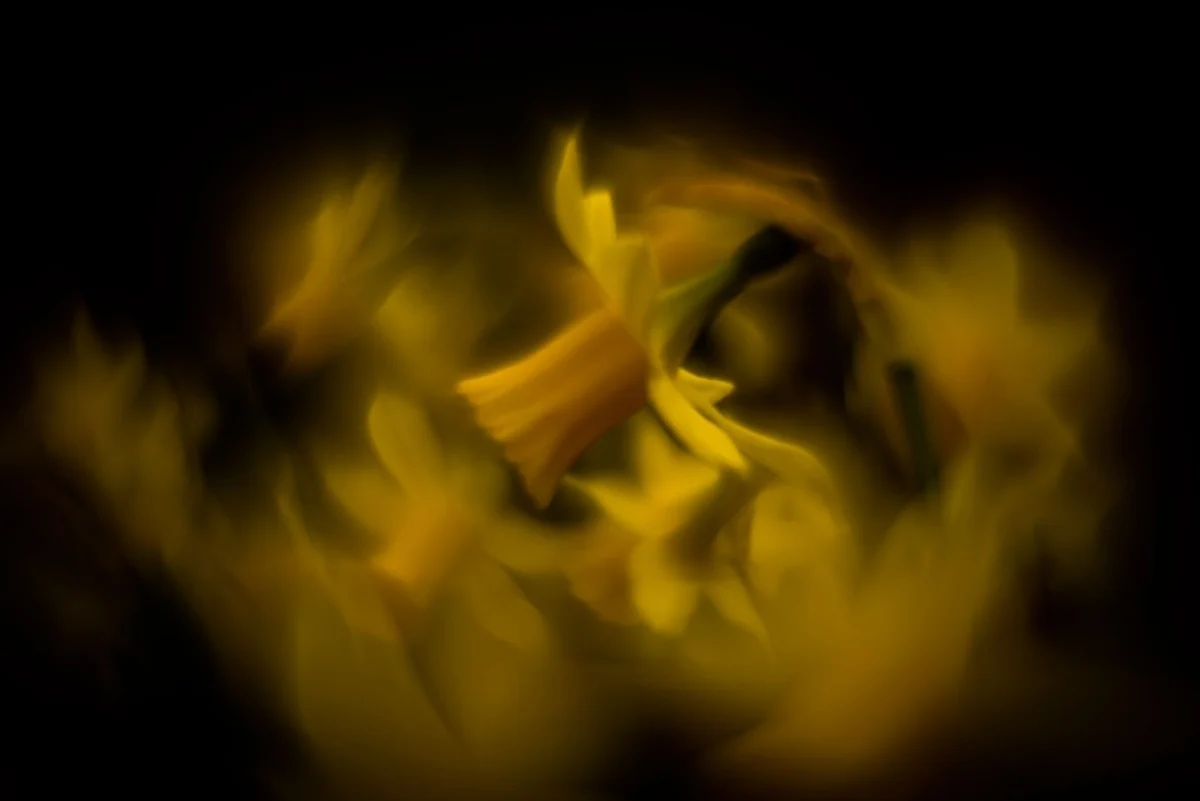
A prominent example of this adaptive methodology involves the creative repurposing of vintage or unconventional optics. Photographers frequently utilize older manual-focus lenses—such as Soviet-era Helios glass—mounted in reverse configurations. Inverting the lens alters the optical path, generating a distinctive out-of-focus background dynamism and a shallow depth of field that imbues everyday subjects, such as common suburban daffodils or wild fungi, with a dreamlike, painterly quality.
Furthermore, field practitioners routinely utilize improvised light modifiers to shape natural illumination. The strategic positioning of micro-flashlights can introduce targeted directional light to subjects like Mycenas mushrooms, while ordinary household items, such as a microfiber lens-cleaning cloth placed strategically near the base of the camera barrel, can create subtle foreground gradients and soft vignettes. These techniques allow artists to replicate studio-grade lighting control entirely within unstructured outdoor environments.

Balancing Contrast and Harmony: The Post-Processing Paradigm
A critical debate within contemporary nature photography centers on the dichotomy between high-impact contrast and subtle harmony. Historically, digital processing workflows have emphasized heavy global contrast, high saturation, and razor-sharp edge definition to capture viewer attention in digital galleries and social media feeds.
However, proponents of minimalist macro work advocate for a more restrained post-capture philosophy. Industry standards among fine-art nature photographers increasingly favor minimizing computer-based manipulation, restricting digital intervention to basic exposure correction, subtle sharpness enhancements, and foundational tonal balancing.
In low-key compositions—such as macro studies of urban flora or insects resting on decaying foliage—photographers often employ targeted vignetting. This technique serves a dual purpose: it draws the viewer’s eye strictly toward the primary subject while suppressing distracting, high-luminance elements along the frame’s periphery.

Artistic directors and photography educators emphasize that the choice between contrast and harmony must be dictated by the emotional narrative of the image. While high-contrast compositions convey dynamic tension and structural rigidity, subtle tonal gradients and muted palettes preserve the inherent delicacy of fragile subjects, such as Lepidoptera (butterflies and moths) or ephemeral frost patterns.
Urban Green Spaces as Laboratories for Visual Literacy
The expansion of macro and micro-photography into urban parks challenges the traditional paradigm that compelling nature subjects exist only in remote wilderness. Urban green infrastructure functions as an accessible, highly concentrated laboratory for photographic experimentation.
Parks and municipal gardens present structured and unstructured patterns simultaneously—ranging from manicured lawns and architectural pathways to random accumulations of fallen autumn leaves, pooled rainwater, and decaying organic matter. Photographers utilizing these spaces report a heightened development of visual literacy.

For instance, encountering a single fallen flower resting atop a grid of leaf veins provides an immediate exercise in breaking geometric patterns to establish a dominant focal point. Similarly, studying light reflections on a puddle covered in floating debris mirrors the compositional challenges of capturing large-scale water bodies, albeit on a micro-scale.
By treating everyday urban environments as legitimate photographic subjects, practitioners maintain consistent operational readiness. This continuous engagement prevents the rust that often accumulates during intervals between major expeditions.
Economic and Educational Implications for the Photographic Community
The growing popularity of impromptu macro and micro-photography carries notable economic and educational implications for the broader imaging industry. Equipment manufacturers have observed a steady resurgence in demand for vintage manual lenses, macro extension tubes, and reverse-mounting rings, reflecting a consumer shift toward accessible, mechanical experimentation over expensive, automated gear upgrades.

From an educational standpoint, photography workshop leaders and institutions are increasingly incorporating impromptu fieldwork into their core curricula. Teaching students how to extract high-value imagery from constrained, unscripted environments builds resilient technical foundations. Photographers who master the art of finding beauty in a neighbor’s flowerpot or a municipal park are demonstrably better equipped to handle complex lighting and compositional challenges when they eventually encounter grand landscapes.
Ultimately, the embrace of the unplanned session represents a maturation of the nature photography discipline. By relinquishing the absolute necessity of perfect weather and remote locations, photographers ensure that their craft remains an active, resilient, and endlessly renewable pursuit of visual storytelling.
