
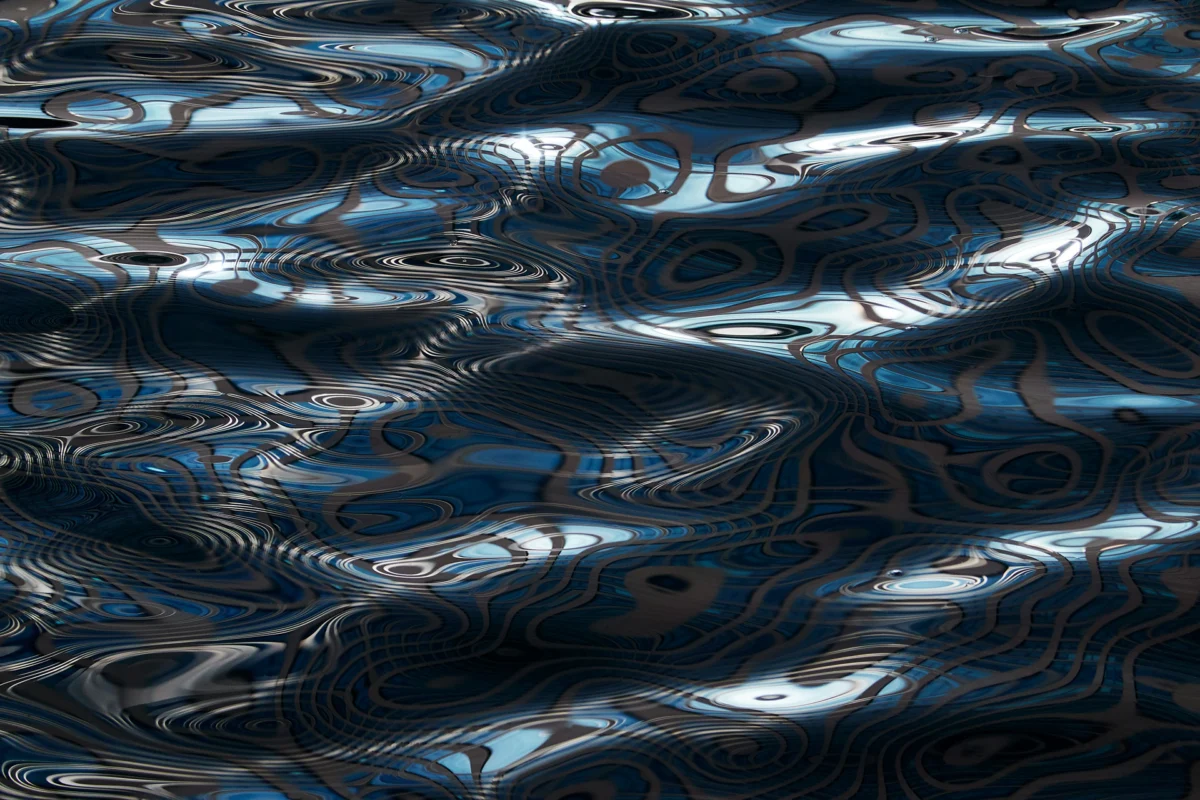
The "Fleeting Reflections" series, a compelling body of photographic work, consistently challenges initial viewer assumptions, presenting images often mistaken for digital manipulations. The artist behind the series, who has dedicated over a decade to this project, affirms that these captivating visuals are not products of Photoshop, but rather authentic in-camera captures. They are the result of light interacting with the glass and steel architecture of London’s Canary Wharf, breaking on the water’s surface, and meticulously recorded—sometimes as single frames, at other times through carefully layered in-camera multiple exposures. This rigorous methodology underscores a core philosophy: genuine creative work in abstract photography hinges on attention, repetition, and a profound investment of time.
The Genesis of "Fleeting Reflections": A Decade of Observation
At the heart of the "Fleeting Reflections" project lies the concept of time. For more than ten years, the photographer has immersed themselves in the dynamic environment of the Canary Wharf docks, transforming a familiar urban landscape into a canvas of ever-changing light and texture. This sustained engagement has led to a profound understanding that meaningful creative output in both nature and abstract photography is built upon three fundamental pillars: accessibility, repeatability, and patience. While many observers often fixate on the technical aspects of photography—cameras, lenses, and shooting modes—the artist posits that these are merely supporting characters. The true driving force behind "Fleeting Reflections" is the intricate relationship between a chosen place, unwavering persistence, and disciplined artistic practice. The project’s longevity and evolution, culminating in two published books, Fleeting Reflections (2017) and Fleeting Reflections II (2023), and exhibitions at prestigious venues like the Greenwich Gallery (2017) and Anise Gallery (2019), testify to the power of this dedicated approach.

Challenging the Myth of Remote Landscapes: The Power of Accessibility
A prevalent misconception within nature photography dictates that artists must journey to dramatic, often remote, locations to capture images of worth. The "Fleeting Reflections" series stands as a powerful refutation of this idea. The entirety of this extensive work has emerged from a mere square mile of water, nestled amidst the towering financial architecture of Canary Wharf. This district, globally recognized as a steel-and-glass bastion of finance, is reinterpreted by the photographer not as a concrete jungle, but as a complex array of light sources. The imposing skyscrapers cast vibrant colours and sharp lines onto the dock waters, while the wind acts as an unseen sculptor, morphing these reflected lights into intricate patterns of waves, undulating ribbons, and fragmented geometries. The artist’s role, in this context, becomes one of keen observation and responsiveness – "listening" to the environment’s subtle cues.
The unparalleled accessibility of Canary Wharf has been instrumental in enabling this deep level of artistic immersion. The photographer can reach the location with ease, traverse its paths on foot, and return frequently without the logistical hurdles of air travel, permits, extended time off, or arduous pre-dawn hikes. This allows for spontaneous visits, even for short durations of 40 minutes, and the opportunity to photograph under conditions conventionally deemed "bad," such as harsh light or heavy rain. On such days, the water’s surface transforms into a shimmering expanse reminiscent of hammered metal, offering unique visual opportunities. While accessibility might seem an unglamorous aspect of creative work, it is, in fact, absolutely fundamental. Without the practical ability to frequently engage with one’s subject, the crucial level of familiarity required to move beyond superficial observations can never be achieved. The more readily an artist can stand before their subject, the more authentically they can study and interpret it. This principle highlights that proximity can foster a deeper connection and understanding than intermittent visits to far-flung locales.
The Dynamic Canvas: Repeatability and the Ever-Changing Docks

The second foundational pillar of the "Fleeting Reflections" series is repeatability. This concept refers to the deliberate selection of a subject that continuously evolves, offering fresh surprises and new photographic possibilities with each encounter. The docks of Canary Wharf exemplify this quality in abundance. The environment is never truly static; no two moments are precisely identical. A serene morning might present long, glassy expanses of colour, while a blustery afternoon can shatter those same reflections into jagged, serrated lines, evoking abstract waveforms. The passage of a boat can smear reflections into painterly, hand-drawn effects. Even transient elements like diesel slicks on the water’s surface create iridescent interference patterns that may only last for a few minutes and never reappear in the same form.
This inherent repeatability allows the photographer to return to what might superficially appear to be the "same" scene hundreds or even thousands of times, yet consistently produce fresh and original work. The artist often remains in a single spot for hours, observing a specific patch of water as it cycles through a myriad of visual personalities. At these moments, the focus shifts from merely documenting architecture to capturing the dynamic "behaviour" of light and water. This is where specific in-camera techniques become vital. Fast burst rates are employed to freeze micro-moments in the water before their ephemeral forms collapse. Multiple exposure modes are utilized to layer gestures and further enhance the abstraction already present in the reflections. However, these techniques are effective only because the subject itself continually offers a rich supply of new raw material. The visual palette shifts dramatically with the weather, the geometry of reflections bends and distorts with the wind, and the overall mood of the scene transforms with the tide. Without the capacity for repeatability, photographic endeavors often yield mere postcards; with it, a comprehensive and evolving body of work can emerge.
Mastering the Moment: In-Camera Techniques and Artistic Intent
The authenticity of "Fleeting Reflections" is deeply rooted in its commitment to in-camera capture. Unlike many contemporary abstract works that heavily rely on post-processing software, the visual complexity and intriguing distortions seen in these images are created organically. The interplay of light bouncing off the sleek glass and robust steel of Canary Wharf’s iconic skyscrapers, then fracturing and refracting on the water’s agitated surface, is the primary source of the art. The photographer’s skill lies in recognizing these transient phenomena and capturing them precisely as they occur.

This involves a sophisticated understanding of light, reflection, and movement. For instance, capturing the fleeting patterns created by a passing boat or the delicate shimmer of an oil slick requires not just technical proficiency but an intuitive sense of timing. The use of multiple exposures in-camera is a deliberate choice to layer visual information, adding depth and complexity without resorting to digital manipulation. This technique, a staple of traditional photography, allows for the blending of different moments or perspectives within a single frame, creating a composite image that exists purely within the optical and chemical processes of the camera. By embracing these "analogue-like" digital techniques, the artist maintains a high degree of fidelity to the scene as it unfolds, emphasizing revelation over fabrication. The philosophy is clear: the forms are not "created" in a digital darkroom but "revealed" through diligent observation and precise capture, reinforcing the artistic integrity and the claim that "this happened."
The Unseen Labor: Patience as the Foundation of Creativity
The final and arguably most underestimated pillar of the "Fleeting Reflections" project is patience. This essential quality permeates every stage of the artistic process, beginning long before the shutter is pressed. The photographer must patiently await the convergence of suitable weather conditions with personal availability. The visual output varies dramatically depending on environmental factors: hard sunlight on still water yields one effect, while flat light during a drizzle creates an entirely different aesthetic. Not every combination proves artistically useful, leading to instances where the photographer may walk for miles, meticulously checking angles and light in the water, only to find nothing that aligns with the day’s conditions.
Even when conditions are promising, patience transforms into a physical exercise. The artist might remain at a single location for up to four hours, capturing as many as 3,000 frames of what, to a casual passerby, might appear to be "the same scene." This intensive effort is driven by the quest for that singular, perfect instant where colour, rhythm, structure, and tension coalesce into a harmonious composition. Such moments cannot be rushed; they demand prolonged presence and an acute sense of recognition.

The demanding nature of patience extends into the post-capture phase. Upon returning home, thousands of nearly identical-looking images are downloaded, initiating a slow, deliberate culling process on an iMac. This stage highlights the importance of discipline. The photographer purposefully sifts through the vast collection, searching for the exact frame where every element aligns perfectly, ruthlessly rejecting the rest. The "keep rate" is notoriously low, a testament to the uncompromising standards applied.
The processing approach is equally restrained. Working primarily in Capture One, the artist applies only global adjustments such as levels, clarity, sharpness, and contrast. There is no manipulation of shapes or forms in Photoshop. This choice is as philosophical as it is aesthetic: the aim is not to "create" forms but to "reveal" what was inherently present in the water. This commitment to honesty is paramount, allowing the photographer to declare, with absolute conviction, "this happened."
Beyond the immediate acts of shooting and editing, there is a longest form of patience: the patience to allow the work to mature. The "Fleeting Reflections" project was not publicly exhibited or promoted in any significant way for several years. The artist simply continued returning to Canary Wharf, shooting, refining, and learning to discern what was truly essential from what constituted mere visual noise. It took approximately seven years before a coherent body of work, suitable for presentation to a publisher, was achieved. This culminated in the publication of the first book, Fleeting Reflections, by Triplekite in 2017. Subsequent milestones included exhibitions at the Greenwich Gallery in 2017 and Anise Gallery in London in 2019, followed by a second volume, Fleeting Reflections II, in 2023. While these accomplishments might suggest a rapid or seamless progression, the reality was a slow, deliberate, and obsessive journey. The photographs themselves, as striking as they are, represent only the visible tip of the iceberg. Beneath them lie thousands of hours dedicated to walking, watching, waiting, shooting, editing, rejecting, and persistently returning to the subject.
Chronology of a Vision: From Concept to Acclaim

The journey of "Fleeting Reflections" exemplifies the long-term commitment often required for profound artistic development. The project commenced over a decade ago, with the photographer initiating consistent visits to the Canary Wharf docks. This period of intense observation and experimentation extended for approximately seven years before the work was deemed cohesive enough for public presentation.
- Circa 2010s: Commencement of the "Fleeting Reflections" project at Canary Wharf, London.
- 2010s (Early-Mid): Extensive period of shooting, refinement, and learning, focusing on accessibility, repeatability, and patience.
- 2017: Publication of the first book, Fleeting Reflections, by Triplekite.
- 2017: Exhibition of the series at the Greenwich Gallery, London.
- 2019: Further exhibition at the Anise Gallery, London.
- 2023: Publication of the second volume, Fleeting Reflections II.
This timeline underscores that significant artistic achievements rarely materialize overnight. They are often the culmination of years of dedicated, unglamorous effort and a deep commitment to a singular vision.
Impact and Broader Implications: Redefining Photographic Practice
The "Fleeting Reflections" project offers significant insights and implications for the broader photographic community and beyond. Its central message is a powerful counter-narrative to the prevailing trends in photography.

For Aspiring Photographers: The project serves as an inspiring testament that one does not require dramatic landscapes or exotic locales to create something profoundly personal and distinctive. Instead, the essential ingredients are consistent access to a subject, the ability to repeatedly engage with it, and unwavering patience. This encourages photographers to look closer at their immediate surroundings—a local canal, a harbour wall, a marsh at the town’s edge, or even rainwater pooling in a car park. By returning to these accessible places in all moods and weathers, one can develop an intimate understanding of how the environment responds to changing conditions. The commitment to "slow work"—walking, waiting, refining, and exercising brutal honesty in the editing process—is presented as the true path to meaningful photographic expression.
For the Art World: "Fleeting Reflections" makes a compelling case for the artistic merit of abstract and urban nature photography, pushing boundaries and challenging traditional definitions. In an era dominated by digital manipulation, the project’s insistence on in-camera authenticity and minimal post-processing stands as a philosophical statement. It champions a return to foundational photographic principles where the photographer’s skill lies in observation and timing, rather than digital artistry. This commitment to honesty resonates with a growing appreciation for genuine craft and the integrity of the photographic medium. It encourages a re-evaluation of what constitutes "nature" in photography, expanding it beyond pristine wilderness to include the unexpected beauty found within the built environment.
Environmental and Urban Context: By revealing the abstract beauty within a major financial district like Canary Wharf, the project subtly highlights the overlooked aesthetic potential in urban environments. It encourages viewers to perceive their surroundings with a fresh perspective, finding patterns, colours, and textures in places they might typically ignore. This can foster a greater appreciation for the dynamic interplay between human-made structures and natural elements (light, water, wind), even in the most developed of areas.
In conclusion, "Fleeting Reflections" powerfully demonstrates that patience is not a passive trait but a highly active, deliberate decision. It signifies a profound investment of oneself in a chosen subject for as long as it takes to achieve a deep and nuanced understanding. Over time, this sustained patience becomes palpably visible within the photographs themselves. While viewers might initially be drawn to the captivating colours and intriguing shapes, what they are ultimately encountering is the distilled essence of meticulous attention, a visual manifestation of a decade-long devotion to seeing the extraordinary in the seemingly ordinary.
