
The strategic use of out-of-focus elements in the foreground is rapidly gaining recognition as a powerful technique in contemporary wildlife photography, transcending mere sharpness to evoke profound mood, depth, and emotional resonance. This deliberate blurring, rather than distracting from the main subject, serves as a sophisticated compositional tool, guiding the viewer’s eye, establishing a sense of place, and imbuing images with an often ethereal quality that sharp focus alone cannot convey. At its core, photography seeks to capture meaningful moments, and foreground blurs are proving to be invaluable instruments in transforming simple scenes into evocative narratives that express more than they simply show.
The Art of Subtlety: Understanding Foreground Blurs

Foreground blur, technically known as selective focus or bokeh when referring to the quality of the blur, involves intentionally positioning an object or element between the camera lens and the primary subject. This intervening element, rendered softly out of focus, creates subtle, often painterly veils that partially obscure or frame the subject without diminishing its visual weight. Far from being a flaw, these blurs are designed to enhance the image by introducing layers of depth, spatial context, mystery, and an emotional nuance that draws viewers into a more intimate engagement with the scene.
This technique moves beyond conventional compositional rules that often prioritize absolute clarity and sharpness across the entire frame. Instead, it embraces ambiguity and suggestion, prompting the viewer to actively interpret and connect with the photograph on a deeper level. The resulting images often possess a dreamlike or painterly aesthetic, reminiscent of classical art where atmosphere and impression are paramount. This deliberate softening can transform a straightforward wildlife portrait into a poignant study of an animal within its environment, such as the initial photograph of vultures in the Pyrenees, where other birds form a dynamic, blurred foreground.
Technical Underpinnings of Artistic Blur

Achieving effective foreground blur relies on a combination of photographic principles. A wide aperture (low f-number) is crucial, as it creates a shallow depth of field, rendering elements outside the focal plane beautifully blurred. The focal length of the lens also plays a significant role; longer telephoto lenses inherently compress perspective and produce more pronounced background and foreground blur, making them ideal for wildlife. Furthermore, the distance between the camera, the foreground element, and the subject is critical. The closer the foreground element is to the lens and the further the subject is from the foreground element, the softer and more abstract the blur will appear. Conversely, placing the foreground element closer to the subject can maintain some discernible shape while still creating a soft barrier, adding valuable contextual information.
While modern cameras boast increasingly sophisticated autofocus systems, the nuanced application of foreground blur sometimes necessitates a shift to manual focus. This allows the photographer precise control over the exact point of focus, ensuring the main subject remains sharp while the foreground elements melt into a pleasing abstraction. This manual intervention acknowledges that prioritizing artistic expression might involve a slight compromise on absolute technical sharpness in the blurred areas, a trade-off many professional photographers are willing to make for the overall impact of the image.
Crafting the Scene: Natural Elements as Artistic Tools

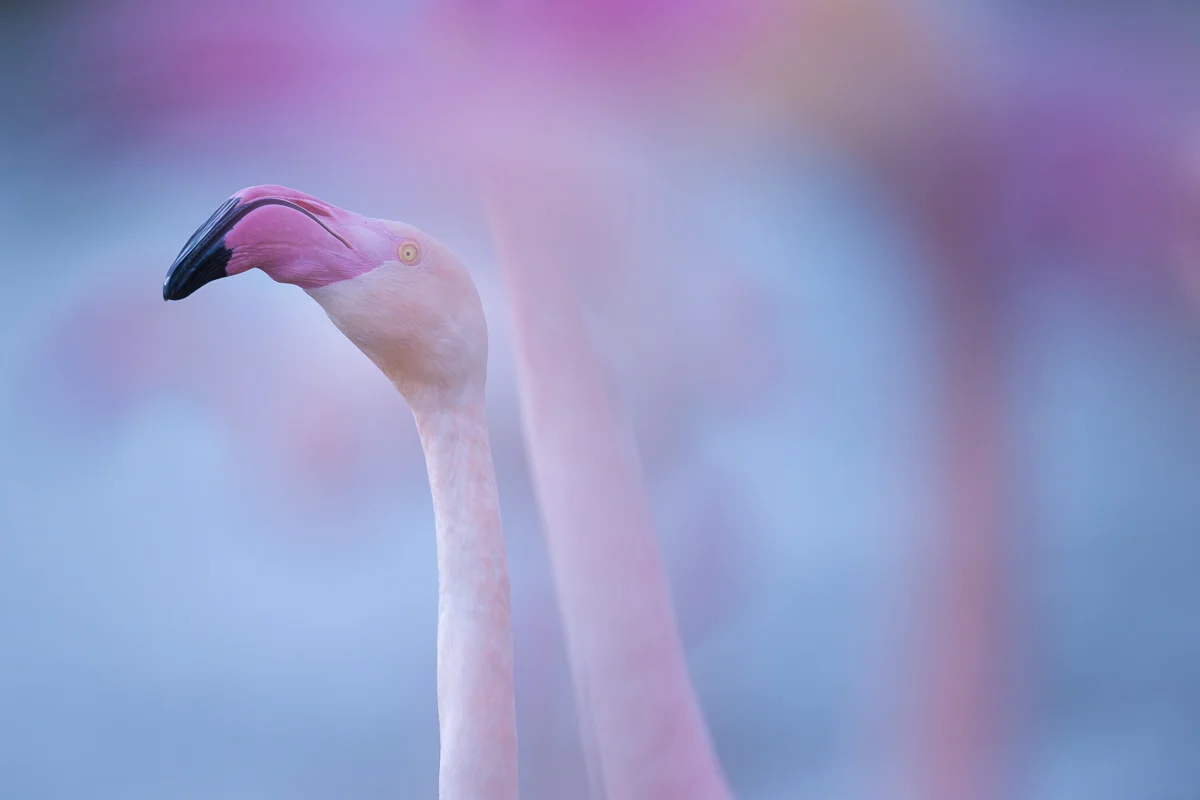
The beauty of foreground blurs lies in their adaptability, often requiring photographers to work creatively with whatever natural elements are immediately available. This resourceful approach transforms the environment into a palette of artistic tools. Common natural elements include various plant life—branches, leaves, flowers, or tall grasses—which can form intricate patterns or soft, organic veils. Water, whether as glistening droplets, reflective surfaces, or blurred ripples, can introduce dynamic textures and light play. Snow, geological features like rocks or sand dunes, and even other animals can also serve as effective foreground elements. The image of flamingos, for instance, might utilize the blurred forms of other birds or water ripples to frame the primary subject.
Beyond tangible objects, intangible elements such as light and shadow are equally potent. Manipulating exposure and white balance can create contrasting areas of light and dark that subtly sculpt the subject within its habitat, as exemplified by the photograph of the goshawk. Here, the interplay of light and shadow serves not only an aesthetic purpose but also a compositional one, naturally guiding the viewer’s eye towards the bird, adding both clarity and profound depth. The image of the Pyrenean capercaillie, captured in the crepuscular light of early morning through a natural filter of local shrubs and underbrush, perfectly illustrates how environmental elements, combined with specific lighting conditions, can elevate a photograph from mere documentation to evocative storytelling.
Ethical Considerations and the Photographer’s Role

While the technique encourages creative intervention, ethical considerations remain paramount in wildlife photography. When photographing from a hide, particularly with less skittish species, photographers may have a degree of control over the immediate scene, allowing for careful planning and placement of foreground elements. However, in many other "reactive situations" or "photographic hunts," direct manipulation of the environment or the animal is neither possible nor ethical. In these instances, the photographer must approach the subject with utmost caution, prioritizing the animal’s well-being and avoiding any disturbance.
This often means the "art of waiting" becomes an integral part of the creative process. The photographer must patiently observe, anticipating moments when natural elements align serendipitously to create the desired effect. This approach fosters a deeper connection with the wild, valuing authentic, unposed interactions over contrived scenarios. As the author notes, this "serendipitous interaction with the wild" is a key draw for many, demanding a tolerance for failure but often yielding the most significant and authentic rewards, as seen in the captivating image of razorbills.
Genre Suitability and Dynamic Challenges

Foreground blurs find their most harmonious application in wildlife portrait photography, where the emphasis is on capturing the essence and character of an individual animal within its environment. The serene, ethereal atmospheres created by soft blurs align perfectly with the contemplative nature of a portrait, enhancing the subject’s presence and emotional impact, such as in the image of the fallow deer.
Conversely, applying this technique to highly dynamic scenes, such as birds in flight (like the kite), mammals in pursuit, or other fast-paced actions, presents significant challenges. The rapid unfolding of events often leaves little to no opportunity for deliberate compositional intervention with foreground elements. In such scenarios, the priority shifts to capturing the decisive moment with sharp focus, and the deliberate artistic use of foreground blur becomes exceptionally difficult, if not impossible, to achieve consistently. While some photographers might experiment with motion blur in these contexts, foreground blur requires a degree of static composition that dynamic action rarely affords.
Diverse Applications: Mastering Different Blur Types

The versatility of foreground blurs extends to various stylistic applications. Photographers can adjust the proximity of the blurring object to the camera or the subject. Placing an object very close to the lens creates a more abstract, painterly veil across a significant portion of the image, contributing to a sense of mystery. Moving the object closer to the subject, however, allows for more discernible detail in the blur, potentially adding valuable contextual information about the environment, as seen in the song thrush photograph where subtle blurs enhance the natural setting.
Furthermore, photographers can choose to create a "veil" that covers the entire image, or strategically use blur to partially obscure specific parts of the animal while carefully preserving the subject’s gaze—a crucial element for establishing connection with the viewer. Two distinct approaches are often employed: "look-throughs," where the camera is aimed through a small opening in the foreground elements, creating a natural frame; and "look-overs," which involve filling the bottom portion of the frame with a soft, blurred foreground, anchoring the subject within its ground-level environment. Each approach offers a unique way to manipulate depth and focus, allowing for a wide spectrum of creative expression.
The Broader Impact: Elevating Wildlife Imagery

The increasing adoption of foreground blurs signifies a broader trend in wildlife photography, moving beyond purely documentary capture towards more artistic and expressive interpretations. This shift has significant implications for how wildlife is perceived and communicated. Artistically composed images, often imbued with emotion through techniques like foreground blur, can foster a deeper connection between the viewer and the natural world, potentially enhancing conservation efforts by evoking empathy and a sense of wonder.
In the competitive landscape of nature photography, images employing these creative techniques often stand out, celebrated for their originality and artistic merit. They challenge the traditional emphasis on clinical sharpness, proving that a photograph can be both informative and deeply moving. This stylistic evolution enriches the genre, offering photographers fresh avenues for creativity and allowing them to revisit familiar species or locations with a renewed artistic vision.
Embracing Creativity: A Call to Experimentation

Foreground blurs represent a powerful and broadly applicable creative technique, offering immense appeal to photographers seeking to infuse their work with greater depth and artistry. Its adaptability means it can be employed across a wide range of situations, provided the photographer can exert some control over their position relative to the subject and the surrounding elements.
Creativity, by its very nature, often flourishes through experimentation and a willingness to embrace trial and error. This technique encourages improvisation and allows inspiration to strike in diverse contexts, transforming routine encounters into opportunities for unique imagery. Moreover, it provides an invaluable tool for refreshing one’s approach to photographing "recurring" or familiar species, injecting novelty into established portfolios. The technique is also highly compatible with other creative photographic methods, including intentional over- or underexposure, manipulating shutter speed for movement, backlighting, double exposures, and various forms of abstraction, offering limitless possibilities for artistic synergy.
Throughout history, visionary photographers have utilized subtle techniques to craft their unique aesthetics and convey profound messages. Foreground blurs stand as a testament to this tradition, inviting contemporary wildlife photographers to explore new dimensions of expression and storytelling. It is a technique that, when mastered, can transform a mere observation into a captivating work of art, deeply resonating with audiences and enriching the narrative of the wild.
