
The Global Birdfair 2026 has officially pledged its significant support to BirdLife International’s urgent conservation efforts aimed at protecting the critically endangered endemic bird species of São Tomé and Príncipe, a small island nation nestled in the Gulf of Guinea. This crucial initiative seeks to prevent the imminent extinction of several unique avian populations, bolstering long-term sustainability for both wildlife and local communities. The partnership underscores a global commitment to safeguarding biodiversity hotspots, particularly in regions where ecological fragility meets socio-economic challenges.
The Island Nation: A Crucible of Evolution
São Tomé and Príncipe, Africa’s second-smallest nation, comprises two main islands and several smaller islets. Located off the western equatorial coast, these volcanic islands are renowned for their spectacular natural beauty and unparalleled biodiversity. Often referred to as the "Galapagos of Africa," the islands’ long isolation has fostered an extraordinary evolutionary laboratory, resulting in a high degree of endemism across flora and fauna. The lush rainforests, mist-shrouded peaks, and pristine coastlines harbor a wealth of species found nowhere else on Earth. However, this very uniqueness also renders its inhabitants exceptionally vulnerable to external pressures. The archipelago is recognized as a critical component of the Guinean Forests of West Africa biodiversity hotspot, a designation that highlights both its ecological richness and the severe threats it faces.
Among the most emblematic, and tragically imperiled, residents of São Tomé’s verdant interior are three avian species that epitomize the island’s unique evolutionary heritage: the Dwarf Ibis (Bostrychia bocagei), the São Tomé Grosbeak (Crithagra concolor), and Newton’s Fiscal (Lanius newtoni). These species are not merely rare; they are classified as Critically Endangered on the IUCN Red List, signifying an extremely high risk of extinction in the wild. Their survival hangs by a thread, contingent upon immediate and sustained conservation interventions.
The Plight of the Endemic Trio
Each of these magnificent birds tells a compelling story of rarity, resilience, and the delicate balance of island ecosystems. The Dwarf Ibis, a shy and elusive forest dweller, is characterized by its compact size and a haunting, guttural call that echoes through the dense undergrowth. With an estimated population believed to be fewer than 2,000 individuals, this species is a true ghost of the forest, incredibly difficult to observe and study. Its restricted range within the island’s primary forests makes it particularly susceptible to habitat fragmentation and degradation. Ornithologists and conservationists stress that understanding its precise ecological requirements and distribution is paramount to its survival.
Equally enigmatic is the São Tomé Grosbeak, a large, stout-billed finch that was once thought to be extinct for over a century, having disappeared from scientific records after its initial discovery. Its rediscovery in recent decades was a monumental moment for conservation, yet it revealed a population so critically small that its future remains uncertain. Surviving in scattered, isolated pockets of high-altitude forest, the total adult population is now estimated to be fewer than 250 individuals. This extreme rarity makes every single bird vital to the species’ persistence, emphasizing the urgency of protecting every remaining patch of its habitat. The grosbeak’s specialized diet and reliance on specific forest structures further complicate conservation efforts, demanding targeted research into its ecological needs.
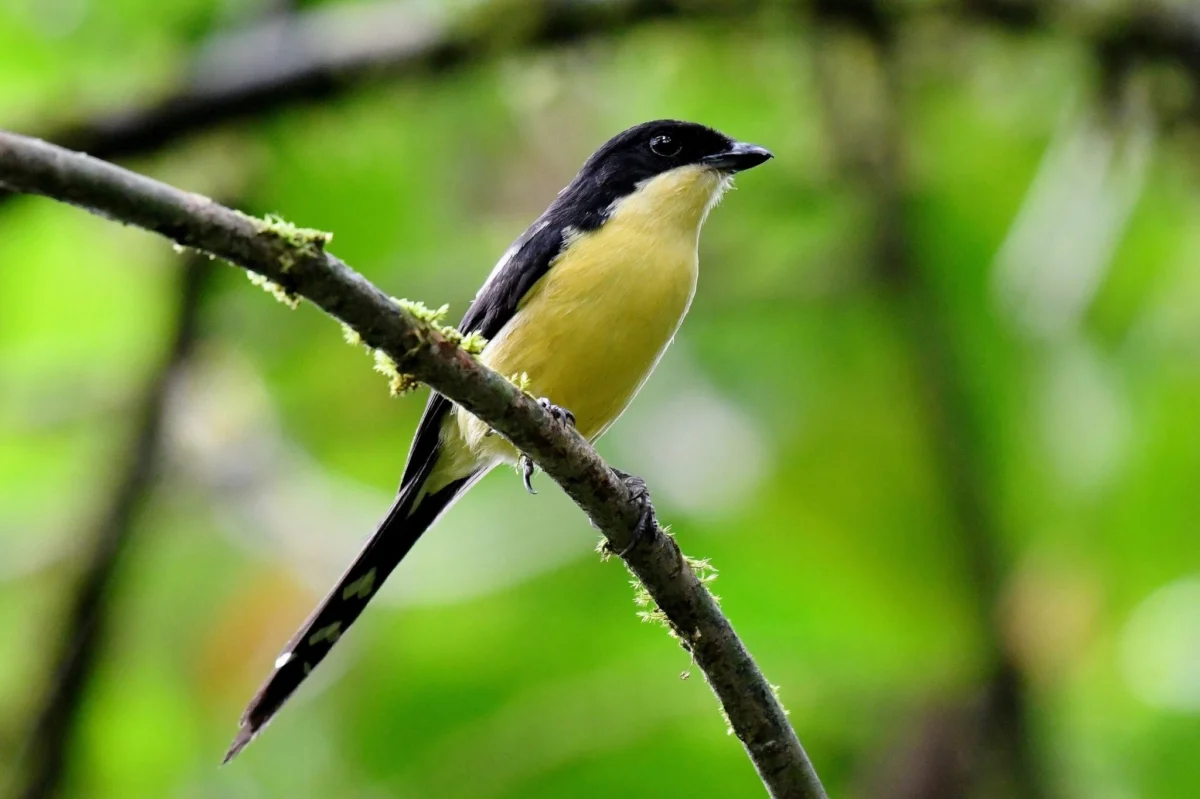
Rounding out this critically endangered trio is Newton’s Fiscal, a striking black-and-white shrike named after the British ornithologist Alfred Newton. This predatory bird, with its distinctive plumage and habit of perching conspicuously on exposed branches along forest ridges in the island’s central highlands, is also estimated to have a population of fewer than 250 individuals. Its highly restricted distribution and specific habitat requirements – primarily dense, undisturbed montane forest – make it one of Africa’s rarest birds. Like its counterparts, the fiscal faces intense pressure from human activities that encroach upon its shrinking domain. The presence of these three species, each representing distinct avian families and ecological niches, underscores the profound ecological value of São Tomé’s forests and the catastrophic loss their extinction would represent.
Mounting Pressures: A Multifaceted Threat

Despite the legal protection afforded to these species and their habitats under national law, the pressures on São Tomé’s biodiversity remain relentless. The primary driver of endangerment is widespread habitat loss and degradation. The island’s growing population and reliance on natural resources have led to significant agricultural expansion, particularly for cocoa, coffee, and other cash crops. This often involves clearing native forest, directly destroying the intricate ecosystems these endemic birds depend upon. Timber extraction, both legal and illegal, further exacerbates deforestation, fragmenting crucial forest corridors and diminishing the quality of remaining habitats.
Beyond habitat destruction, other anthropogenic factors exert immense pressure. Hunting, while legally restricted for many species, persists due to a combination of traditional practices, food insecurity, and a lack of effective enforcement. Disturbance from human presence, including logging activities, farming, and general human encroachment, further stresses already fragile bird populations, disrupting breeding cycles and foraging behaviors. Moreover, the introduction of invasive mammalian species, such as rats, cats, and monkeys, poses a severe threat, particularly to ground-nesting birds and eggs. These non-native predators can decimate local wildlife populations that have not evolved defenses against them, disrupting the delicate ecological balance that has existed for millennia.
BirdLife’s Enduring Commitment: A History of Action
Recognizing the urgent need for intervention, BirdLife International, a global partnership of conservation organizations, has been actively engaged in São Tomé and Príncipe since 2018. Their work, in collaboration with local partners, has focused on strengthening the management of the island nation’s protected areas. This involves not only patrolling and monitoring but also implementing effective conservation strategies tailored to the unique challenges of the archipelago. A key aspect of BirdLife’s approach has been the promotion of sustainable livelihoods within local communities. By working to reduce the reliance on destructive practices like extensive agriculture and unregulated timber harvesting, BirdLife aims to alleviate the direct pressures on biodiversity, fostering a more harmonious coexistence between people and nature.
Conservation, particularly in developing island nations, cannot succeed without the active participation and ownership of local communities. This understanding has been central to BirdLife’s strategy, evolving beyond mere protected area enforcement to encompass deep community engagement. The organization’s philosophy posits that those who live closest to the land are often its most knowledgeable custodians, and their involvement is indispensable for long-term success.
Empowering Communities: The ‘Agents of Change’ Model
A groundbreaking initiative implemented between 2022 and 2024 vividly demonstrated the transformative power of community engagement. This project directly involved local hunters, a demographic often viewed with suspicion by traditional conservation models. Instead of adopting a confrontational approach, BirdLife and its partners sought to shift perceptions, encouraging hunters to view themselves not as adversaries of conservation but as vital stewards of the forest. The program was designed to integrate their invaluable traditional knowledge of the land and its wildlife into scientific conservation efforts.
The results were truly remarkable: 75 hunters voluntarily joined the initiative, becoming "Agents of Change." Leveraging their profound understanding of the forest terrain and animal behavior, these individuals now play a crucial role in conservation. They assist researchers in locating rare species, including the elusive Dwarf Ibis, providing critical data on distribution and population trends. Crucially, they also report instances of illegal bird hunting, acting as an informal but highly effective monitoring network. This innovative model transformed a potential source of conflict into a powerful force for protection, demonstrating that local expertise can be a valuable tool for conservation rather than a challenge to it.
Beyond monitoring, the project facilitated a broader engagement with national authorities, biologists, and other civil society members. Local hunters participated in the review of existing hunting laws, contributing their practical insights to produce a roadmap for their improvement and updating. This collaborative process ensured that new regulations were not only scientifically sound but also culturally sensitive and implementable on the ground. Furthermore, a comprehensive mentoring program was offered to 25 selected hunters, focusing on the development of alternative economic activities. This initiative aimed to diversify income sources, reducing reliance on potentially destructive practices. Participants received training in basic management and financial skills, enabling them to explore new entrepreneurial ventures.
A competition was subsequently held, and the five most promising business ideas received technical and financial support for their development and implementation. This practical demonstration of how local hunters can become active contributors to conservation, balancing human needs with biodiversity protection, set a powerful precedent for future initiatives. It showcased a pathway where economic empowerment directly reinforces ecological stewardship.

Global Birdfair 2026: A Catalyst for Conservation
Building upon the successes and lessons learned from these previous endeavors, the Global Birdfair 2026 project represents a significant escalation of efforts. Global Birdfair, one of the world’s premier events for birdwatchers and conservationists, is celebrated for its ability to galvanize global support for critical environmental causes. Its endorsement and financial backing for São Tomé’s conservation project underscore the international recognition of the island’s unique ecological importance and the urgency of its plight.
The funding provided by Global Birdfair 2026 will be instrumental in addressing critical knowledge gaps about the endangered birds of São Tomé while simultaneously strengthening local capacity for their protection. A key focus will be on enhanced scientific research. This involves deploying teams of researchers, working in tandem with local park rangers and community members, to conduct more intensive surveys and studies. The goal is to gain a deeper understanding of where these species live, their precise habitat requirements, their reproductive success, and the specific factors influencing their population dynamics. Such data is essential for developing highly targeted and effective conservation strategies.
Simultaneously, the project will continue to emphasize and expand community involvement. This means not only reinforcing the "Agents of Change" network but also engaging a broader spectrum of the local population in conservation activities. Workshops, educational programs, and participatory decision-making processes will ensure that conservation efforts are deeply rooted in local knowledge, cultural values, and active participation. This approach fosters a sense of long-term stewardship, where the community views itself as the primary guardian of its natural heritage.
The Broader Significance: Beyond Bird Conservation
The focus on the Dwarf Ibis, São Tomé Grosbeak, and Newton’s Fiscal extends far beyond the protection of individual species. These birds serve as powerful indicators of ecosystem health and are symbols of São Tomé’s extraordinary natural heritage. Protecting them inherently means safeguarding the integrity of the island’s primary forests, the critical ecosystems they inhabit, and the myriad other species that share their environment. Healthy forests provide invaluable ecosystem services, including regulating water cycles, preventing soil erosion, and sequestering carbon, all of which are vital for the well-being of local communities and the global climate.
Furthermore, successful conservation in São Tomé holds significant implications for the potential development of sustainable ecotourism. A thriving natural environment, particularly one boasting unique and iconic wildlife, can attract nature enthusiasts and birdwatchers from around the world. This can create new economic opportunities for local communities, providing alternative livelihoods that are directly linked to conservation rather than detrimental to it. Such tourism can also foster a greater appreciation for biodiversity both locally and internationally, generating further support for conservation initiatives.
The partnership between Global Birdfair 2026 and BirdLife International in São Tomé is a testament to the power of international collaboration in addressing global environmental crises. It highlights that the fate of even the most isolated and seemingly insignificant species is interconnected with global efforts. Preventing the extinction of these three iconic birds would not only preserve a unique piece of Earth’s biodiversity but also serve as an inspiring example of what can be achieved through dedicated research, innovative community engagement, and sustained global solidarity.
Our heartfelt gratitude is extended to the entire Global Birdfair team for their visionary support of this vital project. With continued backing, collaborative spirit, and a shared sense of urgency from individuals and organizations worldwide, there is genuine hope. We can collectively ensure that the haunting call of the Dwarf Ibis, the quiet, persistent presence of the São Tomé Grosbeak, and the watchful, striking silhouette of Newton’s Fiscal remain integral components of São Tomé’s magnificent forests for generations to come. Together, we possess the capacity to help safeguard some of Africa’s rarest and most precious avian treasures, ensuring their continued existence as living testaments to the wonder of evolution.
