
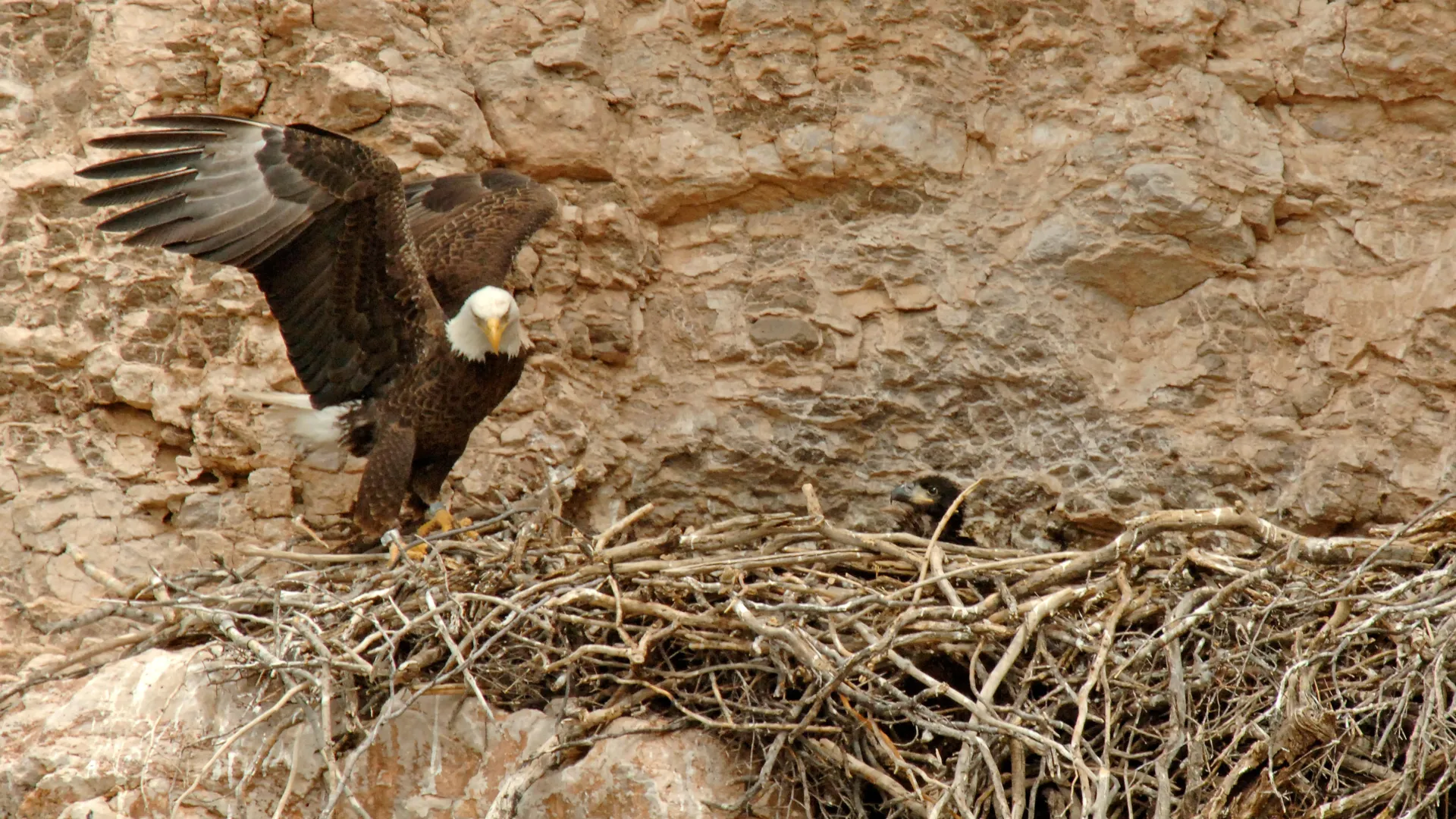
Birds of a feather do not always flock together, despite the adage. A new study published in the esteemed Journal of Raptor Research describes a fascinating deviation from conventional migratory patterns, revealing that Bald Eagles (Haliaeetus leucocephalus) originating from Arizona are undertaking unusual northward journeys, a stark contrast to the southbound migrations typically observed in most temperate-region avian species. The groundbreaking paper, aptly titled "Northward Migrations of Nonbreeding Bald Eagles from Arizona, USA," further illuminates the remarkable adaptability of these iconic raptors by reporting on a singular eagle that departed Arizona and ultimately established itself in California, a finding that significantly challenges long-held assumptions about the frequency of emigration from established home populations. The researchers involved in this pivotal study conclude that southwestern Bald Eagles exhibit a profound exploratory nature, a trait likely honed to efficiently locate and exploit transient food resources. As the global climate continues its inexorable shift and landscapes undergo rapid transformation, comprehensive research documenting how wildlife modifies its movements becomes an indispensable tool for designing effective conservation strategies and safeguarding vital travel corridors for species particularly vulnerable to environmental changes.
Unveiling a Hidden Chapter of Avian Migration
Between 2017 and 2023, a dedicated Arizona-based research consortium embarked on a meticulous study, employing cutting-edge satellite transmitters to track 24 newly fledged Bald Eagles and two nonbreeding adults. This sophisticated tracking technology allowed the team to precisely map their movements both within and far beyond the borders of Arizona. While breeding Bald Eagles in Arizona have historically been presumed to remain in close proximity to their nesting territories for the majority of the year, there has been a notable paucity of information regarding the movements and ecological roles of their nonbreeding counterparts. Understanding the full spectrum of movement patterns and survival rates across all life stages, particularly for nonbreeding individuals, is paramount. Such comparative data provides scientists with a far more complete and nuanced understanding of the species’ overall health across its vast range and offers critical insights into the complex population-level processes that shape its dynamics.
The researchers diligently monitored individual eagles for the entire operational lifespan of their tracking devices, with some birds providing invaluable data for up to four years within the overarching seven-year study period. The prevailing scientific and public perception of North American migratory birds typically involves a southward movement during the nonbreeding season, which for most, aligns with the "winter" months, in pursuit of milder climates and more dependable food sources. However, Arizona’s Bald Eagles present a unique ecological anomaly: their nesting season commences in winter, meaning their nonbreeding period naturally falls during the summer and autumn. Dr. Caroline D. Cappello, the lead author of the study, expressed her profound intrigue regarding this distinct seasonal timing of movement. She noted that "northward migratory behavior raises interesting questions about the recent and historical pressures that shape these movement strategies," suggesting a deep evolutionary context behind these unexpected patterns.
The Arizona Bald Eagle: A Unique Ecological Niche
To fully appreciate the significance of these findings, it’s crucial to understand the broader context of Bald Eagle biology and conservation. Once teetering on the brink of extinction due to widespread pesticide use (primarily DDT) in the mid-20th century, the Bald Eagle has made a remarkable recovery, largely owing to the ban of DDT in 1972 and subsequent conservation efforts. It was removed from the U.S. endangered species list in 2007. Today, populations are robust in many areas, yet regional variations and specific threats persist.
Arizona’s Bald Eagle population is particularly noteworthy. Situated at the southwestern edge of the species’ breeding range in the contiguous United States, these eagles inhabit a unique desert riparian environment, a stark contrast to the more commonly associated forested lakes and coastal areas. Their primary food source in this region is often fish from rivers like the Verde and Salt, and various reservoirs. This specific ecological context likely plays a significant role in shaping their migratory and exploratory behaviors, as the availability of water and associated prey can fluctuate dramatically with seasonal rainfall and human water management practices.
The conventional wisdom regarding Bald Eagle migration across North America posits that most northern populations migrate south for winter, while southern populations are generally considered resident or undertake shorter, less predictable movements. This study directly challenges that latter assumption for the Arizona population, presenting a new paradigm where nonbreeding eagles from a southern, warm-climate region migrate north.
Historical Echoes and Enduring Habitats: A Legacy of Stopover Sites
A particularly compelling aspect of the study is the confirmation that the tracked eagles utilized many of the same lakes and rivers previously identified as crucial stopover sites for Bald Eagles in a foundational study conducted in the 1980s. This remarkable overlap provides robust evidence that these specific habitats have maintained their ecological significance, serving as vital gathering points and refueling stations for multiple generations of eagles over more than four decades. This continuity underscores the enduring importance of these riparian corridors and aquatic ecosystems for the species’ survival and movement.
Beyond merely confirming a strong reliance on the Intermountain Flyway – a major avian migratory route stretching from the southwestern U.S. into Canada – and a clear dependence on lakes and rivers along their routes, the study illuminated that eagles of varying ages undertook migrations to the northern U.S. and even into southern Canada. Dr. Javan M. Bauder, a coauthor of the study, a USGS researcher, Assistant Unit Leader at the Arizona Cooperative Fish and Wildlife Research Unit, and Assistant Professor at the University of Arizona, emphasized the profound significance of this finding. He stated, "Managing and conserving wildlife populations requires that we understand the movement patterns of individuals of all age classes within those populations." This highlights the necessity of a holistic approach to conservation, one that doesn’t solely focus on breeding adults but considers the intricate dynamics of younger, nonbreeding individuals as well.
The research team also observed a fascinating developmental progression: as eagles matured, their migration pathways became notably more precise and refined. Most birds tracked for at least two years consistently returned to Arizona in the fall of their hatch year after spending the summer months roaming extensively farther north. The researchers posit that these young, highly exploratory eagles might be capitalizing on seasonal "food bonanzas" available in northern latitudes, such as prolific spawning salmon runs, abundant nesting waterfowl, or the carcasses of large mammals that become available after winter thaws. Determining the precise nature of these opportunistic feeding strategies will undoubtedly necessitate additional, targeted research. This hypothesis aligns with the concept of "resource tracking" – a migratory strategy where animals move to exploit temporary peaks in food availability.
Navigating a Perilous World: Long Journeys and Lethal Threats to Young Raptors
Bald Eagles, like many other large raptors, face an array of formidable hazards as they navigate an increasingly human-dominated world. The study poignantly highlighted these perils through the fate of one particular eagle. This individual embarked on an extraordinary journey, traversing ten U.S. states and four Canadian provinces during her formative years before appearing to settle in northern California, where she seemed poised to establish her own breeding territory. Tragically, at the tender age of four years old – still relatively young for a species that can live 20-30 years in the wild – she was killed by electrocution, an alarmingly common cause of death for large birds of prey.
Dr. Cappello explained that her loss was especially troubling because it "underscored the ongoing risks these birds face," and because emigration, the permanent departure from a natal population, represents a notoriously difficult aspect of population dynamics to accurately measure. This eagle’s apparent decision to live and breed in California would have provided invaluable and rare insight into the frequency and patterns of how often Bald Eagles hatched in Arizona disperse to other regions, a key factor in understanding gene flow and population connectivity.
Beyond electrocution, young raptors confront a multitude of other threats, including poisoning from lead ammunition fragments (ingested from carrion) and rodenticides (second-hand exposure), collisions with rapidly expanding wind turbine infrastructure, pervasive loss and fragmentation of critical habitat, and the overarching uncertainty related to a rapidly changing climate. By diligently studying raptors across all stages of their life cycle, including the often-risky and highly exploratory journeys of young birds, scientists can generate evidence-based recommendations. These recommendations are crucial for identifying which stopover sites are most important to protect, and which types of human infrastructure, particularly electrical systems, could be modified and improved to significantly enhance the survival rates for eagles and other large raptors. This includes retrofitting power poles with avian-safe designs and insulating power lines.
Conservation in a Changing Climate: Implications for Future Strategies
The findings of this study carry profound implications for the future of Bald Eagle conservation, particularly in the face of climate change. The observed northward migration of Arizona’s nonbreeding eagles could be an adaptive response to shifting resource availability, driven by warmer temperatures and altered precipitation patterns that affect water levels and fish populations. Understanding these adaptive movements is crucial for predicting how species will respond to future environmental shifts.
Protecting these migratory corridors, especially the Intermountain Flyway, becomes even more critical. These pathways are not just routes; they are networks of interconnected habitats that support eagles throughout their long journeys. The identification of enduring stopover sites from the 1980s study reinforces the need for long-term protection of these specific areas. Conservation efforts must therefore be geographically broad, extending beyond state or even national borders, given the international scope of some of these migrations into Canada.
The study also underscores the importance of a multi-species approach to conservation. Protecting key aquatic ecosystems benefits not only eagles but also the fish, waterfowl, and other wildlife that form their prey base. The vulnerability of young, exploratory eagles to human-caused mortality highlights the need for a comprehensive threat reduction strategy. This includes public education campaigns about the dangers of lead ammunition and rodenticides, careful siting and design of wind energy facilities, and proactive measures to mitigate habitat loss and fragmentation.
Future Trajectories and Research Imperatives
Looking ahead, the research team strongly advocates for future investigations into "route fidelity" among these northward-migrating eagles. As Dr. Cappello remarked, "if consistent patterns exist it could help focus conservation efforts on specific, high-use areas along their migratory route." Identifying these predictable high-use areas would allow conservation resources to be deployed more efficiently and effectively, safeguarding critical bottlenecks and essential habitats.
Furthermore, the team highlights the significance of comparing these Arizona Bald Eagles to other wildlife populations that also exhibit northward migration from the southern fringes of their respective ranges. Such comparative studies could provide invaluable insights into the broader ecological tradeoffs, energetic costs, and adaptive benefits associated with this intriguing northward migration strategy. This comparative approach would help to determine if this pattern is unique to Bald Eagles in Arizona or if it represents a more widespread, yet understudied, adaptive response to environmental pressures across different species and ecosystems.
In conclusion, this pioneering research from Arizona offers a captivating glimpse into the nuanced and dynamic lives of Bald Eagles, revealing their remarkable exploratory spirit and adaptability. It challenges preconceived notions about avian migration and underscores the urgent need for continuous, in-depth research to inform robust, proactive conservation strategies in an era of unprecedented environmental change. The journeys of these magnificent raptors serve as a powerful reminder that the natural world is constantly evolving, and our understanding of it must evolve just as rapidly.
