
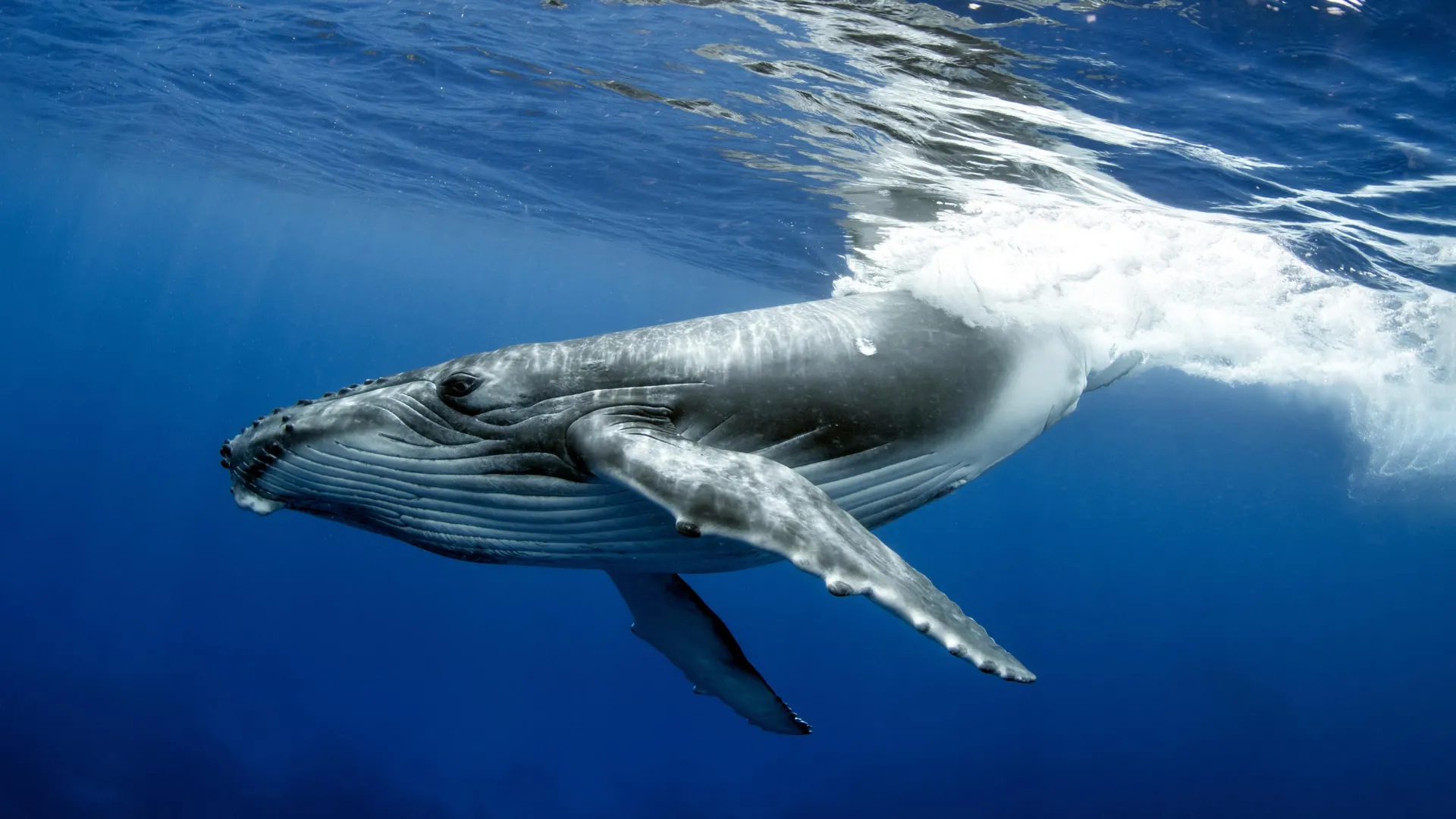
In a landmark discovery that redefines the known limits of mammalian migration, scientists have definitively confirmed that individual humpback whales undertake extraordinary trans-oceanic journeys between disparate breeding grounds in eastern Australia and Brazil. This remarkable feat, covering a minimum straight-line distance exceeding 14,000 kilometers across vast expanses of open ocean, represents the greatest confirmed distance ever recorded between sightings of individual humpback whales anywhere in the world. The findings underscore the incredible navigational capabilities of these marine giants and highlight the critical importance of long-term international research and citizen science initiatives.
The Record-Breaking Journeys Unveiled
The groundbreaking research, published in Royal Society Open Science, details the incredible voyages of two distinct humpback whales ( Megaptera novaeangliae). The methodology relied heavily on photo-identification, a non-invasive technique that leverages the unique markings on a whale’s tail fluke – much like a human fingerprint – to identify individuals over time and across vast geographical distances. This technique has been instrumental in tracking whale populations for decades, allowing researchers to piece together migration patterns, population dynamics, and individual life histories.
One of the documented whales was initially photographed in 2007 in Hervey Bay, Queensland, a renowned whale-watching destination and a crucial breeding ground for Australia’s eastern humpback population. This individual was observed again in the same area in 2013, reinforcing its connection to the Australian breeding stock. Remarkably, six years later, in 2019, the very same whale was sighted and photographed off the coast near São Paulo, Brazil. The minimum straight-line distance between these two breeding grounds is approximately 14,200 kilometers, a distance roughly equivalent to traversing from Sydney to London. Researchers acknowledge that the actual journey undertaken by the whale was likely far greater, given that only the starting and ending points were recorded, leaving the exact migratory path shrouded in mystery.
Even more astonishing was the journey of a second whale. This individual was first identified in 2003 at Brazil’s Abrolhos Bank, a critical nursery area off the coast of Bahia, known for its vibrant humpback whale activity. At the time of its initial sighting, it was part of a lively group of nine adult whales, suggesting active participation in the breeding activities of the Brazilian population. An incredible 22 years later, in September 2025, the identical whale was photographed alone in Hervey Bay, Australia. This documented movement established a new, undisputed record for the longest known migration of an individual humpback whale, spanning an astounding 15,100 kilometers. The sheer scale and duration of these journeys challenge previous assumptions about the connectivity and migratory fidelity of humpback whale populations.
The Science Behind the Discovery: Photo-Identification and Collaborative Research
"Discoveries like this are only possible because of investment into long-term multi-decadal research programs and international collaboration," stated Stephanie Stack, a PhD Candidate at Griffith University and co-author of the study. Her sentiments underscore the extensive commitment required to uncover such rare and significant events. The study’s success hinged on the meticulous collection and comparison of 19,283 high-quality fluke photographs. These images, amassed between 1984 and 2025, originated from both eastern Australia and various locations across Latin America. This extensive dataset represents an unparalleled resource for understanding whale movements.
The process of identifying individual whales across such a vast photographic archive is a testament to technological advancement combined with human expertise. Researchers utilized sophisticated automated image recognition software to initially compare the tens of thousands of photographs. This software, designed to analyze the unique patterns, scars, and pigmentation on each fluke, significantly streamlined the identification process. Following the automated analysis, every potential match was then meticulously checked and confirmed manually by experienced researchers, ensuring the integrity and accuracy of the findings. This rigorous two-step verification process is crucial for scientific validity, particularly when documenting unprecedented events.
The global whale tracking platform, Happywhale, played a pivotal role in facilitating this research. Happywhale serves as a central repository for whale photo-identification data, allowing researchers and citizen scientists worldwide to upload and compare images. This platform democratizes whale research, enabling contributions from a diverse array of individuals and organizations. The integration of data from both professional researchers and dedicated citizen scientists was fundamental to the scale and success of this study. "This kind of research highlights the value of citizen science," said lead researcher Dr. Cristina Castro from the Pacific Whale Foundation. "Every photo contributes to our understanding of whale biology and, in this case, helped uncover one of the most extreme movements ever recorded."
Decades of Dedication: The Role of Long-Term Research and Citizen Science
The timeline of these discoveries is critical. The first whale’s sightings spanned 12 years (2007-2019), while the second whale’s journey was documented over an incredible 22 years (2003-2025). This multi-decadal scope highlights the indispensable nature of sustained, long-term research programs. Whale populations, with their long lifespans and extensive migratory routes, require decades of observation to reveal their full behavioral repertoire. Funding and maintaining such programs across different continents and political landscapes is a significant undertaking, requiring unwavering commitment from institutions, governments, and individual researchers.
The contribution of citizen scientists, often passionate individuals with cameras and a love for marine life, cannot be overstated. Their consistent efforts in capturing and submitting high-quality photographs from various locations have significantly augmented the data collected by professional researchers. Platforms like Happywhale not only facilitate data collection but also foster a global community dedicated to marine conservation. The sheer volume of photographs – nearly 20,000 high-quality fluke images – speaks volumes about the collective effort involved. This collaborative model exemplifies how modern scientific discovery can transcend traditional boundaries, leveraging technology and community engagement to unlock new insights into the natural world.
Humpback Migration in Context: A Global Phenomenon
Humpback whales are renowned for their epic annual migrations, traveling thousands of kilometers between cold, food-rich feeding grounds in polar regions and warmer, nutrient-poor breeding grounds in tropical or subtropical waters. Typically, populations exhibit strong migratory fidelity, returning to the same breeding and feeding areas year after year, and generally remaining within distinct ocean basins. For instance, humpbacks in the North Atlantic are largely distinct from those in the North Pacific, and Southern Hemisphere populations typically breed and feed within their specific ocean sectors (e.g., eastern South Pacific, western South Atlantic, eastern Australia).
The eastern Australian humpback population, known as ‘Ecological Stock E,’ feeds in Antarctic waters south of Australia and New Zealand before migrating north along Australia’s east coast to breed in the Great Barrier Reef and Coral Sea. Similarly, the western South Atlantic population, which includes the Brazilian whales, feeds in Antarctic waters off South America and migrates to breeding grounds like the Abrolhos Bank. The established understanding was that these populations largely remained geographically isolated during their breeding phases, even if they occasionally shared feeding grounds in the vast Southern Ocean.
This new research challenges that paradigm by demonstrating direct, bidirectional exchange between these two historically distinct breeding populations. While the migrations are exceptionally rare – representing only 0.01 percent of the nearly 20,000 identified humpback whales in the dataset – their occurrence profoundly impacts our understanding of humpback whale population connectivity.
Unraveling the ‘Why’: Implications for Genetic Diversity and Cultural Exchange
Despite their rarity, these extraordinary crossings hold significant implications for the long-term health and resilience of humpback whale populations. "Despite their rarity, these exchanges matter for the long-term health of whale populations," Ms. Stack emphasized. One primary benefit is the maintenance of genetic diversity. Occasional individuals moving between distant breeding grounds can introduce new genes into a population, preventing inbreeding and enhancing the genetic robustness of the species. Genetic diversity is a crucial buffer against environmental changes, diseases, and other threats, ensuring that populations have the adaptive capacity to survive and thrive.
Beyond genetics, these rare movements could also facilitate cultural exchange, particularly regarding humpback whale songs. Humpback whale songs are complex, structured vocalizations unique to males, believed to play a role in mating. These songs are not static; they evolve over time and are known to spread culturally across ocean basins, much like musical trends in human societies. If a male whale migrates from one breeding ground to another, it could potentially introduce new song styles to the resident population, enriching their cultural repertoire. This phenomenon, where songs propagate through social learning, highlights the sophisticated social structures and communication systems within whale communities.
The Southern Ocean Exchange Hypothesis: A Paradigm Shift?
The findings provide compelling support for what researchers term the "Southern Ocean Exchange" hypothesis. This theory posits that humpback whales from different breeding populations, while maintaining distinct breeding grounds, may occasionally converge in shared Antarctic feeding areas. The vast, nutrient-rich waters of the Southern Ocean serve as a crucial feeding ground for multiple Southern Hemisphere humpback populations. The hypothesis suggests that some whales, after intermingling in these feeding grounds, might then return along a different migratory route than their original one, eventually settling and breeding in a completely new region. This study offers the first direct empirical evidence of such a bidirectional exchange, providing a tangible link between populations previously thought to be largely separate.
This hypothesis has profound implications for how scientists model and manage whale populations. If such exchanges occur, even rarely, it means that populations are not entirely isolated genetic units. This connectivity must be considered in conservation strategies, particularly regarding issues like genetic viability, disease transmission, and the impacts of localized threats.
Climate Change: A New Variable in Whale Migration
Researchers also believe that climate change could play a significant role in making these rare trans-oceanic crossings more common in the future. The Antarctic ecosystem, which forms the primary feeding ground for Southern Hemisphere humpbacks, is undergoing rapid changes due to global warming. Shifts in Antarctic sea ice extent and distribution, coupled with changes in the abundance and distribution of Antarctic krill – the whales’ primary food source – are already being observed.
As krill populations shift in response to warming waters and altered ice conditions, whales may be forced to explore new feeding grounds. This ecological pressure could lead to increased instances of whales from different breeding populations encountering each other more frequently in newly emerging feeding hotspots. Such encounters could, in turn, increase the likelihood of individuals "straying" or choosing alternative migratory routes back to breeding grounds that are not their natal ones. This highlights a complex interplay between climate change, food availability, and whale behavior, suggesting that the dynamics of humpback migration are not static but are evolving in response to a changing planet. Further research is imperative to monitor these trends and understand their long-term effects on whale populations globally.
A Call for Continued Collaboration and Conservation
The study, titled "First evidence of bidirectional exchange between distant humpback whale breeding populations in eastern Australia and Brazil," published in Royal Society Open Science, is a testament to the power of persistent scientific inquiry and global collaboration. It not only expands our understanding of humpback whale biology but also underscores the interconnectedness of marine ecosystems across vast distances.
The findings serve as a powerful reminder of the importance of robust international conservation efforts. Humpback whales have made a remarkable recovery from the brink of extinction following the cessation of commercial whaling in the mid-20th century, a success story largely attributed to coordinated global conservation initiatives. However, new threats, including climate change, entanglement in fishing gear, and ocean noise pollution, continue to challenge their survival. Understanding their full migratory range and population connectivity is crucial for developing effective, adaptive management strategies in an increasingly dynamic marine environment. The journey of these two record-breaking whales is not just a scientific marvel but a compelling narrative of resilience, adaptation, and the enduring mysteries of our planet’s most magnificent creatures.
