
The Standing Committee 67 (SC67) of the Ramsar Convention on Wetlands, held in Switzerland on the shores of Lake Geneva, has concluded a series of critical discussions aimed at bolstering global efforts in wetland conservation, restoration, and wise use. This intersessional meeting, the first since the pivotal 15th Conference of the Parties (COP15) in Zimbabwe, served as a vital platform for reviewing progress, strengthening accountability, and deepening partnerships to implement the ambitious goals set forth in the Convention’s 5th Strategic Plan (2025-2034).
The SC67, convening from May 4th to 7th, 2026, brought together representatives from Contracting Parties, international organizations, and scientific bodies to translate the commitments made at COP15 into tangible actions. The absence of a full COP until June 2028 underscores the significance of these Standing Committee meetings in maintaining the momentum generated by high-level political declarations.
Key Outcomes and Achievements at SC67
A major accomplishment of SC67 was the adoption of the Indicator Framework for the 5th Strategic Plan. This framework, developed by the Scientific and Technical Review Panel (STRP), is crucial for monitoring progress towards the ambitious targets outlined in the plan, which was a direct follow-up to COP15 held in Victoria Falls, Zimbabwe. The swift adoption of this framework highlights the collective commitment to measurable progress in wetland conservation.
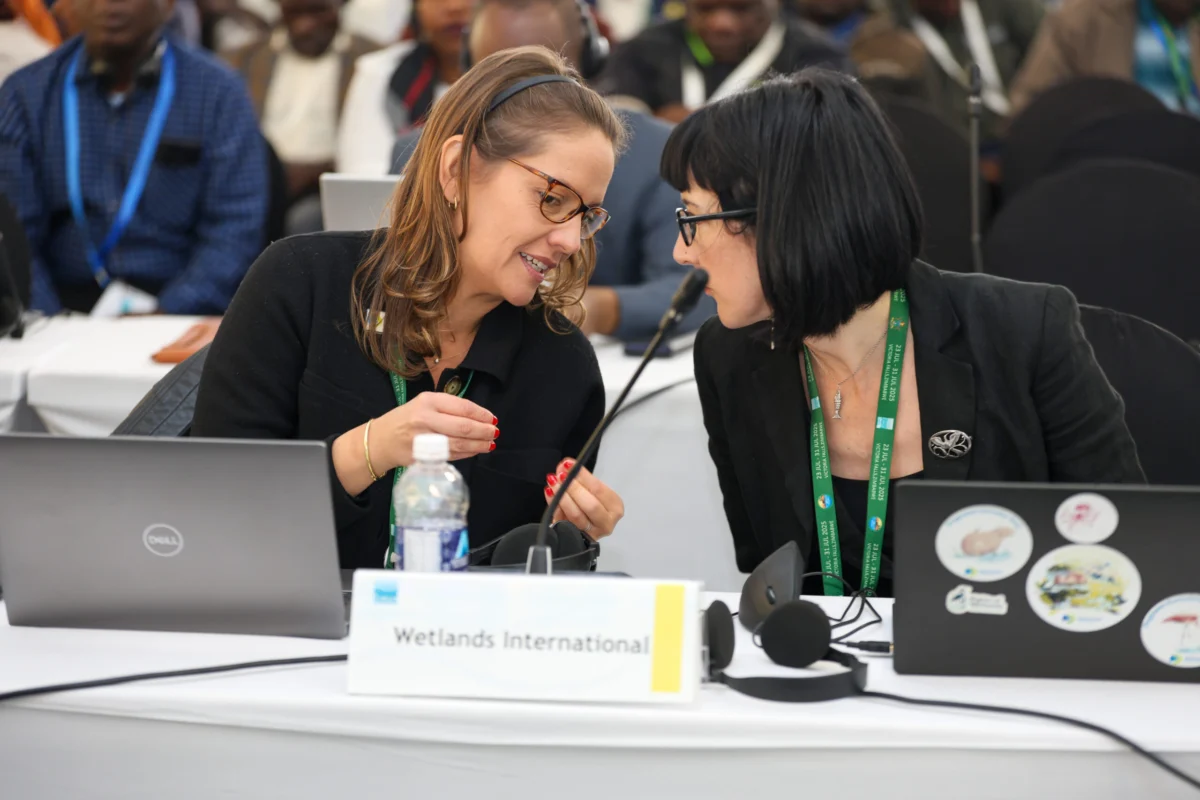
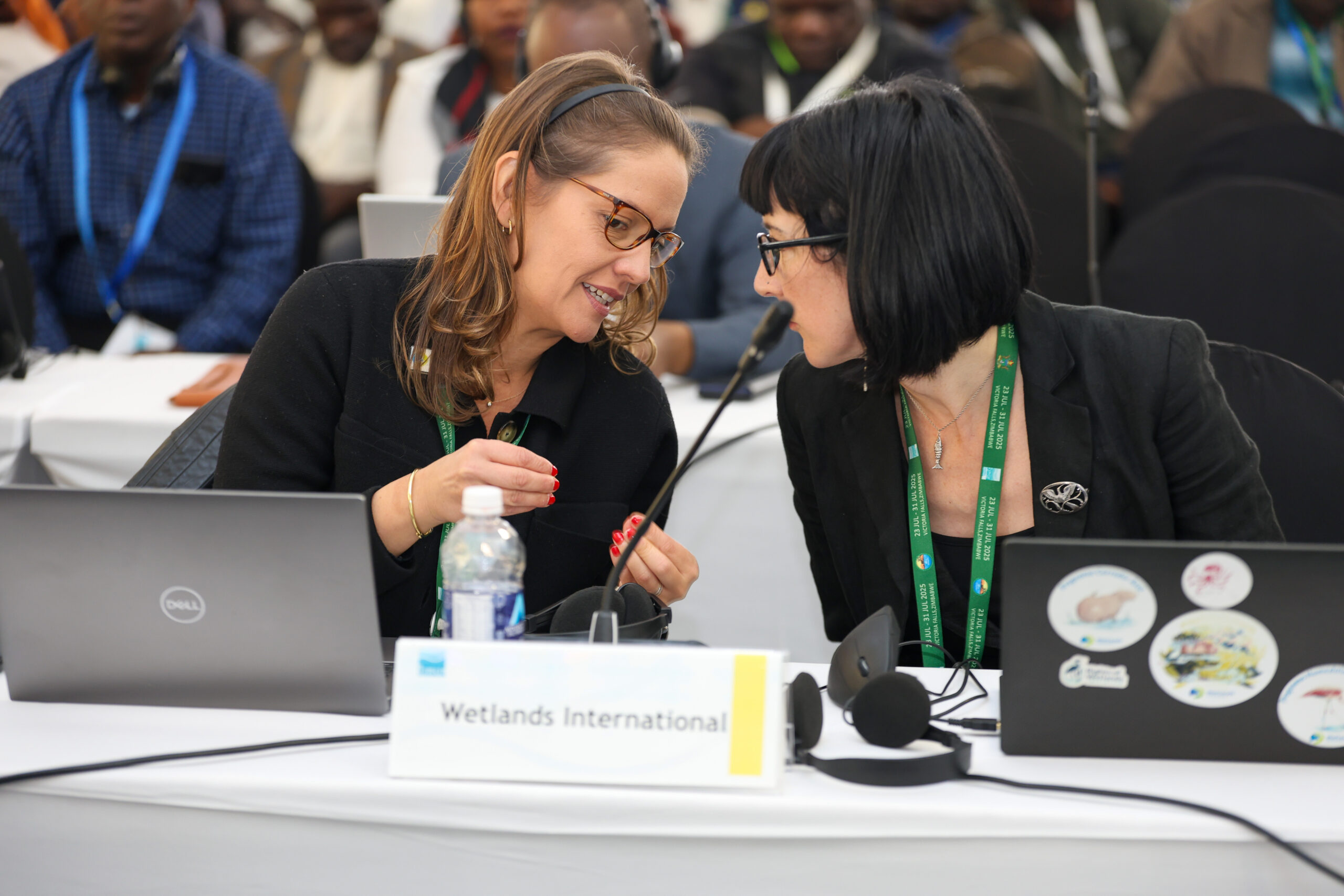
Wetlands International, a key partner in the Convention’s implementation, played an active role throughout the proceedings. The organization highlighted its ongoing contributions to vital initiatives, including the GeoWetlands project. In their intervention, Wetlands International stated, "Wetlands International regards the Geowetlands work as one of the very many incredibly valuable initiatives of the Convention, tailored to the needs of Parties, and we are honoured to continue to contribute including by coordinating the Geowetlands partnership as we have been doing for recent months, in addition to our national offices working directly with many Parties at national level. We consider it very positive that the 2026-2028 workplan and partnership agreement have been finalised, giving us a framework in which we can collaborate, to progress remote sensing of wetlands in a coordinated way in this triennium, as well as moving forwards on National Wetland Inventories." The finalization of the 2026-2028 workplan and partnership agreement for GeoWetlands provides a clear roadmap for advancing remote sensing technologies and National Wetland Inventories.
International Organisation Partners (IOPs) Showcase Collaborative Efforts
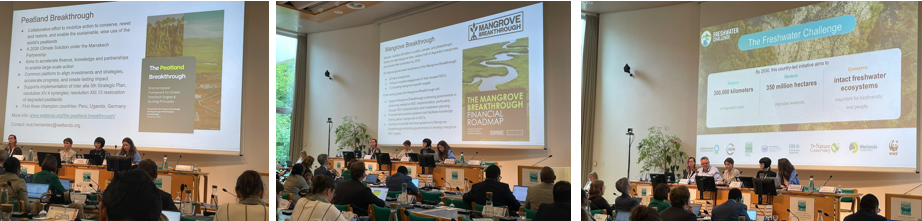
The collective efforts of the six International Organisation Partners (IOPs) of the Ramsar Convention – Birdlife International, IMWI, IUCN, Wetlands International, WWF, and WWT – were a central theme of the SC67. On Wednesday, May 6th, the IOPs provided an update on their support for delivering the 5th Strategic Plan. They emphasized their collaboration on three crucial voluntary global initiatives: the Freshwater Challenge, the Mangrove Breakthrough, and the Peatland Breakthrough. These initiatives are designed to accelerate action in critical wetland ecosystems and demonstrate the power of multi-stakeholder partnerships in achieving conservation goals.
Prioritizing Transformative Change for Wetlands
During the Opening Plenary on Tuesday, May 5th, Laura MacKenzie, Senior Advocacy Officer at Wetlands International, delivered a significant statement on behalf of all six IOPs. The statement articulated three overarching priorities for enhanced wetland action:
- Addressing Root Causes of Wetland Loss: This involves tackling the fundamental financial and economic drivers that lead to wetland degradation.
- Reconfiguring Human-Wetland Relationships: This priority includes exploring concepts like the Rights of Wetlands, fostering a deeper societal understanding of their intrinsic value and ecological functions.
- Elevating Wetlands in Multilateral Environmental Agreements (MEAs): The statement underscored the critical role of wetlands in achieving the objectives of other international agreements, including the Convention on Biological Diversity (CBD), the UN Framework Convention on Climate Change (UNFCCC), the UN Convention to Combat Desertification (UNCCD), and the UN Water Conference. Wetlands were positioned as essential "watery connectors" flowing through all these critical global agendas.
Advancing Scientific Understanding and Data
The SC67 also saw updates on vital scientific initiatives. Wetlands International provided an intervention on the Global Waterbirds Estimates Partnership (GWEP), expressing gratitude for the comprehensive update from the secretariat and the UK STRP representative. "Wetlands International would like to thank the secretariat, and the UK STRP representative, for the comprehensive update on progress with the Global Waterbirds Estimates Partnership. As we work together to deliver 2027 Waterbird Population Estimates, we would like to reiterate how essential the contributions have been: from the governments of Australia, Switzerland and the United Kingdom, Birdlife International, Manomet, and Wetlands International — notwithstanding the urgent need to fill the funding gaps. It’s been a pleasure to work constructively and intensively with contracting parties, the STRP, and many other critical partners and collaborators since the adoption of the resolution last July at COP15, including as part of the interim coordination committee and as G-WEP secretariat, and we look forward to building on that over the coming critical months as this vital work takes flight," the statement read. The GWEP, a collaborative effort involving governments and organizations, is crucial for accurate population assessments of migratory waterbirds, providing essential data for conservation planning. The urgency to fill funding gaps for the 2027 Waterbird Population Estimates was also highlighted.
The Legacy of COP15 and the Path Forward
The success of COP15 in Victoria Falls, Zimbabwe, in July of the previous year, brought global attention to the irreplaceable value of wetland ecosystems. Hosted near the magnificent Victoria Falls, a Ramsar Site of International Importance, COP15 culminated in the Victoria Falls Declaration, a testament to the growing recognition of wetlands’ critical role for people, nature, and climate. While COPs garner significant media attention due to high-level commitments and complex negotiations, intersessional meetings like SC67 are indispensable for maintaining momentum, reviewing progress, and ensuring accountability.
The Ramsar Convention’s Strategic Plan provides a roadmap for wetland action through 2035. This plan prioritizes transformative change in how societies interact with wetlands, addressing the primary drivers of their loss: climate change, unsustainable agriculture, poorly planned infrastructure, urbanization, pollution, and invasive species.

Wetlands International’s Strategic Focus at SC67
Wetlands International articulated five key strategic priorities guiding its engagement at SC67:
-
Demonstrating Support for COP15 Resolutions: The organization showcased the alignment of its new strategy with the Ramsar Convention’s 5th Strategic Plan, detailing how its global wetland landscape work supports resolutions on waterbird flyways, freshwater ecosystem restoration (through the Freshwater Challenge), and the designation of wetlands as protected areas or Other Effective area-based Conservation Measures (OECMs) to contribute to the Global Biodiversity Framework’s 30×30 target.
-
Contributing to Technical and Scientific Work: Wetlands International provided updates on its contributions to essential technical and scientific initiatives, including the GeoWetlands earth observation initiative and the Global Waterbirds Estimates Partnership, underscoring their importance for effective wetland management.
-
Integrating Wetland Values into Finance and Economic Policy: Citing reports from IPBES and UNEP, which highlight significant financial misalignments in nature conservation, Wetlands International emphasized the urgent need to incorporate the economic value of wetlands into financial and economic policy. The organization pointed to concerning examples, such as the weakening of glacier protection laws in the High Andes, which could exacerbate threats to wetlands from lithium mining, and the proposed dilution of the EU Water Framework Directive, as evidence of ongoing challenges in safeguarding these vital ecosystems.
-
Building Momentum Behind Transformative Ideas: Wetlands International explored support for a potential new draft resolution on the "rights of wetlands," building on the IUCN’s resolution on the rights of rivers. Furthermore, the organization shared success stories from the Freshwater Challenge, Mangrove Breakthrough, and Peatland Breakthrough, encouraging more governments to join these voluntary global initiatives and integrate wetland action into their national targets and plans for climate, biodiversity, water security, and sustainable development goals.
-
Championing Multilateralism for Water and Wetland Action: The year 2026 began positively for wetlands and multilateralism, with the Convention on Migratory Species COP15 in Brazil adopting decisions on flyways and migratory wetland species, alongside the Pantanal Declaration. SC67 provided an opportunity to reinforce the prioritization of wetlands as critical interconnectors at upcoming Rio Convention COPs and the UN Water Conference, emphasizing their multifaceted role in biodiversity conservation, climate regulation, water security, and community livelihoods.
Looking Ahead to COP16 in Panama
The SC67 meeting also included an update from Panama on its preparations to host the Convention on Wetlands COP16 in Panama City in June 2028. Following the successful COP15 in Zimbabwe, Panama faces the challenge of building upon the momentum generated. With Wetlands International having an office in the country, the organization is committed to supporting Panama in its efforts to further accelerate global wetland action. The commitment to hosting COP16 signifies Panama’s dedication to global leadership in nature conservation, particularly for wetlands.
