
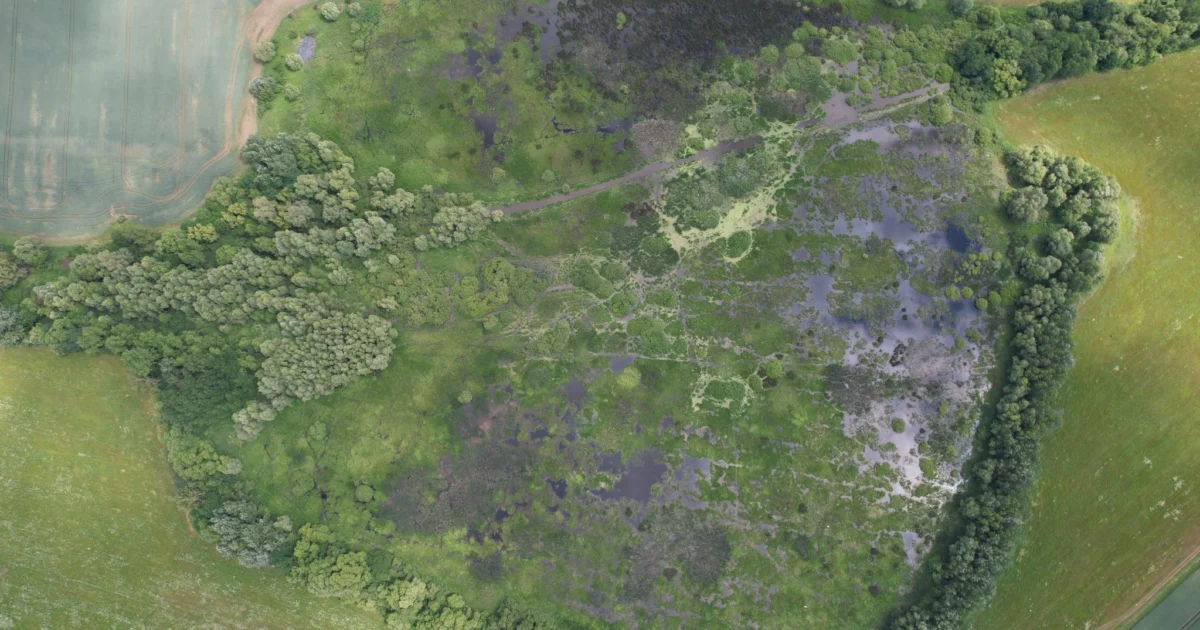
In the heart of southern Paraguay, the San Rafael landscape stands as a defiant monument to biological diversity, existing as one of the final significant remnants of the Upper Paraná Atlantic Forest. Spanning 72,489 hectares of dense canopy and natural grasslands, this Key Biodiversity Area (KBA) serves as a critical refuge for 440 bird species, seven of which are endemic to this specific region. Beyond its intrinsic biological value, the forest functions as a vital environmental infrastructure, regulating water cycles for downstream communities and sequestering vast amounts of atmospheric carbon. Yet, despite its ecological importance, San Rafael remains a landscape under siege, caught in a cycle of fragmentation, illegal land-use pressure, and chronic underfunding.

The history of this region is defined by a century of systemic encroachment. Agricultural expansion—primarily driven by soy cultivation and cattle ranching—along with infrastructure development, has systematically dismantled the once-continuous Atlantic Forest biome. Today, San Rafael is a fragmented island in an ocean of industrial agriculture. The vulnerability of this ecosystem was starkly illustrated in November 2020, when a series of catastrophic, high-intensity fires incinerated approximately 33,000 hectares, or 45% of the reserve. This event served as a brutal reminder that, without consistent management and enforcement, the forest’s future is tenuous. Experts from the Ministry of Environment (MADES) and local conservationists estimate that while some natural regeneration is occurring, a full recovery of the scorched biodiversity may require 20 to 30 years, provided the land is not lost to further conversion.
The Structural Crisis of Conservation Finance
The fundamental tension facing San Rafael—and indeed, many global biodiversity hotspots—is the mismatch between the timeline of ecological restoration and the reality of conservation funding. Traditional conservation models have long relied on philanthropic grants and time-bound project cycles, which often fail to account for the long-term, multi-generational nature of landscape preservation. While these mechanisms are essential for initial research and community engagement, they are inherently temporary.

Data from international conservation finance studies reveals a staggering reality: the global biodiversity financing gap is estimated to be between US$598 billion and US$824 billion annually. Currently, global expenditure covers only roughly 20% of the requisite funds to effectively manage protected areas. When the funding cycle for a specific project ends, local organizations often struggle to maintain basic enforcement, patrolling, and community development programs. This leaves the forest exposed to illegal activities, including the encroachment of illegal farming, which continues to claim approximately 800 hectares of the reserve annually.
Tangará: A Model for Economic Resilience
Recognizing that philanthropy alone cannot provide the permanent financial floor required for long-term stewardship, Guyra Paraguay launched the social enterprise Tangará in 2021. The objective is both ambitious and pragmatic: to generate at least 30% of the organization’s reserve maintenance costs through commercial revenue derived from sustainable activities within the landscape. By creating a direct link between a standing forest and economic viability, Tangará aims to shift the narrative from "conservation versus development" to "conservation as the foundation of development."

The enterprise currently focuses on four strategic revenue streams: shade-grown organic yerba mate, honey production, petitgrain essential oil, and low-impact ecotourism. These activities are designed to be non-extractive, relying on the forest’s integrity to provide quality products. For example, the yerba mate produced under the Tangará label is grown in the shade of the forest canopy, preventing the deforestation typically associated with sun-exposed, industrial yerba mate plantations.
The early results demonstrate the potential of this model. To date, Tangará has successfully facilitated the production and export of over 110,000 kilograms of shade-grown, certified organic, and "Fair for Life" yerba mate to the United States. Additionally, collaborations with international firms like Lush Cosmetics have enabled the marketing of petitgrain oil, involving more than 50 local producers. While ecotourism remains in its infancy, it has successfully attracted over 180 international visitors, providing a direct injection of capital into the local economy while showcasing the biological richness of the Kangüery Biological Station.

Institutional Evolution and Technical Support
Building a social enterprise has required Guyra Paraguay to transition from a purely scientific and advocacy-based institution into an entity capable of managing complex supply chains and market dynamics. This evolution has been supported by BirdLife International’s Forest Impact Accelerator. This program provides essential technical mentoring, peer learning, and strategic guidance, helping local organizations bridge the gap from concept to market-ready implementation.
The initiative has also been bolstered by catalytic seed funding from the Hempel Foundation, which mitigated the early-stage financial risk that typically deters traditional investors. Subsequent support from the Darwin Initiative and the Jensen Foundation has enabled the project to explore advanced financial instruments, such as Afforestation, Reforestation, and Revegetation (ARR) carbon projects. By "stacking" these revenue streams, Tangará minimizes the risk associated with relying on a single commodity or market, building a level of institutional resilience that is rarely seen in traditional conservation NGOs.

Socio-Economic Impact and Community Integration
The success of Tangará is not measured solely in currency, but in the livelihoods of the 132 families across eleven communities and two indigenous groups currently involved in the project. For producers like Lalo Baez of the Oga Ita community, the forest has transitioned from an abstract asset to a tangible source of income. "Before, the forest was just there," says Baez. "Now it’s what feeds my family. If the forest goes, so does everything we’ve built."
This shift in perception is perhaps the most significant outcome of the project. By involving local stakeholders in the economic value of the forest, the project creates a natural defense mechanism against land clearing. The long-term goal is to expand this impact to 250 families, creating a buffer zone of sustainable, forest-dependent livelihoods that surround the protected core of the reserve.

Challenges and the Future of Conservation
Despite these successes, the project remains an "unfinished bet." The development of the honey production line, which has produced 60 kilograms to date, illustrates the reality of scaling different business lines. Each stream—mate, honey, essential oils, and tourism—operates under different market conditions, logistical hurdles, and timelines.
Furthermore, measuring the "return" on investment remains a complex challenge. While financial metrics are clear, the ecological and social benefits—such as increased biodiversity connectivity or improved climate resilience—are harder to quantify within standard market frameworks. As Fabricio Astudillo, Forest Program Manager at BirdLife International Americas, notes, "Tangará is valuable not because it claims to solve that tension entirely, but because it explores how conservation, local economies, and landscape resilience can become more connected over time."

The Broader Implications
The lessons drawn from San Rafael offer a potential blueprint for other conservation organizations worldwide. The integration of market-based activities into conservation strategy recognizes that while philanthropy is irreplaceable—particularly for funding innovation and absorbing early-stage risks—it must be complemented by sustainable economic systems to achieve permanence.
As Rodrigo Zárate of Guyra Paraguay explains, the next phase of the project involves positioning the initiative to attract impact investors and, eventually, accessing debt financing to scale operations across the wider reserve network. The aspiration is to prove that a conservation organization can evolve into an institution that is not only a steward of nature but a viable, long-term economic actor.

The work being done in Paraguay underscores a growing global consensus: the protection of biodiversity is not a problem that can be solved by science alone. It is a social, economic, and governance challenge that requires a holistic approach. By aligning the needs of the forest with the economic aspirations of the people who call it home, Tangará provides a compelling example of how to keep the forest standing in an era of rapid, often destructive, global change. The success of this model will ultimately depend on the ability of these stakeholders to adapt to market fluctuations and maintain the delicate balance between commercial activity and the biological requirements of the Atlantic Forest. For now, in the quiet, bird-filled canopy of San Rafael, the experiment continues—and the forest remains.
