
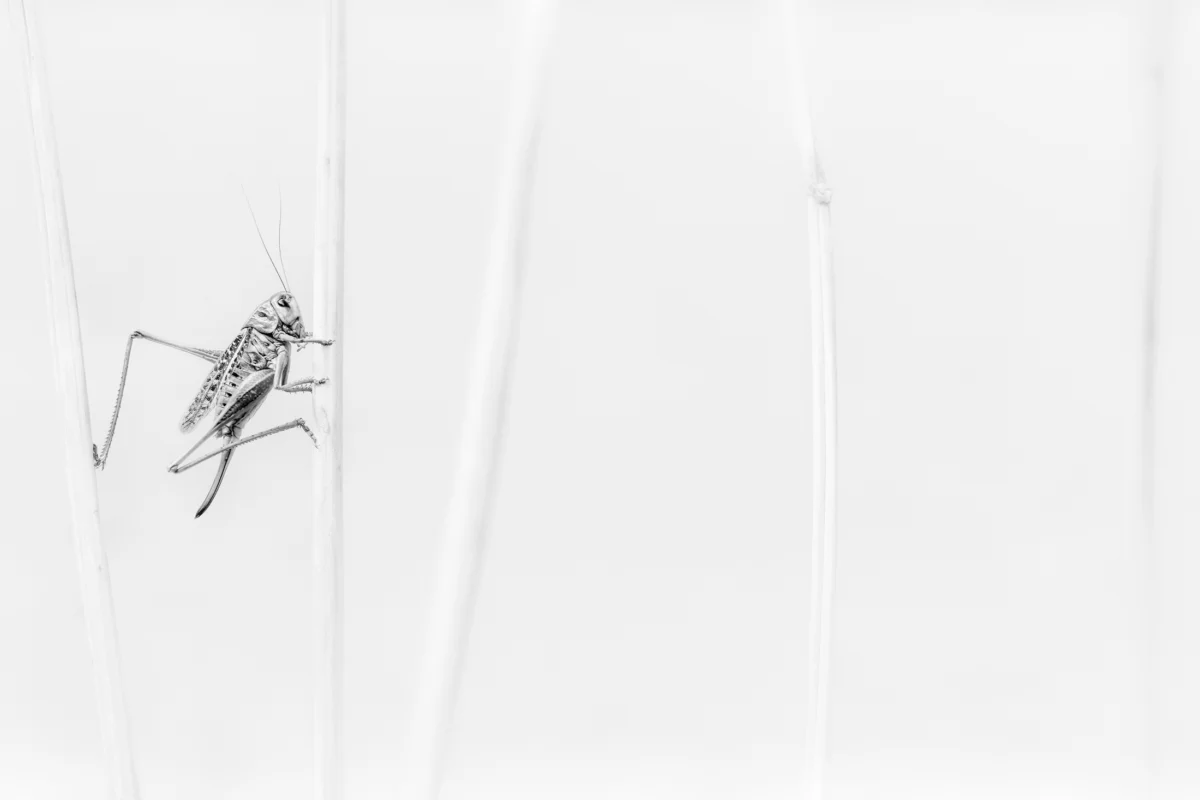
In contemporary digital photography, the default expectation is often a riot of hyper-saturated color, easily manipulated through advanced post-processing software and computational algorithms. Yet, a dedicated faction of macro photographers continues to find profound expressive power in the timeless medium of monochrome. Among them is nature photographer Elisa Confortini, whose long-term documentation of arthropods offers a compelling case study in how stripping away color can reveal the true structural essence, mood, and behavioral nuances of Earth’s most diverse animal group.

Main Facts: The Intersection of Macro Photography and Monochrome Aesthetics
Arthropods—insects, arachnids, myriapods, and crustaceans—represent over 80% of all known animal species on Earth. For macro photographers, they offer accessible subjects that can be found in virtually any backyard or natural environment. While traditional nature photography relies heavily on the vibrant hues of a butterfly’s wings or the iridescent shell of a beetle to capture attention, monochrome macro photography deliberately discards color data. This reduction forces both the creator and the viewer to focus on fundamental visual elements: stark light, deep shadows, intricate textures, and geometric forms.
According to photographic analysis and field documentation, transitioning from color to black and white in macro imagery is not merely an afterthought or an attempt to rescue a technically flawed frame. Instead, it is a deliberate stylistic choice that requires advanced control over tonal gradation. By eliminating chromatic distractions, photographers can isolate subjects within chaotic natural environments, accentuate harsh lighting conditions, and leverage negative space to create minimalist compositions.

Background Context: The Evolution of Insect Representation in Visual Arts
Insects have occupied a complex space in human culture for millennia, inspiring a duality of fascination and repulsion, veneration and fear. From ancient Egyptian veneration of scarab beetles to modern agricultural anxieties regarding crop pests, humanity’s relationship with arthropods is deeply rooted. In the visual arts, insects have long served as symbols of transformation, decay, and ecological complexity.
The advent of macro photography in the mid-20th century allowed scientists and artists to document these microscopic organisms with unprecedented clarity. However, as color film and subsequently digital sensors dominated the market, color became the primary vehicle for wildlife storytelling. The resurgence of monochrome macro photography in the digital age represents a counter-movement. Practitioners utilize modern high-resolution sensors and sophisticated editing suites not to mimic human vision, but to abstract reality, aligning macro photography more closely with classical fine-art studio portraiture and architectural studies.

Chronology and Workflow: Developing a Monochrome Vision
The path toward mastering black and white macro photography is iterative, typically unfolding across several distinct stages of a photographer’s development:
- Initial Color Exploration: Most macro photographers begin their journey capturing standard color images to build foundational technical skills regarding focus stacking, depth of field, and fieldcraft.
- Post-Processing Conversion: Photographers begin experimenting with desaturating existing archives. This phase involves learning how specific color channels translate into shades of gray, utilizing luminance sliders to darken or brighten specific elements like foliage or chitinous exoskeletons.
- Intentional Monochrome Conception: Advanced practitioners reach a stage where they visualize scenes in monochrome in situ, pre-emptively assessing how contrast and directional light will render a subject before pressing the shutter.
- Archival Re-evaluation: Seasoned photographers frequently revisit older portfolios, converting historical color files to discover new emotional dimensions and graphic qualities that were previously obscured by distracting color casts.
Supporting Data and Technical Implications
Technical data from optical and digital imaging studies highlight why monochrome conversion yields distinct advantages in specific macro scenarios:

- Noise Mitigation: High-ISO shooting—often required in low-light forest understories or when utilizing fast shutter speeds to freeze insect movement—frequently introduces chromatic noise. Converting such images to black and white neutralizes color artifacts, transforming digital grain into an atmospheric, film-like aesthetic.
- Environmental Isolation: Field studies in composition indicate that green foliage and chaotic background clutter can reduce subject isolation by up to 40% in complex natural habitats. Tonal manipulation in black and white allows photographers to darken background vegetation while keeping the subject’s luminance high, effectively creating a natural vignette without artificial dodging and burning.
- Depth of Field Management: With macro lenses operating at close working distances, depth of field is often razor-thin—sometimes measuring less than a millimeter. Monochrome rendering accentuates the sharp focal plane against soft, out-of-focus bokeh, enhancing the illusion of three-dimensional depth.
Expert Perspectives and Analytical Insights
Industry analysts and veteran nature photographers emphasize that monochrome macro requires a shift in cognitive processing. The human brain naturally relies on color to categorize objects and assess depth. Training oneself to see the world purely in a continuous scale of grays demands sustained practice.
Critics of the medium occasionally argue that black and white conversion strips away vital biological information, such as warning coloration (aposematism) used by toxic insects to deter predators. However, proponents counter that monochrome shifts the narrative focus from scientific identification to emotional resonance. By emphasizing the dramatic architecture of a praying mantis, the delicate webbing of an orb-weaver spider, or the armored silhouette of a stag beetle, the imagery transcends biological documentation to become an interpretive art form.

Furthermore, post-processing flexibility plays a critical role. While some practitioners advocate for shooting directly in a monochrome camera profile to force a tonal mindset, many professional photographers prefer capturing RAW color files. This retains maximum dynamic range, enabling precise control over how individual color channels (reds, greens, blues) map into the final grayscale tonal scale during conversion.
Broader Impact and Environmental Implications
Beyond its aesthetic merits, black and white macro photography carries subtle implications for environmental conservation and public engagement. By presenting familiar organisms in an unfamiliar, highly stylized format, these images challenge viewers to look closer at the microscopic ecosystems operating just beneath our feet.

Arthropods form the foundational trophic levels of terrestrial food webs and provide essential ecosystem services, including pollination and decomposition. Yet, global insect populations face severe declines due to habitat loss, pesticide use, and climate change. Art forms that reframe insects not as pests or scientific specimens, but as subjects of profound beauty, mystery, and sculptural elegance, can foster a deeper public appreciation for biodiversity conservation.
Ultimately, the choice to pursue monochrome macro photography is a deeply personal creative decision. It demonstrates that even within heavily photographed genres, stripping away technological excesses like hyper-saturation can open up vast, uncharted territories of artistic expression, revealing a hidden universe that remains endlessly fascinating, complex, and vital to our understanding of the natural world.
