
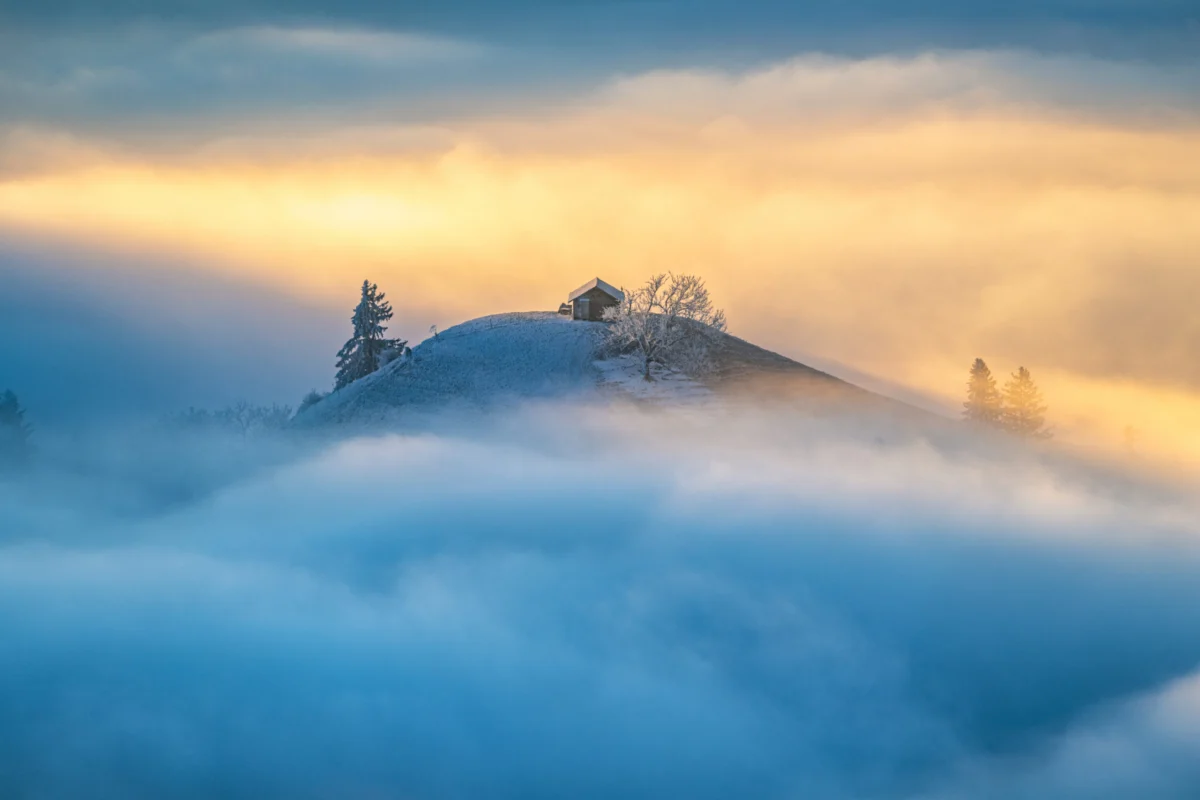
The discipline of landscape photography has undergone a significant philosophical and technical transformation over the past decade, driven by shifts in equipment accessibility, environmental awareness, and artistic vision. While traditional landscape methodology has long prioritized the fleeting, pastel-hued moments of dawn and dusk—collectively known as the golden hour—contemporary photographers are increasingly reevaluating how they interact with natural environments. Industry analyses and photographic retrospectives indicate a growing movement away from formulaic postcard compositions toward dynamic, context-driven storytelling that embraces unpredictable weather patterns, alternative focal lengths, and varied lighting conditions throughout the day.

The Shift in Artistic Perception and Chronological Evolution
Tracing the trajectory of modern landscape photography reveals a clear evolution from rigid technical adherence to intuitive environmental engagement. Beginning around 2019, a wave of emerging visual artists entered the field equipped with increasingly sophisticated mirrorless camera bodies, lightweight carbon-fiber tripods, and advanced cartographic mobile applications. Initial field strategies among practitioners in this cohort predominantly mirrored historical precedents: meticulous route planning designed to position the photographer at a marquee vantage point precisely thirty minutes before sunrise or after sunset.
However, logistical realities and changing weather patterns forced a tactical pivot. Photographers discovered that restricting fieldwork to the golden hours frequently resulted in homogenous imagery that failed to capture the raw, unscripted character of a location. By 2021, field documentation practices began to emphasize full-day immersion. Rather than packing up equipment as direct sunlight grew harsh, professionals began lingering on-site, utilizing mid-day transitions to study topography, shadows, and micro-climates. This chronological shift proved that dramatic visual narratives could be constructed at any hour, provided the photographer remained attuned to shifting environmental cues.

Technical Adaptation and Field Methodology: Case Study of the Swiss Alps
A prime example of this methodological evolution occurred during a field expedition in central Switzerland. Documented by alpine landscape specialists, the excursion involved a grueling three-hour ascent across steep, uneven terrain carrying approximately twenty kilograms of specialized gear, including full-frame camera bodies, multiple zoom lenses, and meteorological tracking devices.
Upon reaching the designated high-altitude plateau, conditions deviated sharply from traditional ideal parameters: the sun was high, casting harsh, direct light across the jagged limestone faces, and several hours remained before the evening transition. Rather than waiting passively, the photographer utilized the dynamic atmospheric conditions. Fast-moving cumulus clouds swept across the ridgelines, alternately masking and revealing the alpine peaks to generate complex, high-contrast interplay between brilliant illumination and deep, shifting shadows.

Industry data from outdoor imaging guilds demonstrates that mid-day alpine shooting requires advanced technical mitigation, including the systematic deployment of graduated neutral density (GND) filters, circular polarizers, and multi-exposure high-dynamic-range (HDR) bracketing. Furthermore, modern post-processing workflows have adapted to these demanding lighting scenarios. Contemporary editing suites allow for precise tonal compression and local adjustments that preserve highlight detail in sunlit rock faces while maintaining natural depth in shadowed valleys, ensuring the final output reflects the authentic visual intensity experienced on-site.
Compositional Rigor: Leading Lines, Natural Framing, and Foreground Balance
Composition remains the cornerstone of professional landscape imagery, dictating how the human eye navigates a two-dimensional frame. Contemporary composition theory emphasizes purposeful framing over superficial aesthetic decoration.

Leading lines serve as primary structural components in modern nature photography. Natural conduits—such as glacial streams carving through scree slopes, meandering forest rivers, geological fault lines, or naturally aligned alpine flora—function as visual pathways that direct the viewer’s gaze deliberately toward a focal subject, such as a distant summit or isolated timber stand.
Concurrently, foreground elements provide crucial spatial context and three-dimensional depth. While foregrounds constructed from vibrant wildflower meadows have become ubiquitous across social media platforms, professional critiques within visual arts circles caution against aesthetic imbalance. When foreground elements are disproportionately emphasized through ultra-wide-angle lens distortion, they frequently overshadow the primary subject, reducing the image to a foreground study rather than a cohesive landscape portrait.

To achieve compositional harmony, modern practitioners utilize a broader spectrum of natural foregrounds. These include intricate frost patterns, glacial ice structures, air bubbles trapped in frozen tarn sheets, weathered tree trunks, cavern openings, and mineral-rich rock strata exhibiting distinct chromatic variations. By integrating these elements thoughtfully, photographers establish a visual journey that draws the viewer seamlessly into the heart of the scene.
The Role of Light and Chromatic Contrast in Visual Storytelling
Light serves as the primary medium of photography, yet its application has expanded beyond simple illumination to become a vehicle for emotional resonance. Modern landscape portfolios frequently feature stark contrasts—both tonal and chromatic—as defining stylistic signatures.

Tonal contrast, characterized by the dramatic juxtaposition of bright illumination against deep shadow, is frequently harnessed during volatile weather events. Meteorological phenomena such as localized fog banks burning off within an old-growth forest or high-altitude storm clouds parting to cast a single, brilliant shaft of light onto a mountain face create transient, high-impact spectacles. These moments require rapid technical execution and an instinctive understanding of sensor dynamic range.
Chromatic contrast is equally vital. Advanced landscape practitioners rely heavily on color theory, balancing complementary color schemes—such as the cool blues of glacial runoff against the warm amber tones of autumn foliage—to create visual tension and separation within the frame. Alternatively, analogous color palettes, utilizing subtle variations within a single chromatic family, are employed to evoke moods of tranquility and atmospheric continuity. Mastering these color relationships during both capture and post-production distinguishes professional output from casual documentation.

Expanding Perspectives: The Integration of Telephoto Lenses and Unmanned Aerial Systems
The technological democratization of unmanned aerial vehicles (UAVs) and high-performance telephoto zoom lenses has fundamentally altered how landscapes are conceptualized and recorded. Historically, landscape photography was bound to the human eye level, typically executed with wide-angle optics ranging from 14mm to 24mm.
Today, aerial platforms equipped with stabilized sensors allow photographers to elevate their perspective by hundreds of feet, uncovering geometric patterns, drainage networks, and geological formations invisible from ground level. This vertical perspective introduces entirely new visual languages to the genre, encouraging viewers to interpret familiar topographies through abstract forms, textures, and minimalist compositions.

Conversely, telephoto compression—achieved through focal lengths exceeding 200mm—allows photographers to isolate distant subjects, stripping away extraneous foreground clutter to focus intensely on isolated details, such as wind-sculpted snow drifts on a distant ridge or intricate forest canopy layers. Market statistics from major photographic equipment manufacturers indicate a sustained surge in telephoto and drone adoption among landscape professionals, reflecting a broader industry demand for diverse visual storytelling.
Post-Processing Ethics and Industry Standards
As digital darkroom capabilities have advanced, the discourse surrounding post-processing ethics has intensified within professional photography associations. A clear consensus has emerged supporting a balanced, measured approach to digital editing.

Industry guidelines stipulate that post-processing should serve to enhance and clarify the emotional impact of a scene without distorting geographical or ecological reality. Excessive saturation, heavy-handed local contrast manipulation (often referred to as the "HDR look" of the early 2000s), and the composite insertion of unnatural elements are widely discouraged among mainstream purists. Instead, modern workflows focus on precise color grading, localized dodging and burning to guide the viewer’s eye, and lens profile corrections that ensure spatial integrity.
Environmental organizations and professional bodies emphasize that post-processing should respect the integrity of the natural world. The ultimate objective is to translate the visceral experience of standing in a wilderness environment into a digital file that resonates with authenticity.

Broader Implications and Future Outlook for Nature Photography
The ongoing evolution of landscape photography carries significant implications not only for the art world, but also for environmental conservation and public engagement with natural spaces. As visual artists venture further off beaten paths and experiment with alternative perspectives, their imagery plays a critical role in shaping public perception of vulnerable ecosystems.
Furthermore, the shift away from chasing standardized, hyper-curated golden hour locations helps mitigate overcrowding at iconic tourist landmarks. By encouraging photographers to look for beauty in micro-details, adverse weather conditions, and non-traditional hours, contemporary methodology fosters a deeper, more sustainable appreciation for nature’s constant flux.

Ultimately, the future of landscape photography relies on patience, acute observation, and profound ecological respect. As technical tools continue to evolve, the core mandate for the modern photographer remains unchanged: to listen to the landscape, embrace its unpredictability, and translate personal contemplation into compelling visual art that honors the natural world.
