
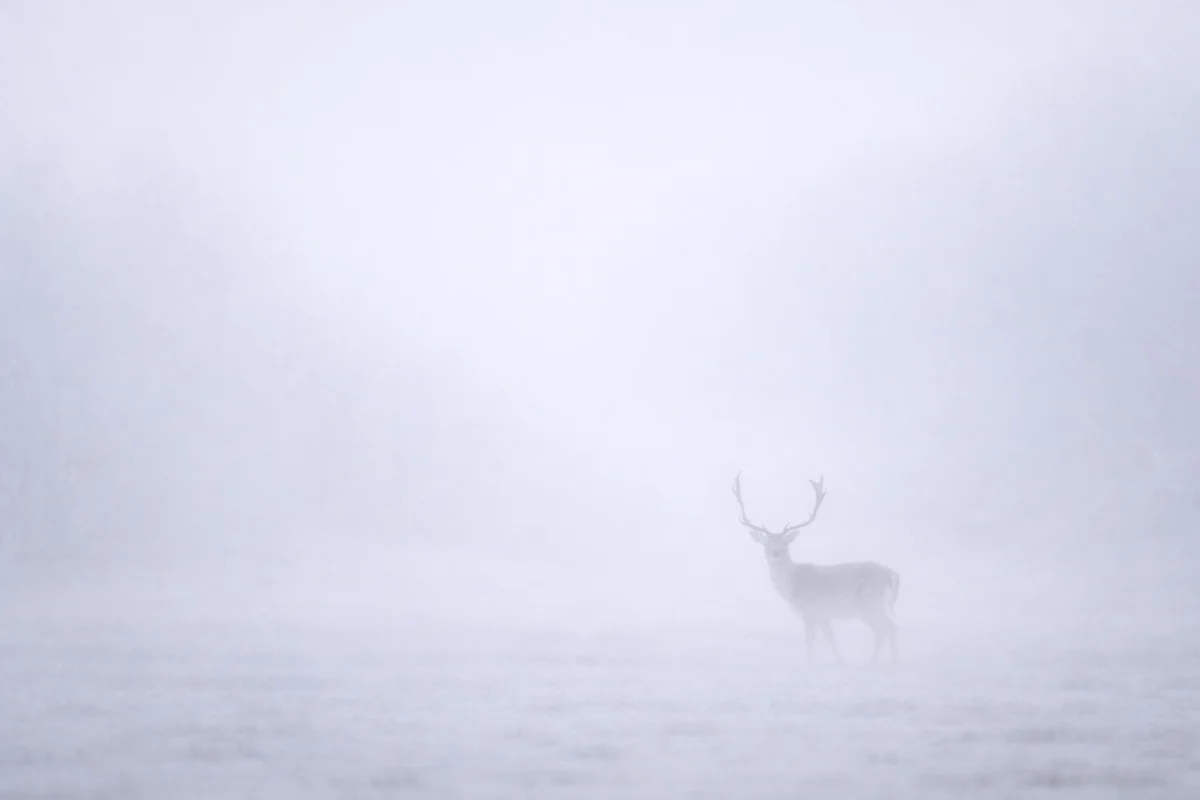
In contemporary visual arts and nature photography, the relentless pursuit of razor-sharp detail, vibrant saturation, and hyper-realistic wildlife documentation has long dominated mainstream media. However, a growing counter-movement among visual artists is challenging this paradigm by turning toward minimalism, high-key and low-key aesthetics, and deliberate compositional restraint. This stylistic evolution emphasizes emotional resonance, spatial emptiness, and psychological calm over technical complexity or documentary exhaustiveness. As modern audiences face unprecedented levels of digital saturation and sensory overload, minimalist nature photography has emerged as a vital medium for psychological respite and contemplative engagement.

The Genesis of a Minimalist Approach
The transition toward minimalist nature photography rarely begins with a calculated commercial strategy or a formal academic curriculum. For many contemporary practitioners, the style develops organically as an intuitive response to the overwhelming visual and emotional complexity of modern life. Early career experiments with camera mechanics often reveal an instinctive inclination to step backward, reducing the scale of primary subjects within the frame and inviting expansive negative space into the composition.
This stylistic choice is frequently rooted in a search for perceptual quiet. In artistic psychology, high-key photography—characterized by bright, dominant tones with minimal contrast—and low-key photography—defined by deep shadows and selective illumination—serve as powerful tools for emotional modulation. By stripping away visual clutter, artists can transform chaotic natural environments into cohesive fields of calm. Fog, snowfall, and heavy mist act as natural diffusion layers, neutralizing harsh lines and allowing subjects such as fallow deer, red foxes, and mute swans to dissolve seamlessly into vast expanses of white or dark space.

Chronology of the Contemplative Shift: From Speed to Stillness
The methodology underpinning minimalist nature photography rejects the fast-paced, transactional nature of modern media consumption. A standard fieldwork timeline for a minimalist photographer contrasts sharply with traditional wildlife documentation:
- Arrival and Decompression: Unlike active hunting or fast-paced journalism, the practitioner enters a natural habitat without a rigid agenda or performance metrics. The initial phase involves psychological alignment with the environment, typically during early morning fog or winter snowstorms.
- Prolonged Stationary Observation: Rather than traversing vast geographical areas to capture multiple subjects, the photographer remains in a single location for extended periods. This stationary approach allows the human nervous system to decelerate and harmonize with subtle environmental shifts.
- Emergence of Invisible Details: Extended presence alters perception. Subtle movements at the periphery of vision, minute changes in atmospheric light, and ephemeral wildlife encounters become visible only after the photographer and the landscape reach a state of mutual stillness.
- Intuitive Capture: The physical actuation of the shutter is dictated by an immediate somatic response rather than intellectual calculation. If an image fails to evoke an internal physical sensation of truth, it is systematically discarded, regardless of its technical perfection.
- Post-Capture Curation: Editing focuses on restraint. Rather than enhancing contrast or adding sharpness, post-processing is utilized to soften boundaries, preserve breathing room, and maintain the fragile emotional resonance of the original encounter.
Industry Data and Psychological Implications
While nature photography has historically been evaluated through metrics of sharpness, rarity, and proximity—such as long-lens telephoto captures of wildlife in motion—recent trends in fine art curation indicate a steady shift toward impressionistic and minimalist landscapes. Gallery sales and exhibition entries featuring negative space, atmospheric abstraction, and muted tones have seen a measurable rise over the past decade.

Psychological and environmental researchers suggest that this aesthetic shift aligns with broader societal trends. According to environmental psychology studies, exposure to natural fractals, low-contrast environments, and visual simplicity can significantly lower cortisol levels and reduce cognitive fatigue. Minimalist nature images function as visual sanctuaries, offering urban populations a surrogate experience of restoration. By employing distance and restraint, these photographs prevent cognitive overload, allowing viewers to project their own internal narratives onto the canvas of the image.
Expert Perspectives and Critical Reception
Art critics and photography educators increasingly recognize minimalism as a legitimate departure from documentary literalism. Unlike traditional photojournalism, which seeks to inform through empirical evidence, minimalist nature photography operates on the plane of phenomenology—the study of structures of consciousness and subjective experience.

Industry analysts note that this approach redefines the relationship between the observer and the observed. Wildlife encounters in snow or mist are inherently fleeting; a fox pausing in an open field or a swan gliding through dark water exists only for seconds. By photographing these subjects from a distance and allowing them to occupy a minor fraction of the frame, the photographer acknowledges the autonomy of the natural world. The animal is not captured as a trophy or a focal point of human dominance, but as an integrated element of a larger, silent ecosystem.
Broader Economic and Cultural Impact
The market for minimalist nature photography extends beyond traditional print sales into digital licensing, interior design, and wellness industries. Corporate and residential interior designers increasingly specify minimalist nature prints for healthcare facilities, hospitality spaces, and modern offices to promote calm and reduce stress among occupants.

Furthermore, the philosophy of restraint challenges the equipment-driven culture of modern photography. By emphasizing patience, observation, and emotional intelligence over high-speed burst rates and expensive telephoto lenses, minimalist practitioners advocate for a more sustainable, low-impact engagement with the outdoors. This ethos resonates deeply within a culture seeking meaningful alternatives to constant connectivity and algorithmic optimization.
Ultimately, minimalist nature photography transcends traditional categorizations of landscape or wildlife documentation. By prioritizing silence over narrative noise and space over subject matter, it offers a timeless invitation: a momentary pause in an accelerating world where nothing needs to be solved, and where stillness alone is enough.
