
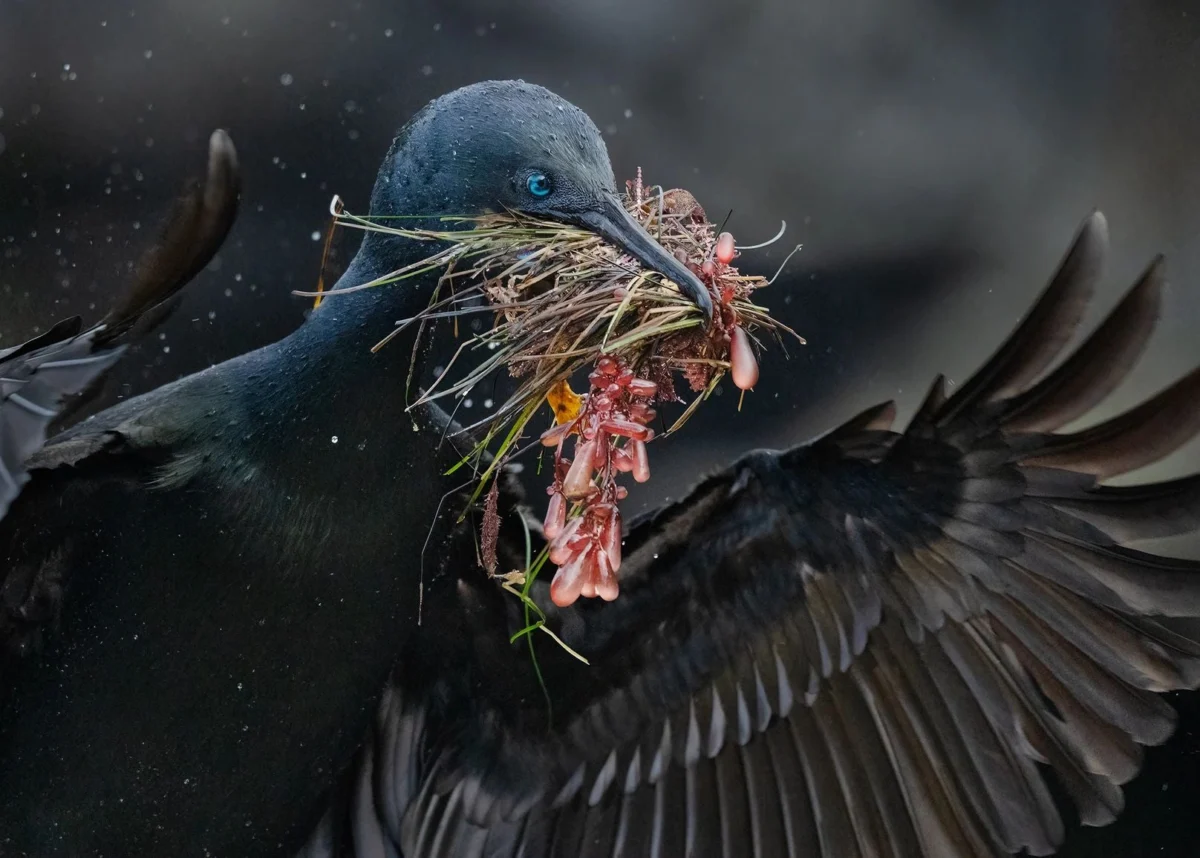
The intricate balance of California’s coastal ecosystems is under increasing pressure, a reality brought into sharp focus by recent observations of distressed marine wildlife and anomalously warm ocean temperatures. This concerning trend underscores the urgent need for comprehensive climate solutions, a challenge at the heart of the work undertaken by Aspen Ellis, a PhD candidate at the University of California Santa Cruz (UCSC). With over a decade of dedicated research into seabird populations, Ellis is now at the forefront of efforts to ensure that the development of offshore wind energy, a critical component of the renewable energy transition, proceeds in a manner that protects vulnerable avian species. Her work represents a crucial intersection of conservation biology and renewable energy policy, seeking to address the existential threat of climate change while meticulously mitigating the immediate environmental impacts of new infrastructure.
A Decades-Long Witness to Climate Change’s Grip on Seabirds
Ellis’s journey into the nexus of seabird conservation and climate action began long before her current doctoral studies. Her extensive field experience, spanning more than ten years as a field biologist, provided a firsthand view of the escalating environmental crises impacting avian marine life. Before joining UCSC, Ellis contributed to numerous projects focused on the restoration and study of seabird colonies across various U.S. islands. Many of these initiatives boasted significant conservation legacies, such as her tenure with Audubon’s Project Puffin. This iconic program, launched in the early 1970s, aimed to re-establish Atlantic Puffin colonies on islands in the Gulf of Maine, where historic overhunting had eradicated these charismatic birds. Through decades of painstaking effort, including chick translocation and habitat restoration, Project Puffin achieved remarkable success, transforming barren islands into thriving seabird havens.
However, even amidst these triumphs, Ellis and her colleagues began to observe alarming new trends that defied traditional conservation efforts. These emergent patterns, increasingly frequent and severe, appeared directly linked to the burgeoning impacts of global climate change. In certain years, the consequences were devastatingly clear: Ellis spent weeks witnessing seabird chicks succumb to starvation, a phenomenon directly attributed to shifts in the distribution and timing of the fish species critical for their survival. Marine heatwaves, such as the infamous "Blob" that persisted in the Pacific from 2013 to 2016, dramatically alter ocean temperatures, disrupting the delicate marine food web. Warmer waters can reduce the productivity of cold-water species like herring and sand lance, forcing adult seabirds to travel farther to find prey, or to return with less nutritious or smaller fish, directly impacting chick survival rates.
The severity of these climate-induced events was brought home dramatically during Ellis’s research in Half Moon Bay in 2019. During an intense heatwave, she documented seabirds literally fainting from heatstroke on their nests. Many adult birds, desperate for relief, were forced to leave their eggs exposed to the scorching sun and opportunistic predators, abandoning their broods in a desperate attempt to cool off. "So few chicks made it that year, just because it was too warm," Ellis recounted, highlighting the direct and brutal impact of extreme weather events on breeding success. The emotional toll of witnessing such widespread suffering, particularly in colonies that had been painstakingly restored, became a powerful motivator for Ellis to seek solutions beyond traditional species-specific conservation.
From Direct Conservation to Holistic Climate Solutions
The immersion in a vibrant seabird colony, often described by Ellis as a "magical" experience, was what initially drew her to a career in research. The spectacle of hundreds of birds nesting, feeding, and interacting in remote, untouched landscapes fueled her passion. Yet, the repetitive documentation of climate change’s destructive effects on these very ecosystems began to erode the joy of discovery. After a decade dedicated to these projects, Ellis concluded that the potential for meaningful seabird conservation would remain severely limited without a fundamental shift in approach—specifically, by directly confronting the root cause: climate change itself.
This realization catalyzed her pivot to the offshore wind sector. Ellis recognized that while localized conservation efforts were vital, a more "holistic" strategy was needed to address the systemic threats facing seabirds. At UCSC, her research now leverages her extensive background as a seabird biologist to inform the responsible development of renewable energy infrastructure. Her work focuses on understanding the potential impacts of offshore wind energy developments on seabird populations and, crucially, developing effective mitigation strategies to ensure that these essential climate solutions do not inadvertently harm wildlife.
The narrative surrounding offshore wind energy often zeroes in on its potential immediate impacts on wildlife, particularly collision risks with turbines or displacement from foraging areas. These concerns, while critical and requiring thorough investigation, must be balanced against the broader, often less quantifiable, benefits. Ellis consistently reminds stakeholders that offshore wind, as a clean energy source, plays a pivotal role in reducing reliance on fossil fuels, thereby combating climate change—the single greatest threat to global biodiversity. "Anything we can do to fight climate change is critical," she asserts. "Its impact on global ecosystems can’t be understated." This perspective highlights the complex trade-offs inherent in the energy transition: localized, manageable impacts versus widespread, catastrophic environmental degradation.
Bridging Research Gaps and Implementing Proactive Mitigation
Ellis’s current research is actively involved in closing critical knowledge gaps surrounding seabirds and offshore wind impacts. While much has been learned from existing offshore wind farms in Europe and the eastern U.S., there remains significant uncertainty regarding species unique to California’s Pacific coast, or those whose behaviors differ in this region. This includes species such as the Common Murre, Cassin’s Auklet, and various albatross species that forage far offshore. Understanding their flight patterns, migration routes, and foraging behaviors in proposed development areas is paramount. Despite these research needs, Ellis stresses the certainty of known threats like oil spills—a persistent danger from fossil fuel infrastructure—and the undeniable trajectory of climate change, reinforcing the pressing need to transition to cleaner energy sources.
A cornerstone of responsible offshore wind development, according to Ellis, is the proactive and substantial investment in intentional and effective mitigation from the outset. This requires close collaboration between wind developers, scientific experts, and regulatory agencies. Such efforts can manifest in several ways:
- Strategic Site Selection: Identifying and avoiding areas that are critical habitats, major migration corridors, or high-density foraging grounds for vulnerable seabird species. This involves extensive pre-construction surveys and ecological modeling.
- Technological Innovation: Exploring and implementing turbine designs that minimize risk. Research is ongoing into technologies that could make turbines more visible to birds, such as specific lighting patterns or painting strategies, although their effectiveness is still under evaluation. Larger turbines, while potentially having a wider impact radius, often rotate more slowly, which could paradoxically reduce collision risk compared to smaller, faster-spinning models.
- Operational Measures: Implementing curtailment strategies, where turbines are temporarily shut down during periods of high bird activity, such as peak migration times or specific weather conditions that increase collision risk. This requires sophisticated real-time monitoring systems.
Even with these preventative measures, it is unlikely that 100% of impacts on all species can be avoided. In such cases, Ellis advocates for compensatory mitigation, where developers fund projects that reduce other existing threats to the species of concern. A notable example comes from onshore wind energy developers who have funded projects to retrofit existing power lines. These retrofits aim to reduce electrocution risk for large raptors like Golden and Bald Eagles. By modifying power poles to provide minimum clearances of 60 inches horizontally and 40 inches vertically between conductors and grounded hardware, electrocution risks are significantly diminished. Such design changes do not impair the efficiency of the power lines but make a substantial difference for avian safety. Expanding this model, funding from offshore wind projects could accelerate the implementation of similar vital conservation initiatives.
International Precedents and California’s Future
International examples offer valuable insights into successful mitigation strategies. Scotland, a global leader in offshore wind development, currently generates approximately 6.3 GW of energy from its offshore wind farms, enough to power 6.3 million homes. To counterbalance potential impacts on seabird populations from additional offshore wind developments, Scotland has invested in efforts to remove invasive predators from seabird colonies. Non-native species like rats, stoats, and feral cats can decimate ground-nesting seabird populations, preying on eggs and chicks. By eradicating these threats, Scotland is bolstering the resilience of seabird populations, effectively increasing their overall numbers and providing a buffer against other environmental stressors. This "additionality" approach—creating a net positive for a species by addressing a different, existing threat—is a model Ellis finds highly compelling for adoption in California.
California is poised to embark on its own ambitious offshore wind journey. While no commercial-scale offshore wind farms are currently operational, plans are well underway for development in designated areas off Northern California (Humboldt Bay) and the Central Coast (Morro Bay). These projects are particularly innovative as they will utilize floating wind technology, necessary for the deep waters of the Pacific continental shelf. The state has set aggressive clean energy targets, aiming for 100% clean electricity by 2045, with offshore wind projected to play a significant role, potentially contributing up to 25 GW by 2045—enough to power millions of homes.
Recognizing the complexity and multi-faceted nature of this endeavor, the Ocean Protection Council (OPC), a state agency dedicated to protecting California’s coast and ocean, is actively coordinating efforts through the West Coast Science Collaborative. This initiative brings together scientists, state and federal agencies, tribal nations, environmental organizations, and industry stakeholders to develop robust, science-based recommendations for supporting wildlife throughout the entire lifecycle of offshore wind development. The Collaborative anticipates launching its subcommittee meetings, including a crucial one focused on birds and bats, in the fall, with public participation encouraged. This collaborative framework is essential for informed decision-making, adaptive management, and fostering public trust.
A Collective Responsibility for a Decarbonized Future
The imperative to transition to a decarbonized world is undeniable, driven by the escalating impacts of climate change that Ellis and countless other scientists are documenting globally. While the path to achieving this goal is fraught with challenges and complex trade-offs, the solutions are increasingly within reach. The observations of struggling seabirds along California’s coast serve as a stark reminder of this necessity.
Individuals, like the members of the Morro Coast Audubon and Santa Barbara Audubon chapters, play a vital role in supporting local biodiversity and advocating for broader environmental policies. Their efforts in restoring wetlands and native plant habitats, transforming former golf courses into thriving ecosystems, demonstrate the tangible impact of human intervention. These local actions, coupled with informed advocacy for large-scale renewable energy projects like offshore wind, are critical.
Aspen Ellis’s work embodies the scientific rigor and ethical commitment required to navigate this critical juncture. By bridging the gap between rigorous ecological research and the practical demands of renewable energy development, she offers a pragmatic and hopeful vision. Supporting scientists like Ellis, who are meticulously working to minimize environmental harm while maximizing climate benefits, is paramount. It is through such dedicated efforts that a better future can be secured—a future where baby hummingbirds and Great Horned Owls thrive in their nests, where the beautiful coasts continue to sustain a rich tapestry of life, and where the planet, upon which all life depends, is protected for generations to come. The birds, in their struggle and their resilience, offer a profound message: the time for decisive, integrated climate action is now.
