
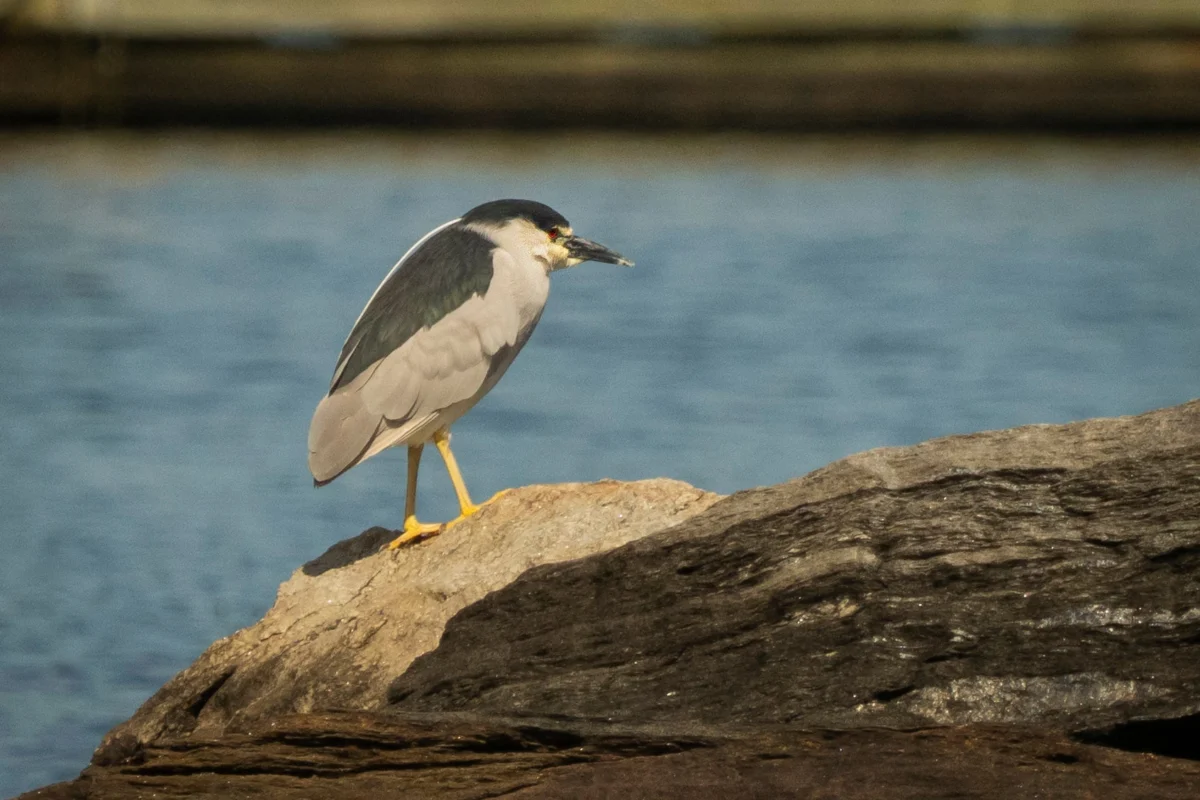
New York City, a vibrant metropolis teeming with life, is witnessing a disturbing ecological trend: the precipitous decline of its Black-crowned Night Heron population. For decades, the secluded waters and islands surrounding the city have been crucial breeding grounds for thousands of these striking birds, forming the largest breeding colony in the Northeastern United States. However, recent data compiled by the New York City Bird Alliance reveals a mysterious and alarming plunge in their numbers, raising fears that this resilient urban bird could vanish from the region within little more than a decade. The implications extend beyond the avian world, signaling potential environmental distress that could affect the broader ecosystem and even human health.
A Vanishing Urban Icon
By late May, New York City’s green spaces are abuzz with the sounds of fledgling birds. Young robins, fresh from their nests, chase their parents for offered worms, while Red-tailed Hawks—adaptable residents—huddle in nests atop both ancient trees and gleaming high-rises. The city’s ponds are dotted with the vibrant progeny of Wood Ducks and Mallards. Yet, largely unnoticed by the city’s 8.5 million human inhabitants, another remarkable urban bird, the Black-crowned Night Heron, silently raises its young within the city limits. These nocturnal wading birds, with their stocky build, striking blue-black caps, white bodies, and piercing red eyes, are a unique fixture of the New York-New Jersey harbor’s ecosystem. During the breeding season, both sexes develop elegant white head plumes, making them particularly conspicuous, even occasionally venturing onto city streets.
These raucous colonies, nestled in the trees of little-known islands across the harbor, represent a significant portion of the species’ regional population. The Black-crowned Night Heron (Nycticorax nycticorax) is known for its adaptability, thriving in diverse wetland habitats across the globe. Its presence in a densely populated urban environment like New York City has long been a testament to its resilience and the unexpected pockets of wilderness that persist within the concrete jungle. However, this adaptability now faces an unprecedented challenge.
Decades of Decline: The Data Unveiled
For a quarter of a century, the New York City Bird Alliance, an Audubon chapter, has meticulously monitored these wading bird colonies. Their annual surveys, conducted over the last two weeks of May, involve visiting 20 islands throughout the New York-New Jersey harbor, individually tallying every nest, egg, and chick. This robust dataset, spanning two decades, paints a grim picture. A study published on June 3 in a peer-reviewed journal reveals that the harbor colonies have collectively declined by 27 percent since the year 2000. This overall decline is primarily driven by a particularly steep drop-off in the numbers of Black-crowned Night Herons.
Historically the most abundant species within these breeding colonies, the Black-crowned Night Herons have lost more than half of their breeding population on these islands. Dustin Partridge, Director of Conservation and Science for NYC Bird Alliance, expressed his shock at the findings. "It’s kind of shocking," Partridge stated, acknowledging that while a decline was anticipated, the extent of the risk to the local population was unexpected. "What we’re showing is that they are going to disappear at some point in coming years." The study’s projections are stark: the herons could entirely vanish from the New York City area as early as 2037, triggering cascading ecological effects throughout the broader Northeast region.
A Remarkable Comeback, Now Imperiled
The current crisis stands in stark contrast to what was, until recently, considered a major conservation success story. Sixty years ago, the islands of New York Harbor were devoid of such vibrant rookeries. While New York’s waters historically hosted immense wading bird colonies that captivated observers with their sheer scale, these populations dramatically disappeared by the early 20th century. Factors contributing to this ecological collapse included rampant market hunting, widespread habitat loss due to urbanization, and increasingly severe water pollution from industrial and municipal waste. For decades, the birds remained absent.
The turning point arrived shortly after the passage of the landmark Clean Water Act in 1972, a pivotal piece of environmental legislation aimed at restoring and maintaining the chemical, physical, and biological integrity of the nation’s waters. Just two years later, in 1974, local birders made a remarkable discovery: 50 pairs of wading birds were spotted nesting on a small island off the north coast of Staten Island. This marked the beginning of a slow but steady resurgence. Over the subsequent two decades, herons, egrets, and ibises gradually returned to other islands throughout the New York-New Jersey harbor, establishing new colonies in areas such as Jamaica Bay and the East River. By the late 1990s, these thriving harbor colonies supported a significant proportion—as much as a quarter—of the long-legged wading birds breeding in the entire Northeastern United States, with Black-crowned Night Herons being a dominant species among them, alongside Great Egrets, Snowy Egrets, and Glossy Ibises. The reversal of this success story, therefore, represents a significant setback for regional conservation efforts.
The Search for a Culprit: Unraveling the Mystery
The precise drivers behind this alarming decline remain unclear, prompting urgent investigations by the NYC Bird Alliance. The herons, known for their resilience in navigating developed urban landscapes, are proving to be particularly vulnerable to unseen threats. Dustin Partridge noted their ability to adapt to city life, often foraging in parks and wetlands, but highlighted a crucial vulnerability: "Scientists who study the species have discovered that Black-crowned Night Herons are particularly sensitive to environmental pollution. Their young just fail to thrive if there’s some sort of contaminant present." This makes them an invaluable "sentinel species," serving as an early warning system for broader environmental health issues.
Several potential culprits are under consideration:
-
Environmental Contaminants: Despite apparent improvements in water quality (discussed below), the lingering effects of persistent pollutants could be impacting the birds. These include:
- Pesticides: Chemical compounds used in agriculture and pest control, which can accumulate in the food chain.
- Polychlorinated Biphenyls (PCBs): Industrial chemicals, now banned but highly persistent in the environment, known for their toxic effects on wildlife and humans.
- Heavy Metals: Such as lead, mercury, and cadmium, which can be released from industrial processes and waste, causing neurological and developmental damage.
- The herons’ sensitivity means even low levels of these contaminants could compromise the health and reproductive success of their young, leading to fewer fledglings surviving to adulthood.
-
Predation: Nest-raiding predators, particularly raccoons, pose a significant threat. Raccoons are highly adaptable urban dwellers and can decimate nesting colonies on an island within a mere two years, consuming eggs and chicks. While islands offer some natural protection, the increased presence of predators, potentially due to human activities or ecological shifts, could be a factor.
-
Human Disturbance: The secluded islands, while vital for bird breeding, are not always free from human intrusion. The nearer islands, in particular, are popular destinations for recreational activities like jet skiing. The noise, movement, and presence of humans can cause adult birds to abandon their nests, leaving eggs and chicks vulnerable to exposure or predation. This type of disturbance can be especially detrimental during critical breeding periods.
The Hudson’s Paradox: Clean Waters, Troubled Birds
One of the most perplexing aspects of the decline is its timing, given the significant strides made in cleaning up New York City’s waterways. On paper, the Hudson River and its tributaries continue to show improvements in water quality each year. In fact, the waters around the city are currently experiencing a remarkable ecological resurgence, with the return of once-vanished aquatic life—including various fish species, seals, and even whales—to the estuary, thanks to tighter environmental regulations and concerted clean-up efforts over the past few decades. This paradox deepens the mystery: if the water is getting cleaner, why are the herons struggling?
This situation underscores the complex nature of environmental recovery. While broad indicators of water quality may improve, localized "hot spots" of contamination or the slow breakdown of persistent pollutants could still pose threats. Furthermore, the herons’ position as a sentinel species means they are often the first to exhibit symptoms of deeper, unseen environmental problems. "They signal when something’s amiss," Partridge explains, indicating that their struggle might be pointing to subtle yet potent environmental stressors that are not immediately obvious from general water quality reports.
A Sentinel Species’ Warning
The concept of a "sentinel species" is critical here. These are organisms that provide early warning signs of environmental degradation. Their health and population dynamics reflect the overall health of their ecosystem. The Black-crowned Night Heron’s diet primarily consists of fish, crustaceans, and insects from the very waters and wetlands they inhabit. This places them at a crucial point in the food web, making them highly susceptible to bioaccumulation—the process by which toxins build up in an organism over its lifetime—and biomagnification, where toxins become more concentrated at higher trophic levels.
The decline of the herons, therefore, is not merely about the loss of one bird species. It’s a red flag for the entire New York-New Jersey harbor ecosystem. If contaminants are indeed the cause, these same substances could be affecting other wildlife and potentially posing long-term risks to human communities that rely on these waters for recreation or that consume seafood from the region. Their disappearance could indicate fundamental changes in the food web, habitat quality, or the presence of pollutants that demand immediate attention.
Mobilizing for Conservation: NYC Bird Alliance’s Response
In response to the dire findings, the NYC Bird Alliance is launching a multi-pronged investigation into the potential sources of the Black-crowned Night Herons’ precipitous decline. Their efforts are comprehensive, combining ongoing monitoring with new scientific inquiries:
-
Acoustic Monitoring: In May of 2026, the team deployed acoustic recorders on the islands. These devices will help gauge whether and how often the colonies are disturbed by human visitors throughout the critical breeding season. Understanding the frequency and impact of human presence is crucial for developing effective management strategies.
-
Biomarker Collection: The Alliance is making plans to collect feathers and eggshell fragments from the colonies. These biological samples will be analyzed for environmental contaminants, including pesticides, PCBs, and heavy metals. This direct analysis will provide crucial evidence to identify specific pollutants that might be impacting the birds.
-
Continued Colony Counts: The annual surveys, which have provided the foundational data for this study, will continue, ensuring that population trends are consistently monitored and any recovery or further decline can be accurately tracked.
Dustin Partridge emphasized the urgency and scope of their new initiatives: "We’re kicking off a bunch of new work." This proactive approach is essential for identifying the root causes of the decline before it’s too late.
A Call for State Protection
One significant component of the NYC Bird Alliance’s work is a dedicated campaign to add the Black-crowned Night Heron to the New York state list of threatened and endangered species. The timing is favorable, as New York state updated its list last year for the first time since 1999, and has committed to making further updates. While the Black-crowned Night Heron is globally abundant and not currently listed by the International Union for Conservation of Nature (IUCN) or the U.S. federal government, its regional decline is severe. The species has already been declared endangered in Pennsylvania and Maine, and threatened in New Jersey, highlighting a broader regional vulnerability.
State listing would unlock crucial resources and support for conservation efforts, including funding for research, habitat protection, and the implementation of mitigation strategies once the root causes of the decline are identified. To build public support for this listing, NYC Bird Alliance is engaging in extensive public outreach, aiming to foster a sense of shared identity between city dwellers—both human and avian. "They stay up late at night, they can show up anywhere, and they’re nesting right here alongside of us," Partridge says, aiming to frame the herons as quintessential "New Yorkers" and integral to the city’s unique character. This narrative seeks to underscore the interconnectedness of urban life and the natural world, fostering a sense of collective responsibility for the species’ survival.
Hope on the Horizon: A Path to Recovery
Despite the sobering forecast, the NYC Bird Alliance team maintains a cautious sense of hope. The discovery of the decline, while alarming, has occurred early enough to potentially intervene. "Good news is we’ve discovered it soon enough," Partridge remarked. "We have 10 years to act." This decade-long window is critical for identifying the threats and implementing effective conservation measures.
There are glimmers of potential recovery. On one of the final surveys of the 2026 season, a team visited a small island in the Bronx that once hosted a healthy heron colony but was abandoned due to human disturbance. While Black-crowned Night Herons haven’t nested there since, the team spotted several roosting adults last year. Although bushwhacking through the overgrown island revealed no nests during the recent survey, the distinctive harsh cry of at least one adult Black-crowned Night Heron, reminiscent of a small dog’s bark, was heard. If the birds resume breeding on this island, it would be the first instance of the species returning to an abandoned site observed by the NYC Bird Alliance, offering a crucial precedent for future restoration efforts.
Once the safety and suitability of currently unused islets can be ensured, NYC Bird Alliance scientists hope to actively draw Black-crowned Night Herons back to these sites using decoys and audio cues—a proven technique in bird conservation. Reaching this point, however, hinges on a much better understanding of what is driving the species’ decline, which is precisely what the Alliance is diligently working to achieve.
Broader Ecological and Human Implications
The fate of the Black-crowned Night Herons in New York City is more than a local ornithological concern; it has broader ecological and even human implications. As a key component of the harbor’s food web, their decline could destabilize other species and disrupt the delicate balance of the ecosystem. The potential presence of contaminants, highlighted by the herons’ sensitivity, underscores the ongoing challenge of managing environmental pollution in a densely populated region. If pollutants are affecting these birds, they could also be impacting other wildlife, fish populations, and ultimately, human residents through various exposure pathways.
The efforts to save the Black-crowned Night Heron represent a microcosm of urban conservation challenges worldwide: balancing human development and recreation with the needs of wildlife, addressing legacy pollution, and responding to emerging environmental threats. The NYC Bird Alliance’s work serves as a vital reminder that even in the heart of a global city, the health of our natural environment remains intrinsically linked to our own well-being. The next ten years will be critical in determining whether this iconic New Yorker of the avian world can be pulled back from the brink of local extinction.
