
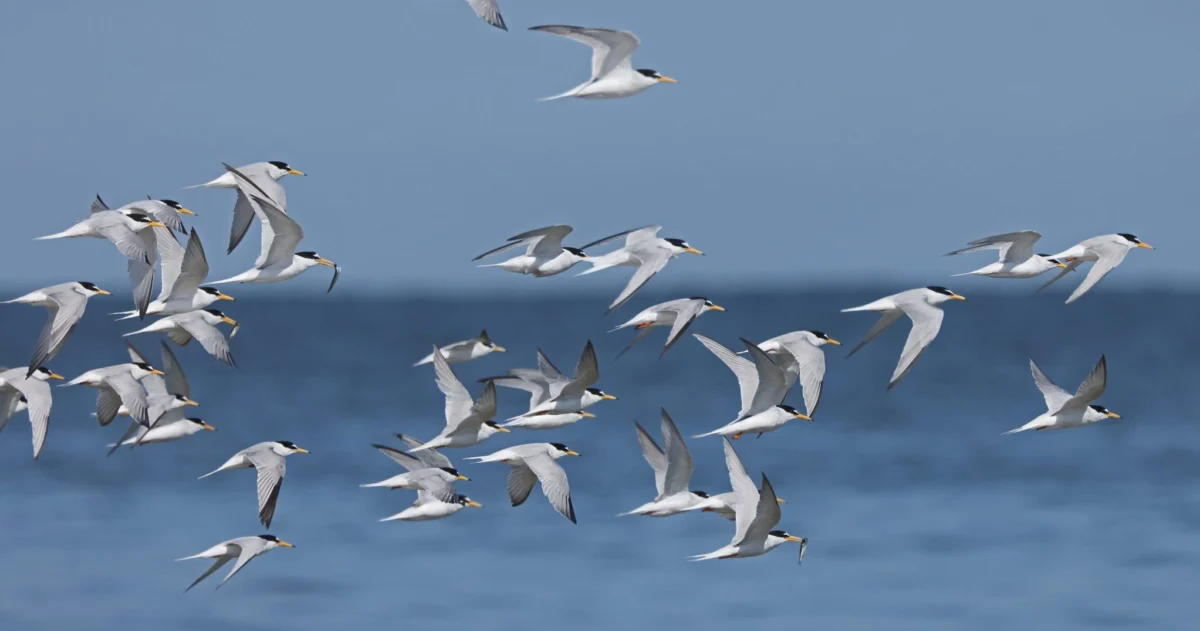
Conservation is no longer the exclusive domain of institutional scientists and policymakers; it has evolved into a global, grassroots movement where the most vital research is increasingly conducted by the public. Across the world, a vast, decentralized network of passionate volunteers is revolutionizing ornithology by collecting granular data on wildlife, weather patterns, water quality, and historical biodiversity. This practice, widely known as citizen science, has moved from a hobbyist pursuit to a cornerstone of modern ecological management, providing the scale and precision necessary to address the escalating threats to global avian populations.
The Scale and Significance of Collective Data
The sheer volume of bird observations generated by citizen scientists has created datasets of unprecedented size. In the past, the logistical and financial constraints of research institutions limited the scope of bird monitoring to specific, localized projects. Today, platforms such as eBird, BirdTrack, iNaturalist, and Observation.org serve as massive, open-access repositories that aggregate millions of data points annually.
For instance, Observation.org alone processes approximately 35 million records each year, fueled by a community of over 450,000 active users. When this data is synthesized, it reveals long-term trends in population size, shifts in migration timing, and the encroaching impacts of habitat degradation and invasive species. These insights are not merely academic; they directly inform high-level regulatory frameworks, such as the EU Birds Directive and the International Union for Conservation of Nature (IUCN) Red List. By identifying exactly where biodiversity is declining, citizen science dictates the strategic allocation of conservation funding and the designation of protected areas.
A Century of Counting: The Evolution of Monitoring
The roots of this collaborative research model run deep. The practice of amateur monitoring was formalized as early as 1900 with the launch of the Christmas Bird Count (CBC) by the National Audubon Society in the United States. Conceived as an alternative to the traditional "side hunt"—a competition where teams competed to see who could shoot the most birds—the CBC transformed the act of observation into a census.
Over the last 124 years, the CBC has become the world’s longest-running citizen science survey. Its longevity has provided a unique historical baseline that allows contemporary researchers to measure the biological response to climate change over more than a century. By comparing modern observations with those from the early 20th century, scientists have been able to document significant range shifts, with many bird species moving further north or to higher altitudes in response to warming global temperatures. This longitudinal data acts as a "canary in the coal mine," signaling environmental shifts that might otherwise go unnoticed until they become irreversible.
European Leadership and Collaborative Atlases
The tradition of large-scale monitoring has been robustly adopted across Europe, where coordination between disparate ornithological groups has led to some of the most comprehensive biodiversity maps in existence. The European Bird Census Council (EBCC) stands as a prime example of international cooperation. Its efforts have culminated in the publication of two major European Breeding Bird Atlases—the first in 1997 and the second in 2020.
These projects are staggering in their ambition, involving over 120,000 fieldworkers. Together, they mapped 596 breeding species across 11 million square kilometers and 48 countries. This data is now digitized and accessible via the EuroBirdPortal, a cutting-edge interface that provides near real-time, animated maps of weekly bird distributions. By integrating data from 52 different ornithological organizations, the portal offers a dynamic visualization of migration that would be impossible to replicate without the voluntary input of thousands of citizens reporting their sightings daily.
Strategic Initiatives and Global Coordination
Beyond general monitoring, specific initiatives have been developed to target high-priority conservation goals. The German partner of BirdLife International, NABU, manages the global White Stork Census, a decennial survey that tracks the health of breeding pairs and nesting success. This level of granular monitoring is essential for understanding how regional agricultural changes or pesticide use impact iconic species that traverse continents.
Similarly, EuroBirdwatch, coordinated by SOS/BirdLife Slovakia, serves as an annual testament to the power of public engagement. Each October, the event synchronizes monitoring efforts across the continent. In the most recent cycle, 28 BirdLife partners organized nearly 1,000 events, drawing over 23,000 participants who recorded 4.8 million birds. These events serve a dual purpose: they provide a massive influx of data during critical migration windows, and they foster a culture of stewardship, turning the migration season into a tangible, shared experience that bridges the gap between scientific inquiry and public appreciation.
The Technological Catalyst: Merlin and Beyond
The barrier to entry for citizen science has been significantly lowered by advancements in digital technology. Identification tools like the Merlin Bird ID app have democratized ornithology. By using machine learning to identify bird calls and visual characteristics, Merlin allows individuals with limited training to contribute high-quality data to professional databases.
"The integration of user-friendly technology with professional scientific rigor is the most significant development in field biology this century," notes one independent biodiversity analyst. "We have moved from a system where data was siloed in institutional filing cabinets to a democratic ecosystem where every citizen acts as a sensor, providing a constant stream of high-resolution data."
Implications for Future Conservation
The impact of this democratization of science is profound. Traditional conservation funding is often reactive, triggered by reports of population collapses. Citizen science, by contrast, provides a proactive framework. By mapping population densities and migration routes in real-time, conservationists can predict where human-wildlife conflict will occur and implement mitigation strategies before a population reaches a critical tipping point.
Furthermore, the data produced by these networks has a higher level of "social legitimacy" in political arenas. When policies regarding land use or wind farm placement are contested, data supported by tens of thousands of citizen observations is difficult for policymakers to ignore. It grounds environmental legislation in the lived reality of the citizens it is meant to represent.
Conclusion: A Call to Action
As the global community observes World Migratory Bird Day, the importance of the individual observer has never been clearer. Every sighting, from a common backyard sparrow to a rare migratory raptor, contributes to a collective understanding of a planet in flux. The success of these initiatives relies on the sustained commitment of volunteers who understand that they are part of a larger, global scientific enterprise.
The transition from a passive observer to an active contributor to science is an opportunity to directly influence the trajectory of ecological health. As environmental pressures mount, the network of citizen scientists will remain the most critical tool for monitoring the health of our biosphere. Today, as the sky fills with the movement of migratory species, the message remains simple: every bird counts, and every individual who records one plays a vital role in protecting the future of our natural world. By participating in these monitoring schemes, citizens are not just watching the environment—they are helping to secure its survival.
