
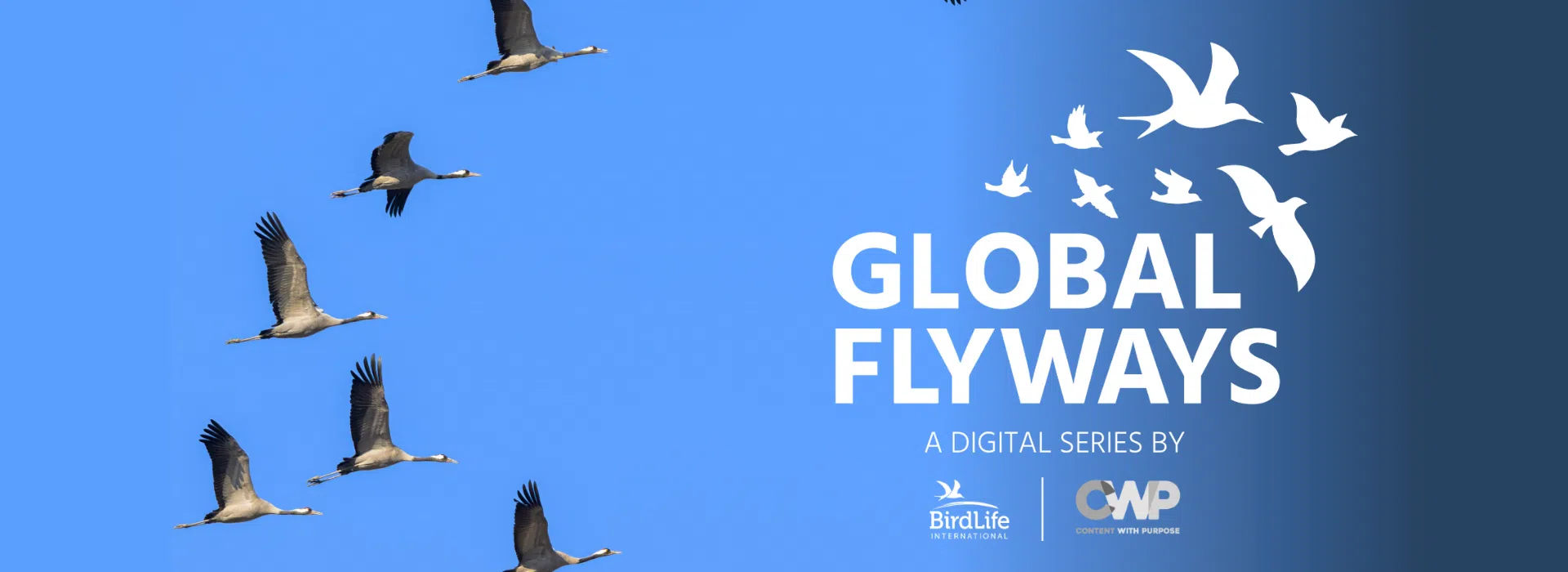
The launch of Global Flyways, a comprehensive digital film series produced in collaboration with Content With Purpose (CWP), marks a pivotal moment in international environmental storytelling. By documenting the work of scientists, conservationists, local communities, and policymakers across 19 countries, the series seeks to demystify the complex, often invisible logistical networks required to sustain the world’s migratory bird populations. As these species face unprecedented threats, the project serves as both a scientific record and a call to action, mapping the perilous journeys that connect ecosystems across five continents.
The necessity for this project is underscored by the sobering findings of the 2026 State of the World’s Birds report. According to the data, 45% of all migratory bird species are currently in population decline. Perhaps more alarming is the statistic that one in nine species—totaling approximately 200 distinct types of birds—now faces the immediate threat of extinction. These figures represent more than just a loss of biodiversity; they serve as a bellwether for the health of the global environment, signaling systemic failures in habitat connectivity and international environmental policy.
The Science of Flyways: A Chronology of Connectivity
The concept of "flyways"—the ancient, genetically encoded routes migratory birds follow annually—is central to understanding the scope of this crisis. These routes are not merely paths; they are interconnected webs of stopover sites, refueling zones, and breeding grounds. The Global Flyways project follows these routes over a two-year production timeline, documenting the intricate collaboration required to keep them operational.

Historically, conservation efforts have been localized, focusing on specific wetlands or forest patches. However, migration is a borderless phenomenon. A bird departing from the Arctic may rely on stopovers in the boreal forests of North America, the wetlands of Central America, and the grasslands of South America. The failure of any single node in this chain can result in population collapses thousands of miles away.
The production of the series involved an intensive, 24-month filming schedule. Camera crews were embedded with research teams across 19 countries to capture the logistical reality of bird tracking. From the deployment of satellite telemetry to the restoration of degraded coastal ecosystems, the series illustrates the "chain of custody" approach to conservation—the idea that a bird’s survival is the collective responsibility of every nation it traverses.
Data-Driven Conservation and Habitat Fragmentation
The decline of migratory species is fundamentally linked to human-driven environmental changes. The 2026 State of the World’s Birds report highlights three primary drivers: land-use change, the intensification of agriculture, and the impacts of climate change on phenology—the timing of biological events.
Migratory birds are particularly vulnerable because they rely on precise timing. If a bird arrives at a stopover site to feed on insects that have already hatched and died due to unseasonably warm temperatures, the migration fails. The Global Flyways series addresses these systemic issues by highlighting technological innovations in the field. For instance, the series documents how artificial intelligence and advanced satellite tracking are being used to identify "critical bottlenecks"—areas where the highest number of species concentrate, and which, if protected, provide the highest return on investment for conservation efforts.

Furthermore, the integration of Indigenous knowledge has become a cornerstone of modern conservation strategies featured in the films. In many regions, local communities have served as stewards of these flyways for generations. The series emphasizes that effective conservation is not just about fences and regulations; it is about building sustainable economies that incentivize the protection of natural landscapes, such as bird-friendly agricultural practices that allow for "soft" infrastructure in vital migratory corridors.
Official Responses and Strategic Collaboration
The initiative has garnered support from international environmental bodies, which view the series as a crucial tool for policy advocacy. Martin Harper, CEO of BirdLife International, noted the importance of shifting the narrative from a localized perspective to a global one. "For two years our camera crews followed the birds through 19 countries, and at every stop they found people working tirelessly to save migratory birds," Harper stated. "Together, we can inspire a global movement to safeguard these natural super-highways—for birds, for people, and for the planet—and save the wonder of migration."
Max Smith, founder and Managing Director of Content With Purpose, echoed this sentiment, emphasizing the practical application of the series. "Across the world, people are doing extraordinary work to protect migratory birds and the landscapes and habitats they depend on," Smith observed. "Global Flyways brings those efforts together, showing what conservation looks like in practice and what can be achieved when communities, scientists, organizations, and decision-makers work towards a shared goal."
The collaboration between an environmental advocacy group and a media production house is a strategic move to bridge the gap between complex ecological data and public understanding. By utilizing high-definition cinematography and digital distribution, the project aims to reach policymakers and the general public, translating scientific reports into a compelling visual narrative that illustrates the human cost of ecological loss.

Broader Implications for Global Environmental Policy
The launch of the Global Flyways project coincides with a broader push in international law to recognize the concept of "migratory connectivity." Historically, international treaties have struggled to enforce protection across vast distances, often failing because of conflicting land-use priorities between neighboring countries.
The implications of this series for policy are significant. By demonstrating that the threats to migratory birds are universal—ranging from light pollution affecting night-migrating species to the destruction of intertidal mudflats—the project provides a template for "flyway-scale" governance. This approach suggests that environmental agreements must be synchronized along the entirety of the migration route, rather than being managed in isolated national silos.
The series also serves as an educational resource, intended for use by researchers, journalists, and educators. By providing a centralized, high-quality repository of 68 individual films and assets, it simplifies the task of communicating complex environmental issues. It effectively argues that the health of migratory birds is inextricably linked to the health of the planet’s shared resources, such as water security and food systems.
Conclusion: A Blueprint for Future Stewardship
As the 2026 reporting cycle highlights the fragility of our ecosystems, the Global Flyways series provides a necessary, if sobering, perspective on the scale of the challenge ahead. It moves beyond the doom-and-gloom narrative, focusing instead on the tangible, on-the-ground successes achieved through international partnership.

The project posits that while the decline of migratory birds is a result of human impact, the solution lies in human cooperation. By documenting the intersection of technology, tradition, and policy, the series outlines a pathway for future environmental management. It reminds audiences that the survival of these species is a measure of our global integrity. As these birds continue their ancient journeys, their survival will increasingly depend on the ability of the international community to maintain the "natural super-highways" that connect us all.
For those looking to engage with the material, the films offer a comprehensive look at the front lines of conservation, providing a clear window into the challenges faced by the most resilient, yet vulnerable, travelers on Earth. Through this collaboration, the creators hope to inspire a new generation of stewards, ensuring that the spectacle of migration continues to traverse our skies for centuries to come.
