
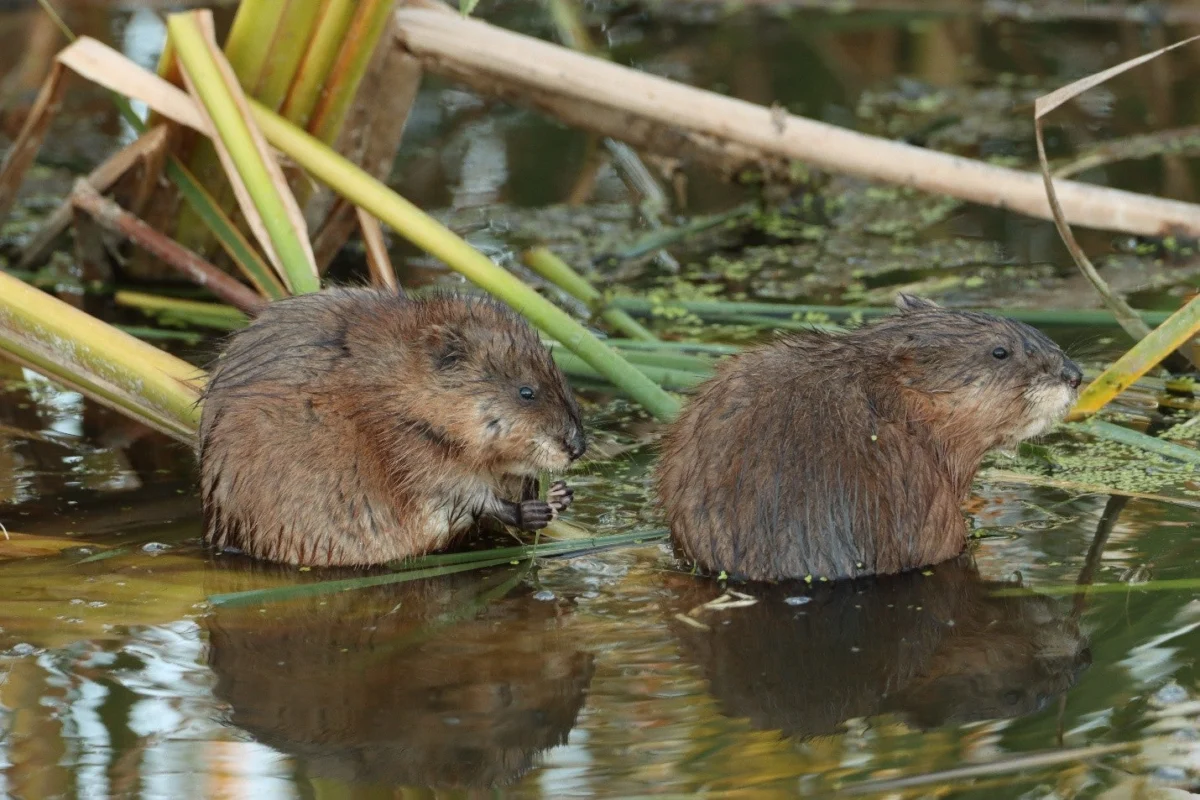
The Great Lakes region is currently facing a critical environmental challenge: the rapid degradation of coastal wetlands, which serve as vital nurseries for migratory birds and essential buffers for water quality. Central to this decline is the loss of "hemi-marsh" conditions—a balanced, 50:50 ratio of open water to emergent vegetation. As invasive species like common reed (Phragmites australis) choke off these habitats and non-native carp decimate submersed aquatic vegetation, the complex mosaic required by marsh birds is disappearing. However, new research led by community ecologist Leo Chan Gaskins, in partnership with Audubon Great Lakes, suggests that the solution may lie in a modest, often-overlooked native mammal: the muskrat (Ondatra zibethicus).
The Crisis of Habitat Homogenization
Over the past century, Great Lakes wetlands have undergone a transformation that has significantly reduced their ecological productivity. Invasive vegetation, particularly the aggressive common reed, creates dense, impenetrable monocultures that offer little nesting or foraging space for specialized marsh birds. Conversely, the introduction of invasive carp species has led to the stripping of underwater vegetation, turning diverse marshes into barren, turbid open-water ponds.
For wetland managers, restoring the ideal hemi-marsh state is a logistical and financial hurdle. Traditional management often requires large-scale mechanical intervention, such as mowing hectares of six-foot-tall vegetation while navigating unstable, waterlogged terrain. These methods are not only expensive but can also cause temporary, significant disruption to the local fauna. The search for a more sustainable, "nature-based" restoration approach has led researchers to reconsider the ecological role of the muskrat.
The Muskrat: An Unlikely Architect of Biodiversity
Muskrats are medium-sized, semi-aquatic rodents native to the Midwest, weighing between two and four pounds. Despite their small stature, their impact on the landscape is profound. Muskrats construct large, dome-shaped lodges, typically five feet in diameter and height, which serve as their primary shelter. These lodges are architectural feats, featuring interior dry chambers accessible only via underwater tunnels.
Because muskrats do not hibernate, they must remain active throughout the harsh Great Lakes winters. To sustain themselves, they forage on cattails, reeds, and other aquatic plants, transporting the material back to their lodges. This foraging behavior, combined with the material collection required to build and maintain their massive lodges, creates significant clearings in the vegetation. A single lodge can be surrounded by a ring of open water extending up to twelve feet in radius.
From an ecological perspective, these "muskrat clearings" are the engine of the hemi-marsh state. By systematically thinning dense vegetation, muskrats perform a form of natural wetland maintenance that would otherwise require heavy machinery. These clearings provide the critical interface between water and cover that many bird species require to forage, nest, and hide from predators.
Field Investigation: Tracking Wildlife Response
To quantify the impact of these structures on avian biodiversity, Leo Chan Gaskins deployed a network of trail cameras within urban wetlands in southeast Chicago. These sites, already monitored by Audubon Great Lakes for bird population trends, provided a controlled environment for the study.
The methodology involved placing cameras at two distinct types of locations: directly at active muskrat lodges and at nearby, unaltered stands of vegetation acting as control sites. Programmed to capture high-resolution imagery every five minutes over a two-week period during the spring migration, the cameras yielded a comprehensive dataset of wildlife activity.
The results, while still undergoing full analysis, are significant. The study identified 35 distinct species frequenting the muskrat lodges, compared to only 23 species in the control plots. Notably, 26 of the 35 species observed at the lodges were avian. Among these were seven species of high conservation concern targeted by Audubon Great Lakes: the American Coot, Black-crowned Night Heron, Blue-winged Teal, Common Gallinule, Pied-billed Grebe, Sora, and Virginia Rail.
The footage revealed a diverse array of behaviors. Canada Geese were observed nesting directly on the lodge structures, while herons utilized the clearings as strategic fishing platforms. Reptiles, including local turtle species, were frequently documented basking on the lodges to thermoregulate, and various foraging birds utilized the open-water edges for feeding. While the presence of predators like coyotes and mink was also noted, the overall density of wildlife at the lodge sites underscores the importance of these structures as hubs of ecosystem activity.
Chronology of Muskrat Population Trends
The decline of the muskrat is a parallel issue to the degradation of the marshes themselves. Over the past 50 years, muskrat populations in the Great Lakes region have experienced a consistent downward trend. This decline is attributed to a combination of factors, including habitat fragmentation, climate-induced changes to water levels, and potential competition with invasive species.
- 1970s–1990s: Observed contraction of muskrat populations across various Midwest wetland systems.
- 2000s: Increased emphasis on mechanical wetland restoration as natural ecosystem engineers (muskrats) become less prevalent.
- 2023: Launch of the current research project, funded by the Walder Foundation’s Biota Award, to investigate the potential for "mimic" muskrat structures.
- 2024–2025: Ongoing data collection regarding the effectiveness of artificial lodges in mimicking the biodiversity-boosting properties of natural muskrat lodges.
Mimic Lodges as a Restoration Strategy
Recognizing that muskrat populations may not rebound in the short term to levels sufficient for landscape-scale restoration, Gaskins and his team are testing the viability of "mimic muskrat lodges." If the physical structure of the lodge is the primary driver of biodiversity, then artificial, constructed lodges could theoretically serve as an effective proxy.
This approach represents a paradigm shift in wetland management: moving from "fighting" the landscape through constant mechanical intervention to utilizing "bio-mimicry." By installing structures that simulate the size, composition, and placement of natural muskrat lodges, conservationists may be able to maintain the hemi-marsh mosaic at a fraction of the cost and with lower environmental disturbance.
Implications for Future Wetland Policy
The implications for regional conservation are significant. If the research confirms that mimic lodges can reliably attract the same diversity of species as natural ones, this methodology could be integrated into the standard restoration toolkits for agencies like the U.S. Fish and Wildlife Service and regional park districts.
"This work is not just about birds; it is about recognizing the interconnectedness of our native species," says a spokesperson for the Audubon Great Lakes research team. "When we protect or support the muskrat, we are effectively subsidizing the life cycles of dozens of other species that rely on the habitat these mammals engineer."
The project serves as a reminder that biodiversity conservation often requires looking at the "invisible" work performed by native animals. As the team moves into the next phase of their study—analyzing the comparative performance of natural versus artificial lodges over a two-year period—the data will provide the evidence needed to advocate for a more nuanced, ecologically informed approach to managing the Great Lakes’ most precious, and threatened, wetland habitats.
For birders, ecologists, and the public, the research also offers a rebranding of the muskrat: no longer viewed merely as a common rodent, the muskrat is emerging as a keystone partner in the urgent mission to restore the health and vitality of the Great Lakes ecosystem.
