
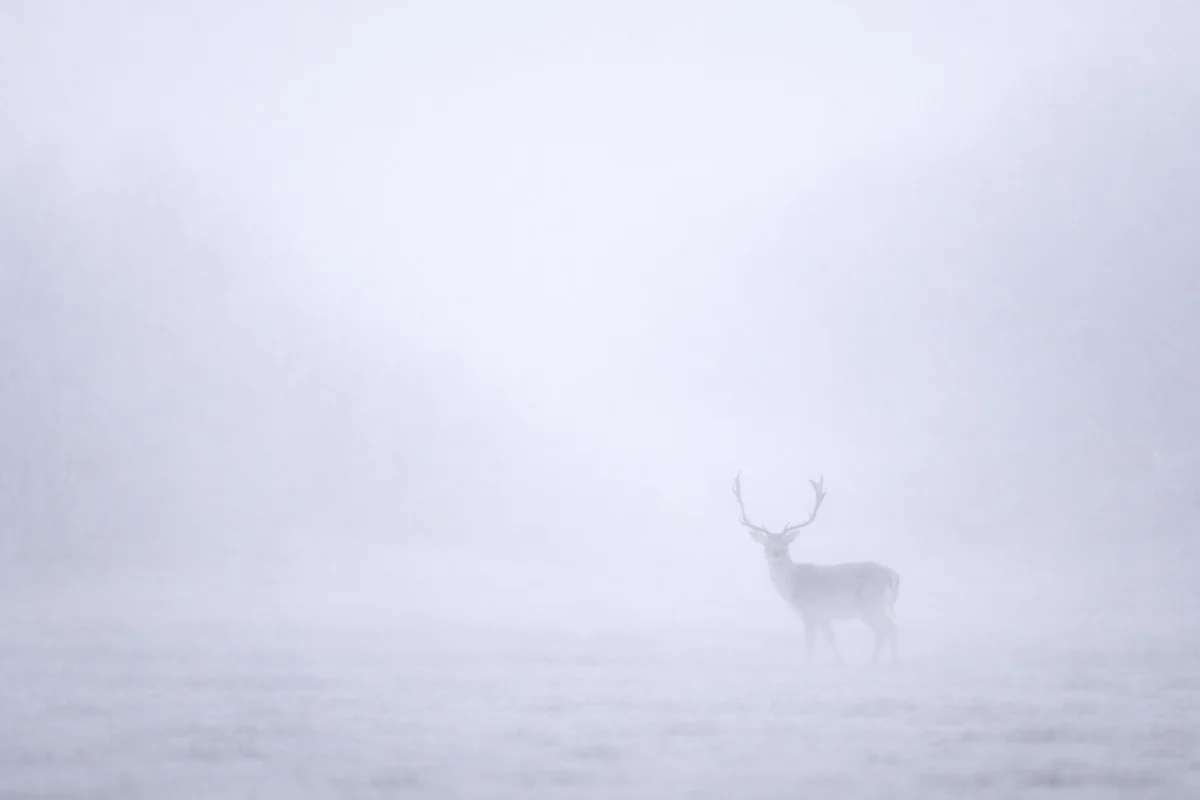
In an era defined by relentless digital noise, hyper-saturated imagery, and an unprecedented pace of daily life, a profound counter-movement is quietly taking shape within the realm of fine-art nature photography. Practitioners of minimalist landscape and wildlife photography are increasingly moving away from traditional, densely packed compositions, opting instead for high-key and low-key imagery that prioritizes negative space, fog, snow, and profound stillness. This aesthetic shift is not merely a stylistic preference; it represents a fundamental rethinking of how visual artists interact with the natural world, capturing not just a physical location, but an internal state of cognitive rest and psychological restoration.
The Evolution of Minimalist Nature Aesthetics

The roots of minimalist photography trace back to mid-century modernist movements, yet its application in contemporary nature and wildlife documentation has evolved significantly over the past decade. Historically, nature photography heavily emphasized documentation—capturing vivid details, dramatic lighting, and active subjects in sharp, high-contrast focus. However, contemporary minimalist photographers are deliberately subverting these conventions.
By employing techniques associated with high-key (overexposed, bright, airy fields of white) and low-key (deep, enveloping shadows and muted tones) styles, modern photographers are intentionally reducing visual clutter. Subjects such as fallow deer, red foxes, and solitary swans are frequently rendered small within the frame, dwarfed by vast expanses of heavy mist, falling snow, or dark, reflective water. This deliberate use of distance and restraint challenges conventional photographic standards, shifting the focus from subject-centric documentation to atmospheric immersion.
Psychological Implications and the Pursuit of Cognitive Calm

The growing popularity of minimalist imagery intersects directly with rising public interest in mental health, mindfulness, and sensory reduction. According to psychological studies on environmental aesthetics, exposure to natural scenes characterized by high visual simplicity and low complexity can significantly lower cortisol levels, reduce mental fatigue, and induce a state of involuntary attention restoration—a concept famously explored in Attention Restoration Theory (ART).
Art critics and behavioral researchers note that modern society’s constant exposure to rapid media stimuli has fatigued the human brain’s executive functioning networks. Minimalist nature photographs act as visual sanctuaries. By stripping away extraneous details, these images invite viewers to pause, slow their cognitive processing, and engage in contemplative observation. The resulting sense of quietude mirrors the internal psychological benefits experienced by photographers who spend hours waiting in solitude for subtle environmental shifts.
Methodology and Philosophy: The Shift from Performance to Presence

The working methods of minimalist nature photographers diverge sharply from commercial or trend-driven digital content creation. Rather than chasing optimal weather conditions for high-impact social media engagement, practitioners often adopt an observational, contemplative posture. Chronologically, a typical session involves prolonged stillness—hours spent in a single location without urgency or specific compositional expectations.
Industry experts and veteran photographers point out that this process requires a high degree of technical mastery combined with strict emotional discipline. Photographers must understand complex exposure triangles, dynamic range management, and atmospheric diffusion to accurately capture the subtle gradients of mist or snow without losing the tonal integrity of the minimalist composition. Yet, despite the underlying technical foundation, the guiding principle remains intuitive. Decisions regarding framing, distance, and shutter speed are increasingly driven by physiological and emotional responses to the environment rather than rigid adherence to rule-of-thirds or traditional wildlife framing conventions.
Broader Impact on the Fine-Art Market and Environmental Conservation

The resonance of minimalist nature photography extends beyond individual mental health benefits, leaving a measurable imprint on the contemporary fine-art market and environmental advocacy. Galleries and cultural institutions have reported a notable increase in exhibitions featuring monochromatic, high-key landscapes and minimalist wildlife portfolios. Collectors are increasingly drawn to works that offer contemplative breathing room rather than hyper-detailed spectacle.
From a conservation perspective, this minimalist approach fosters a different kind of relationship with wildlife and wild spaces. By emphasizing distance, restraint, and the preservation of natural habitats without intrusive framing or disruptive proximity, photographers model an ethic of non-interference. The resulting images do not sensationalize nature; instead, they evoke a fragile, weightless beauty that underscores the urgent need for habitat preservation.
Future Outlook for Contemplative Visual Media

As digital saturation accelerates, the demand for visual content that provides genuine cognitive respite is expected to grow. Minimalist nature photography stands at the forefront of this cultural shift, proving that silence, restraint, and emptiness in visual art are not synonymous with a lack of substance. On the contrary, as contemporary practitioners demonstrate, true depth often begins where visual clutter ends, offering audiences a rare and enduring invitation to pause, breathe, and simply observe.
