

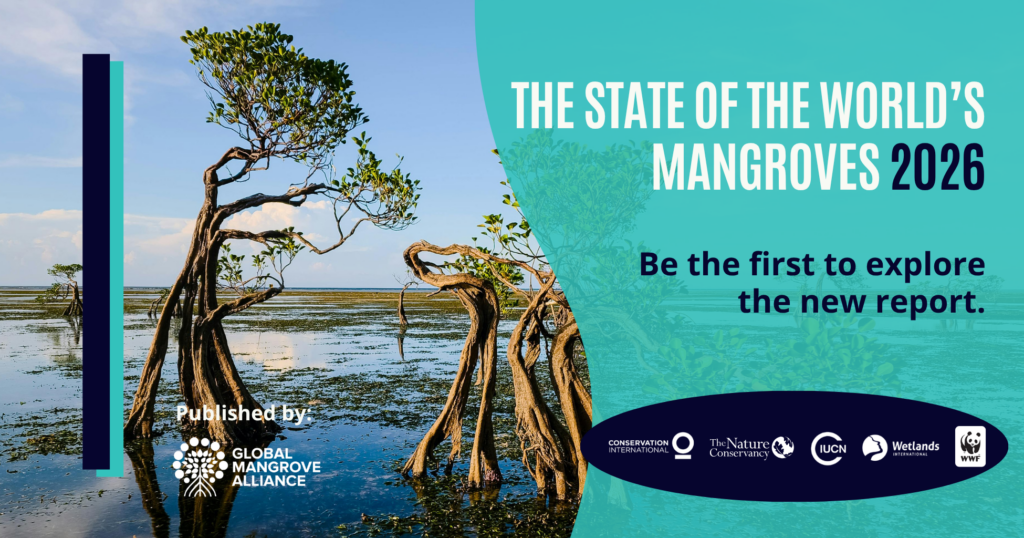
For decades, the global narrative surrounding coastal ecosystems was one of relentless decline, marked by the steady clearing of vital tropical forests for aquaculture, urban expansion, and industrial development. Today, however, a profound shift is reshaping the environmental horizon. According to The State of the World’s Mangroves 2026, the global extent of mangrove ecosystems is no longer in retreat; it is actively increasing. Released on October 1, 2026, this landmark report synthesizes decades of advanced satellite mapping, cutting-edge ecological science, and grassroots conservation efforts to reveal a cautiously optimistic reality. While old-growth destruction remains a critical threat, the global tide has turned toward net expansion, underscoring the extraordinary power of international collaboration, precise monitoring, and community-led restoration.
Spanning approximately 15 million hectares worldwide, mangroves are among the most productive and economically valuable ecosystems on Earth. These coastal powerhouses serve as essential nurseries for global fisheries, dynamic carbon sinks capable of sequestering vast quantities of greenhouse gases, and frontline natural defenses against storm surges and sea-level rise. Empirical data demonstrates that coastal wetlands mitigate the impacts of flooding for nearly half a million people annually, preventing an estimated $2 billion in structural damages worldwide. Despite these irreplaceable services, the twentieth century witnessed staggering losses of mature forests. The new findings, however, indicate that targeted conservation and natural regeneration are beginning to reverse this historic trajectory, offering a blueprint for addressing the twin crises of climate change and biodiversity loss.
A Four-Decade Chronicle: Mapping the Mangrove Transition
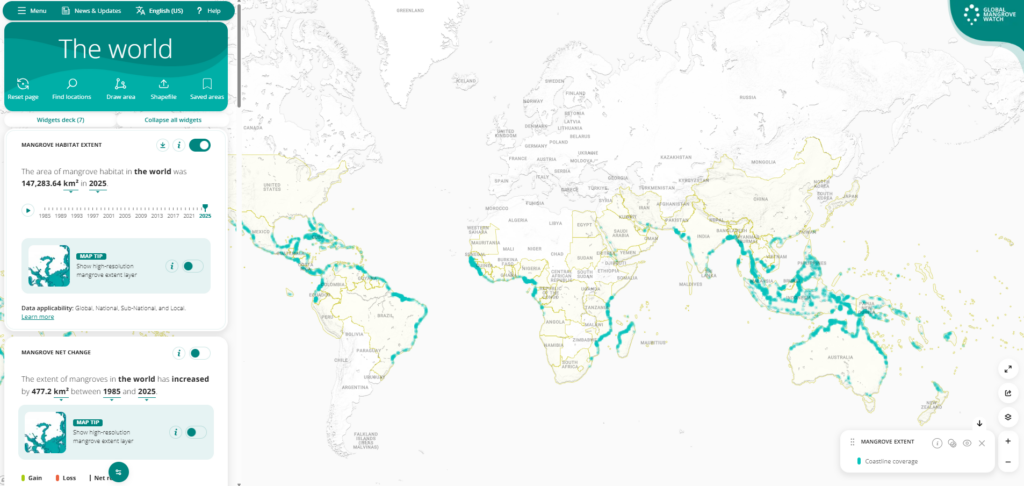
The realization that global mangrove cover is rebounding is rooted in technological revolutions in earth observation, most notably exemplified by Global Mangrove Watch (GMW) version 4.1 and parallel research published in Science. By analyzing high-resolution satellite imagery spanning from 1985 to 2025, scientists have been able to map historical losses, trace the stabilization of coastlines, and identify the precise moment the curve bent upward.
According to the data, the relentless global decline of mangrove forests gradually slowed over the final decades of the twentieth century. Approximately ten years ago, a critical turning point occurred: global net losses gave way to net gains. This milestone is a testament to the efficacy of international environmental treaties, national protection laws, and localized replanting initiatives.
Nevertheless, environmental scientists emphasize the need for nuanced interpretation of these net gains. A closer examination of the data reveals that roughly 65 percent of new mangrove growth is occurring in areas where these forests have not traditionally grown. In many regions, these young ecosystems are colonizing fresh sediment deposited in coastal waters as a direct consequence of severe deforestation and erosion miles inland. Consequently, while these emerging forests represent a positive ecological development, they cannot immediately replace the complex biodiversity, immense biomass, and deep-soil carbon storage capacity of ancient, old-growth mangrove ecosystems. Experts warn that it will take decades of careful stewardship for these new forests to mature and match the ecological value of the old-growth forests currently being degraded or lost.
The Anatomy of Continuing Threat
Even as net expansion offers a reason for hope, the report highlights the persistent, multifaceted threats facing established mangrove forests. Where losses continue, the underlying causes are often complex and deeply tied to regional socio-economic pressures. Direct clearance and conversion for urban infrastructure remain rampant in regions as diverse as Guinea, India, Bahrain, and Bali. In Senegal, illegal timber cutting and the expansion of unregulated aquaculture continue to fragment fragile coastlines. Meanwhile, in Mozambique, poorly planned mining operations have severed vital hydrological connections, cutting off mangroves from the ocean tides necessary for their survival. Nigeria faces ongoing ecological degradation driven by oil pollution and industrial runoff.
Other threats are more insidious and difficult to attribute to a single human activity. Rising sea levels rarely destroy mangroves in isolation; instead, they act as a compounding stressor when combined with local land subsidence and upstream hydrological disruptions, such as dam construction and water diversion. Understanding these localized drivers is essential for developing targeted interventions that protect mature forests before they reach a point of irreversible decline.

Global Collaboration and the Power of Partnership
The positive shifts documented in the 2026 report are not accidental; they are the direct result of unprecedented global cooperation. More than 190 governments, scientific institutions, community organizations, and conservation practitioners across 30 countries contributed to the findings. At the heart of this collaborative movement is the Global Mangrove Alliance (GMA), a coalition of over 100 member organizations—led by conservation heavyweights including The Nature Conservancy, Conservation International, the International Union for Conservation of Nature (IUCN), Wetlands International, and the World Wide Fund for Nature (WWF).
The GMA’s 17 National Chapters serve as operational linchpines, bridging the gap between high-level international climate pledges and practical, boots-on-the-ground execution. By fostering knowledge exchange across regional and sectoral divides, these chapters empower local stakeholders to influence national policies, secure vital investment pathways, and build technical capacity.
Pieter van Eijk, Programme Head for Deltas and Coasts at Wetlands International, reflected on the decades of collective effort required to reach this juncture. "Over the years, we built a community of thousands of people who work tirelessly to conserve and restore our mangroves," van Eijk stated. "This report provides an overview of their work and describes why it is so vital to scale up action for mangroves together."
Echoing this sentiment, Susanna Tol, Global Policy Officer for Deltas and Coasts at Wetlands International, emphasized the mechanics of policy translation. "As countries move from ambition to action on mangrove conservation and restoration, translating climate and biodiversity targets into effective national policies, investment pathways, technical capacity, measurable results and local leadership is essential," Tol noted. "This report highlights the critical role of collaboration among national partners through the National Chapters of the Global Mangrove Alliance in turning these commitments into coordinated and practical action."
Technological Innovation in Coastal Defense
Beyond community mobilization, the integration of advanced satellite technology has revolutionized how conservationists monitor and protect remote shorelines. The deployment of upgraded platforms like Global Mangrove Watch provides real-time data and alert systems that empower local authorities and indigenous communities to act against illegal clearing the moment it occurs.
Lammert Hilarides, Global Mangrove Watch Programme Lead at Wetlands International, underscored the transformative impact of these tools. "The unprecedented accuracy of the upgraded Global Mangrove Watch is transforming our understanding of mangroves at global and local levels—and revolutionizing our ability to protect and restore them," Hilarides explained. "With its unmatched data and unique alert system, this world leading tool is now even more powerful, enabling relevant authorities, communities and conservationists to plan mangrove activities more effectively and to react to illegal clearing as it happens—even in remote areas beyond the reach of routine surveillance."
Looking Toward 2030 and Beyond
As the international community reaches the halfway point toward the ambitious Global Mangrove Alliance 2030 Goals—which aim to halt mangrove loss, double the area under effective protection, and restore half of all historically lost mangroves—the focus has increasingly turned to localized execution. The State of the World’s Mangroves 2026 investigates these objectives through detailed regional case studies, showcasing successful community-led restoration projects in Ghana, Brazil, Mexico, Qatar, Tanzania, and the Philippines. These case studies prove that sustainable restoration is most effective when local communities are placed at the helm of project design and long-term management.
The broader implications of the report are clear. Mangroves represent an immediate, cost-effective, and highly scalable natural climate solution. By halting deforestation, improving the management of existing stands, and aggressively restoring degraded coastal wetlands, nations can simultaneously mitigate greenhouse gas emissions, shield vulnerable coastal populations from extreme weather events, and reverse the catastrophic loss of marine and terrestrial biodiversity. As the world navigates an increasingly volatile climatic future, the resurgence of the mangrove forest offers both a tangible scientific triumph and an enduring lesson in the power of global solidarity.
