
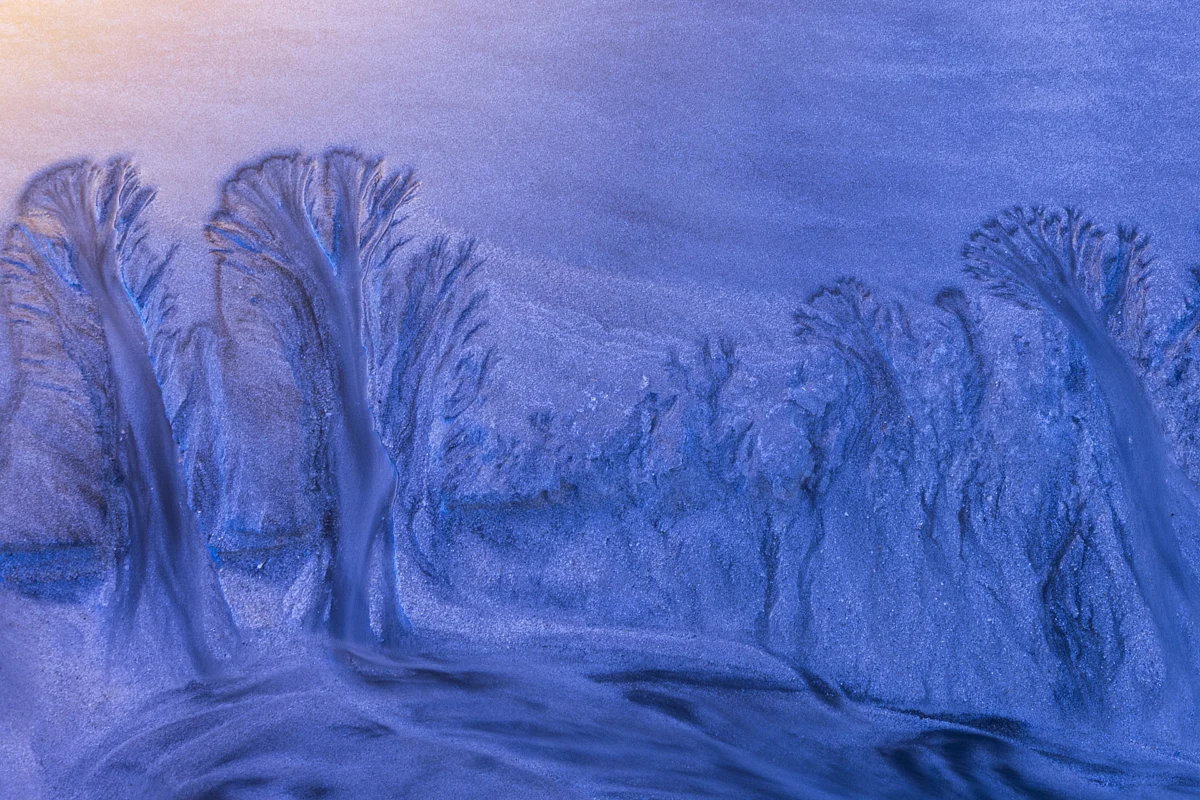
In contemporary fine-art nature photography, the boundary between objective reality and subjective interpretation continues to dissolve. Across diverse ecosystems ranging from the windswept coastlines of Norway to the subtropical rainforests of Argentina, modern visual artists are increasingly bypassing post-processing software to achieve surreal, narrative-driven imagery directly in-camera. By leveraging specialized optics, precise white-balance manipulations, and advanced multi-exposure mechanics, these practitioners are redefining what constitutes documentary nature photography, shifting the focus from mere topographical recording to profound psychological storytelling.

This artistic movement emphasizes in-camera methodology over digital manipulation. Rather than relying on heavy computer-generated composites, photographers are utilizing optical filters, vintage lenses, and camera-native exposure modes to construct complex visual metaphors at the exact moment of capture. Industry analysts and photography historians note that this technique reflects a broader cultural desire for authenticity and craftsmanship in an era heavily saturated by digital alterations and artificial intelligence.
The genesis of these photographic essays often lies in mundane, overlooked environments. Whether capturing the fleeting architecture of receding tidal water or framing a common insect against a dusty windowpane, artists working within this discipline demonstrate that visual poetry does not require exotic locales. Instead, it demands a disciplined, imaginative gaze that transforms ordinary subjects into extraordinary micro-universes.

Technical Frameworks and Methodologies
The execution of fine-art nature photography demands rigorous technical precision, particularly when altering parameters traditionally held neutral by documentary standards. Practitioners frequently manipulate white balance to evoke specific emotional responses, shifting Kelvin temperatures far outside naturalistic bounds to establish ethereal, cold atmospheres or warm, nostalgic undertones.
Polarizing filters, notably specialized options like the Singh-Ray Gold-N-Blue, are deployed not merely to reduce glare, but to actively sculpt the tonal contrast of a scene. By neutralizing unwanted surface reflections while simultaneously infusing specific areas of the frame with golden hues, photographers can introduce warmth into otherwise austere, monochromatic environments.

Furthermore, the integration of multiple exposure modes—specifically additive compounding and shadow-superimposition—allows artists to merge disparate temporal moments or spatial elements into a unified composition. When combined with vintage glass, such as the Helios 44-2 lens known for its distinct swirling bokeh, these techniques enable creators to dissolve chaotic natural backgrounds and isolate subjects with painterly delicacy.
Chronology of Compositional Projects
The development of these photographic portfolios typically spans years of field research and seasonal observation. The chronology of a single cohesive project involves several distinct phases:

Initial Field Reconnaissance: Photographers spend extended periods immersing themselves in specific ecosystems, observing how shifting weather patterns, seasonal flora, and coastal dynamics alter familiar landscapes. For instance, documenting the world’s largest colony of burrowing parrots along the high cliffs of El Cóndor, Argentina, requires careful timing to align avian flight paths with unpredictable marine turbulence.
Conceptualization and Vision: Once a recurring motif is identified—such as the transient structures carved by water or the architectural symmetries found in riparian flora—the artist formulates a narrative framework. This stage involves determining which in-camera techniques, focal lengths, and filtration systems will best serve the emotional core of the essay.

Execution and Capture: Field sessions are frequently dictated by environmental constraints. Capturing coastal scenes during the first light of dawn requires immediate adaptation to rapidly changing light conditions and receding tides. Similarly, macro-photography in humid rainforest environments demands swift adjustments to artificial lighting and framing before environmental moisture interferes with equipment.
Refinement and Curation: The final phase involves selecting the most resonant frames from hundreds of exposures, ensuring each piece contributes to a cohesive overarching narrative without relying on digital post-production tricks.

Case Studies in Environmental Transformation
Several distinct photographic projects illustrate the practical application of these avant-garde techniques across varied global landscapes.
The Ephemeral Architecture of Coastal Tides
Along the sub-arctic shores of Skagsanden beach in Norway, photographers working on water-focused essays document compositions that exist for mere minutes. Utilizing wide-angle lenses at a focal length of 16mm, practitioners set slow shutter speeds—approximately 0.8 seconds—to impart a silky, fluid motion to retreating water. This technique creates a stark visual contrast against the abrasive, coarse texture of the surrounding sand. By forcing an intentional white balance of 3500 K, the resulting imagery radiates a cold, ethereal atmosphere, counterbalanced by polarization filters that introduce targeted warmth.

Riparian Symmetries and Botanical Abstraction
In the province of Río Negro, Argentina, overcast afternoons along the coast of Viedma provide ideal lighting conditions for botanical studies. Focusing on black alders (Alnus glutinosa) and their pinecone-like fruits, photographers mount telephoto lenses on stable tripods to isolate specific elements against bright river backgrounds. By engaging camera-native "double exposure in the shadows" modes and rotating the lens mounting ring by 180 degrees between exposures, artists generate intricate, symmetrical compositions. These images transform mundane riparian flora into abstract designs characterized by rhythmic contrast and interconnected shadows.
Jungle Microcosms and Cosmic Metaphors
Within the subtropical rainforests of Puerto Iguazú, Misiones, routine environments serve as backdrops for surrealist interpretations. During damp, overcast afternoons, ordinary jungle ferns are often swallowed by chaotic tangles of decaying forest debris. To reestablish visual harmony, photographers utilize additive double-exposure techniques. By pairing a vintage Helios 44-2 lens to capture softly lit foliage bokeh with a second centered exposure of the plant life, the chaotic background effectively dissolves.

Similarly, urban-adjacent environments yield unexpected cosmic metaphors. When encountering common moths resting on dusty glass panes near the Paraná River, photographers have collaborated with assistants to backlight the subjects using simple flashlights. By underexposing the scene by three stops and adjusting the white balance to 3000 K, the accumulated dust on the windowpane is transformed into a glittering constellation of stars, elevating an ordinary insect into a celestial voyager.
Coastal Dynamics and Avian Flight
Along the fifty-meter-high sedimentary cliffs of El Cóndor—habitat to more than 74,000 burrowing parrots (Cyanoliseus patagonus)—artists merge dynamic marine forces with avian behavior. Through sequential double exposures, the fury of crashing ocean waves captured via a 400mm telephoto lens is fused with backlit images of swift-moving flocks. Setting the white balance to an ochre-tinted 8000 K, the resulting compositions depict birds appearing to flee from the chaotic rising tides below, symbolizing psychological escape and motion.

Analytical Implications for the Photographic Industry
The rising prominence of in-camera fine-art photography carries significant implications for the broader photographic community. As software developers introduce increasingly sophisticated artificial intelligence tools capable of generating or heavily altering photographic content with a single keystroke, purist movements focused on in-camera craftsmanship are gaining substantial traction.
Industry observers note that collectors, galleries, and conservation organizations are placing a renewed premium on provenance—the verifiable proof of how an image was constructed in the physical world. Photographers who achieve complex, dreamlike aesthetics strictly through optical manipulation, filtration, and camera mechanics are positioning themselves as masters of traditional craft within a rapidly digitalized medium.

Furthermore, this methodological approach fosters a deeper, more sustainable connection between the photographer and the natural environment. Because the success of the image relies entirely on physical presence, atmospheric observation, and immediate technical execution, artists must cultivate an intimate understanding of the ecosystems they inhabit. This heightened engagement frequently translates into more compelling environmental advocacy through visual storytelling.
Broader Impact and Future Outlook
Ultimately, the shift toward in-camera artistic interpretation expands the vocabulary of nature photography. By treating the camera not merely as a recording device, but as an active interpretive brush, photographers are challenging audiences to look beyond surface appearances.

As these visual essays continue to be exhibited globally, they inspire a new generation of practitioners to slow down, observe the overlooked details of the natural world, and harness the full mechanical potential of their equipment. In doing so, everyday moments—a wave receding, a fern glistening in the rain, a moth resting on glass—cease to be fleeting, insignificant occurrences and instead become enduring visual metaphors that resonate deeply within human consciousness.
