
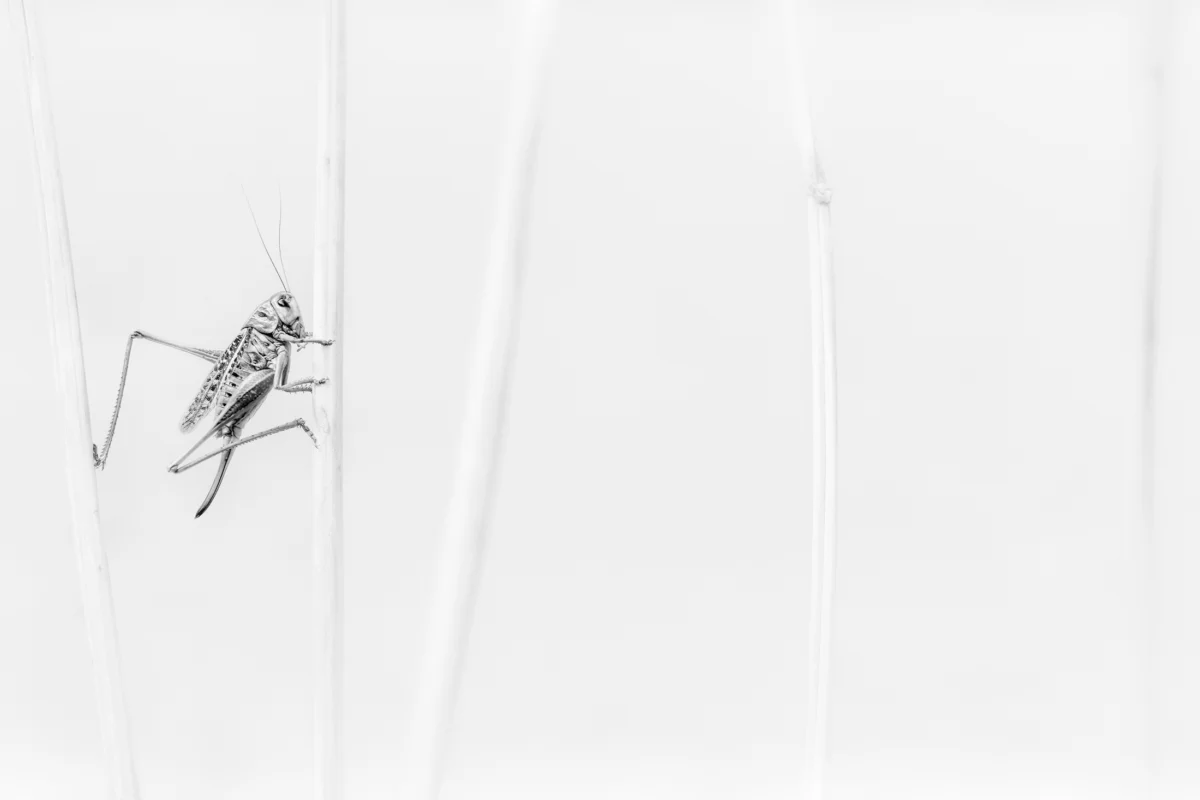
In an era defined by hyper-saturated digital displays and technologically engineered color profiles, a growing movement within nature photography is stripping away the spectrum to reveal the raw, structural essence of the natural world. Elisa Confortini, a prominent macro photographer specializing in arthropods, has spotlighted this aesthetic shift, championing black-and-white macro photography not merely as a stylistic throwback, but as a deliberate and sophisticated tool for biological documentation and artistic expression.
While color has traditionally dominated mainstream wildlife and nature portfolios—capturing the iridescent blues of morpho butterflies or the vibrant greens of praying mantises—the conscious choice to remove chromatic distraction offers an alternative methodology for observing some of Earth’s most ubiquitous yet overlooked inhabitants.

The Evolution of Arthropod Observation
Insects and other arthropods occupy a paradoxical space in human consciousness, evoking an intricate mix of fascination, utility, fear, and repulsion. Historically, scientific illustration and early entomological photography prioritized clinical precision and color accuracy to aid in species identification. However, contemporary fine-art nature photography has pivoted toward emotional resonance and behavioral storytelling.
The journey toward specialized macro photography typically begins close to home. Arthropods represent the most diverse group of animals on the planet, making them accessible subjects for backyard naturalists and professional field researchers alike. Long-term observation of these organisms reveals complex behaviors—predatory stalks, defensive postures, delicate molting phases, and intricate spatial navigation—that routinely escape the casual human eye. By focusing on these micro-ecosystems, photographers bridge the gap between scientific observation and visual art, translating minute interactions into grand narratives.

Decoding Monochrome: The Rationale Behind the Gray Scale
The decision to transition from vibrant color palettes to monochrome in macro photography is grounded in several distinct optical and psychological principles. Color, while visually striking, frequently acts as a cognitive magnet, drawing the viewer’s eye away from composition, geometry, and texture. In the chaotic micro-habitats where insects thrive—cluttered with tangled blades of grass, fractured light, and competing foliage—chromatic noise can dilute the impact of the primary subject.
By distilling an image into a continuous scale of grays, photographers highlight structural integrity. The absence of color elevates surface textures, such as the chitinous exoskeleton of a stag beetle or the delicate veining of a dragonfly’s wings. It accentuates high-contrast lighting, deep shadows, and negative space, producing a dramatic and timeless quality that color images struggle to achieve. Furthermore, modern digital post-processing affords creators unprecedented control over tonal distribution during monochrome conversion, allowing for precise manipulation of light and shadow that enhances the subject’s physical form.

Methodological Approaches in the Field
Mastering monochrome macro photography requires a fundamental shift in perception. Practitioners generally employ one of two methodologies: shooting natively in a monochrome picture profile to train the brain to visualize scenes in tones and contrasts, or capturing raw color files and executing the conversion during post-processing.
Professional practitioners often favor the latter approach for its technical flexibility. Translating a world rich in biological color into shades of gray is counterintuitive to human neurobiology, which relies heavily on hue to differentiate objects. Experimentation is vital; photographers must learn how specific colors—such as the bright yellows of a swallowtail butterfly or the dull browns of an opilione—translate into corresponding luminance values in a black-and-white spectrum.

Moreover, post-processing conversion enables a critical editorial filtering process. If color serves a vital narrative function—such as warning coloration (aposematism) signaling toxicity to predators—retaining color is essential. However, when the primary objective is to emphasize atmosphere, graphic line work, or emotional weight, monochrome becomes the superior medium.
Strategic Applications of Black and White in Macro Work
Monochrome is not a corrective tool for technically flawed or noisy images, but rather a specialized instrument deployed under specific environmental and artistic conditions. Experienced practitioners utilize black-and-white conversion in several distinct scenarios:

Isolating the Subject: When natural backgrounds are visually overwhelming, converting an image to grayscale helps visually detach the arthropod from chaotic surroundings, sharpening the viewer’s focus on the organism.
Managing Harsh Lighting: Direct midday sunlight creates extreme contrast. Rather than viewing this as a technical obstacle, monochrome photography weaponizes harsh light and deep shadow to sculpt the subject’s silhouette and emphasize three-dimensional form.
Mitigating High-ISO Noise: Low-light macro photography often requires elevated ISO settings, introducing chromatic noise that can ruin a color image. In black and white, digital noise frequently transforms into a pleasing, film-like grain that enhances the overall mood.

Resolving Color Casts: Environmental reflections—such as the unnatural green or brown tints found in stagnant pond water—can be notoriously difficult to correct accurately in color. Grayscale conversion bypasses this hurdle entirely, turning problematic color casts into neutral tonal gradients.
Embracing Minimalism and Abstraction
The minimalist potential of black-and-white macro photography allows creators to strip away environmental clutter to focus purely on geometric order and organic irregularity. Arthropods provide an infinite library of natural geometry—from the concentric circles of a spider’s web to the segmented, armored plating of beetles.

Compositional strategies in this realm often reject the traditional documentary impulse to center the subject and fill the frame. Instead, practitioners utilize extreme shallow depth of field to isolate a single anatomical feature—an antenna, an eye cluster, or a pincer—allowing the rest of the frame to dissolve into an ethereal, out-of-focus blur. This abstraction challenges viewers to reconsider organisms they might otherwise dismiss or overlook.
Additionally, while digital sensors are engineered to produce clinically clean images, intentional grain is frequently introduced during editing to evoke a classic, contemplative atmosphere. This technique shifts the viewer’s experience from a sterile scientific inspection to an evocative, mood-driven encounter with the wild.
Broader Implications for Nature Conservation and Art

The intersection of macro photography and monochrome aesthetics carries broader implications for how humanity perceives biodiversity. As global insect populations face severe declines due to habitat loss, pesticide use, and climate change, visual documentation plays a crucial role in scientific outreach and conservation advocacy.
While vibrant, high-definition color photographs remain powerful tools for showcasing the beauty of ecosystems, black-and-white imagery taps into a different psychological register. By removing the sensory overload of color, monochrome forces a deeper contemplation of form, vulnerability, and existence. It strips away the superficial barriers of disgust or indifference that people often feel toward insects, presenting them instead as architectural marvels of evolution.
Ultimately, choosing to portray arthropods through a monochrome lens is a deliberate artistic choice. It unveils a parallel universe thriving right beneath our feet—one that is complex, ancient, and endlessly fascinating, viewed through an entirely new spectrum of light and shadow.
