
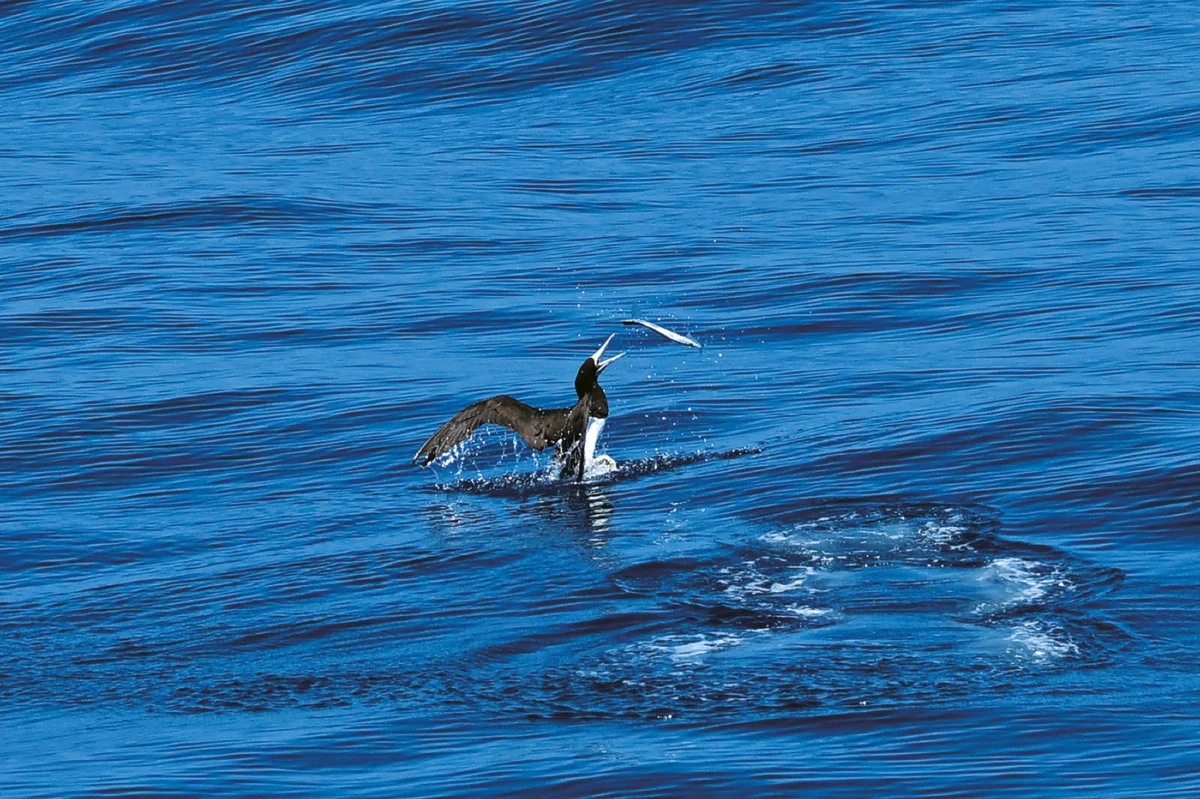
The Ogasawara Islands, a UNESCO World Heritage site known as the "Galapagos of the Orient," served as the primary backdrop for a recent wildlife documentation project led by HIH Princess Takamado. Published in the August 2026 issue of Fujingahou magazine, the feature titled "Through the Lens" provides a rare, firsthand visual and scientific account of the Sulidae family—commonly known as boobies—and their complex hunting behaviors within the remote marine ecosystems of the North Pacific. Supported by nature photographer Koichi Fujiwara and editor Yuki Masuda, the project highlights the intricate survival mechanisms of these seabirds, offering a glimpse into the unforgiving reality of life in the open ocean.
Scientific Context and Ornithological Significance
The booby, a member of the Sulidae family, is a specialized plunge-diver found across tropical and temperate maritime zones. The Princess’s observations focus specifically on the Brown Booby (Sula leucogaster), known in Japanese as "Katsuo-dori" or "Bonito Bird." While the colloquial name suggests a direct biological association with the skipjack tuna, or bonito, ornithologists clarify that the relationship is one of ecological opportunism rather than predation.
Brown Boobies are highly efficient foragers that rely on the predatory behavior of larger pelagic fish, such as bonito, to drive smaller prey species toward the sea surface. As the bonito chase schools of baitfish upward, the boobies capitalize on the condensed concentration of prey. This symbiotic, albeit competitive, relationship makes the presence of boobies a reliable biological indicator for commercial fishers regarding the location of productive fishing grounds.
Chronology of the Expedition
The documentation was conducted during a May 2026 expedition to the Ogasawara archipelago. This timing coincides with the breeding and early chick-rearing phases for various seabird species in the region. The project serves as an informal follow-up to the broader engagement with environmental themes seen during the World Expo 2025 in Osaka.
The fieldwork involved rigorous observation of feeding rituals, specifically the high-speed pursuit maneuvers that characterize the Sulidae family. During the expedition, the team captured high-speed burst photography of adult boobies executing vertical dives—a maneuver that involves reaching velocities of nearly 100 km/h. The chronology of the photographs reveals a distinct sequence: target acquisition, aerial folding of wings to minimize drag, ballistic water entry, and the subsequent struggle to secure prey—often against the backdrop of intense intraspecific competition.

Biomechanical Adaptations for Survival
The efficiency of the booby as a hunter is rooted in highly evolved biological adaptations. Researchers have long studied the morphology of the Sulidae family to understand how they survive the immense G-force and impact pressure associated with high-velocity diving.
- Streamlined Morphology: The head, neck, and chest of the booby form a conical shape, which serves to minimize air resistance during the descent.
- Impact Cushioning: A subcutaneous layer of air sacs located under the skin of the breast and face acts as a natural airbag. Upon impact with the water surface, these air pockets compress, effectively dissipating kinetic energy and protecting internal organs.
- Cranial Protection: The skull of the booby is notably thick and robust, functioning as a protective helmet to mitigate the risk of brain trauma during sub-surface collisions.
- Wing Retraction: Seconds before contact with the water, the bird retracts its wings against its body and extends its legs backward, essentially transforming into a living projectile.
Despite these adaptations, the environment remains lethal. The observational data gathered during the Ogasawara trip confirms that "misses" are frequent. Birds are susceptible to collision-related injuries, including self-inflicted blindness from striking the surface at improper angles or colliding with other birds during synchronized feeding frenzies.
Ecological Analysis and Competitive Behavior
The visual record provided by the project emphasizes the scarcity of resources in the open ocean. Through high-speed imagery, the documentation captures the "theft" of prey—a behavior known as kleptoparasitism—whereboobies attempt to intercept the catch of a successful peer.
This behavior highlights a broader ecological truth: the vastness of the Pacific Ocean is not a uniform habitat but a series of scattered, ephemeral hotspots. While documentaries often portray seabird feeding frenzies as constant, the reality observed by the research team suggests that these instances of high-density prey are rare and fleeting. For the booby, the interval between successful catches can be significant, making each attempt a high-stakes endeavor. The images of a single bird struggling to retain a needlefish against a group of competitors underscore the relentless pressure of natural selection.
Environmental Implications and Biodiversity
The Ogasawara Islands are critical for the conservation of global seabird populations. As a UNESCO site, the islands provide nesting grounds for several species, including the Brown Booby and the Red-footed Booby (both white and brown morphs).
The documentation of these species in their natural habitat serves as a poignant reminder of the fragility of marine ecosystems. The reliance of boobies on subsurface predators like bonito creates a "cascading dependency." If overfishing or climate-driven changes in ocean temperature disrupt the migratory patterns or population density of the bonito, the ripple effect on the booby population could be profound.

Expert and Institutional Perspectives
BirdLife International, which assisted in the English-language preparation of the report, notes that such citizen-science and royal patronage projects provide invaluable public awareness. By bridging the gap between high-level ecological data and public accessibility, these photographs serve as a tool for environmental advocacy.
The documentation does not merely celebrate the beauty of the bird; it serves as a factual record of its behavior. The absence of "successful capture" photographs in the majority of the team’s archive—despite extensive efforts—serves as a compelling piece of evidence regarding the difficulty of survival. It challenges the romanticized perception of the ocean as an inexhaustible larder, presenting instead a world where survival is entirely dependent on the individual’s physical agility and timing.
Conclusion: A Reflection on Wild Resilience
The expedition concluded with a reflection on the harshness of life in the wild. The documentation effort, which yielded nearly one hundred frames of a single feeding interaction, provides a microscopic view of a broader biological struggle. As human activity continues to impact the world’s oceans, the Ogasawara Islands remain a vital sanctuary for observing these processes in relative isolation.
The work of Princess Takamado and her collaborators serves to underscore the importance of protecting these remote marine habitats. By focusing on the booby, the project highlights that even the most "common" species possess complex survival strategies that are intricately linked to the health of the entire marine food web. As the global community looks toward long-term sustainability, these observations provide a stark, necessary baseline for understanding the challenges faced by species inhabiting the world’s most remote environments. The "Katsuo-dori," while historically a guide for the fishing industry, now serves as an essential guide for those seeking to understand the enduring, and often perilous, mechanics of the natural world.
