
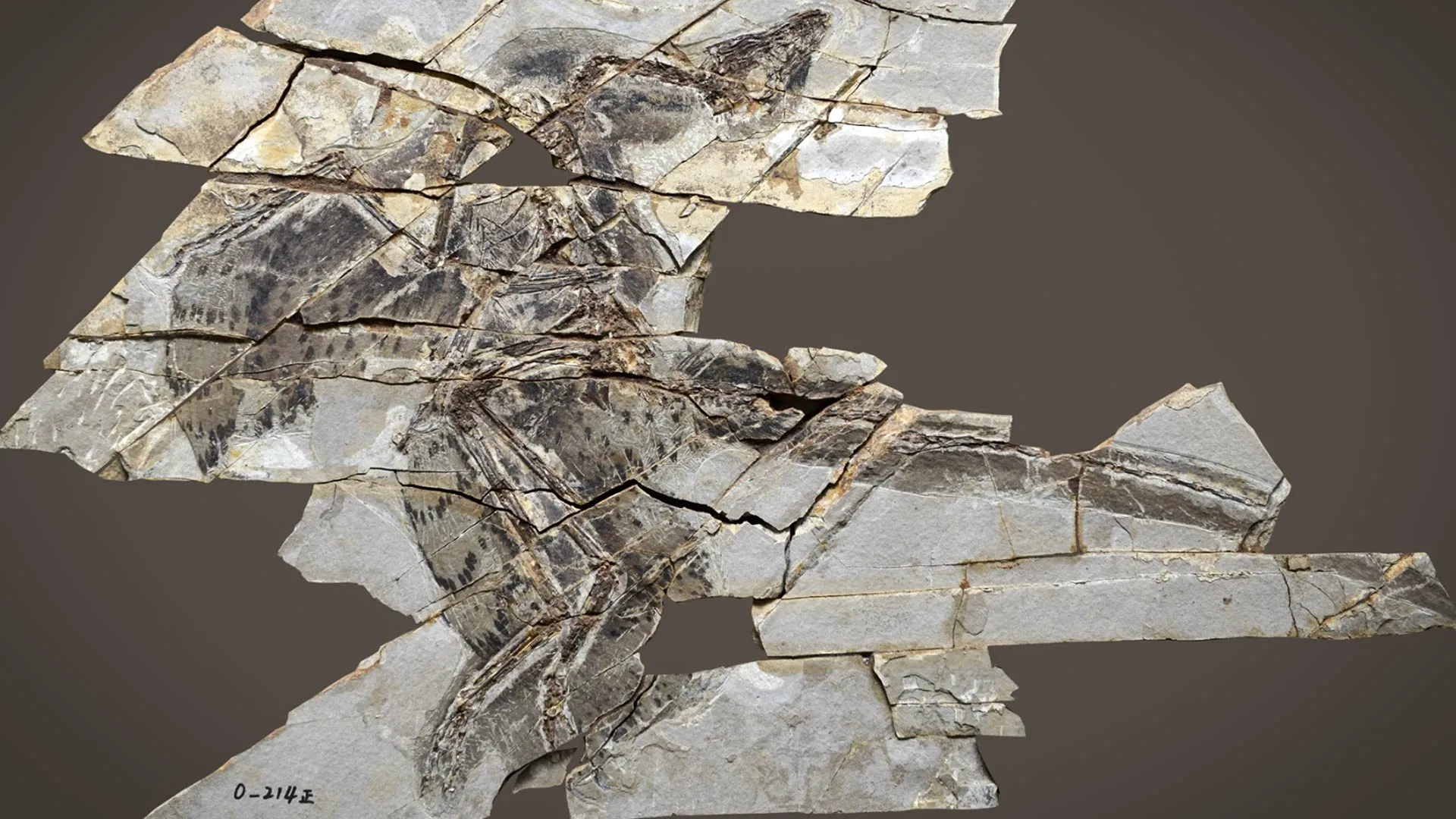
A groundbreaking new study led by researchers from Tel Aviv University has unveiled compelling evidence suggesting that some feathered dinosaurs, despite possessing intricate plumage, had already forfeited the ability to fly. This remarkable discovery, centered on exquisitely preserved fossils, offers a rare glimpse into the complex evolutionary trajectory of flight, indicating a more nuanced and less linear path than previously understood for both dinosaurs and their modern avian descendants. The research team, spearheaded by Dr. Yosef Kiat from the School of Zoology and the Steinhardt Museum of Natural History, emphasizes the profound implications of their findings, stating, "Feather molting seems like a small technical detail – but when examined in fossils, it can change everything we thought about the origins of flight, highlighting how complex and diverse wing evolution truly was." This revelation not only reshapes our understanding of prehistoric animal life some 160 million years ago but also introduces the concept that flight capabilities, once acquired, could be subsequently lost within a lineage, mirroring patterns observed in contemporary flightless birds.
The detailed investigation, which included international collaborators from China and the United States, was published in the prestigious journal Communications Biology by Nature Portfolio. Their work meticulously analyzed rare fossil specimens exhibiting intact feathers, allowing an unprecedented look into the biomechanical and physiological aspects of ancient dinosaur wings. The central tenet of their argument revolves around the sophisticated interpretation of molting patterns, a biological process hitherto challenging to discern in the fossil record, but which now proves to be a critical indicator of flight functionality.
Unlocking Secrets from Ancient Feathers: The Case of Anchiornis
The study focused intensively on nine exceptionally preserved fossils belonging to Anchiornis, a small, feathered paravian dinosaur that lived during the Late Jurassic period, approximately 160 million years ago. Anchiornis holds a significant position in paleontological research as one of the earliest known feathered dinosaurs with clear avian-like features, including long feathers on its forelimbs, hindlimbs, and tail. Its discovery in the Liaoning Province of eastern China, an area renowned for its lagerstätte deposits (sites of exceptional fossil preservation), has provided a treasure trove of information regarding the transition from dinosaurs to birds. These unique geological conditions meant that not only the skeletal structures but also soft tissues and intricate feather details, including original pigmentation, were preserved with astonishing fidelity.
Dr. Kiat, an ornithologist with a specialized focus on feather biology, explains the importance of this level of preservation. Each Anchiornis specimen showcased distinct wing feathers that were predominantly white, strikingly accented by a prominent black spot at the tip. This remarkable preservation of coloration, attributed to fossilized melanosomes (pigment-producing organelles), allowed the researchers to move beyond mere structural observation to a functional analysis of these ancient flight surfaces. The ability to discern specific color patterns and their distribution across the wing provided the crucial visual cues needed to analyze the molting process, a physiological phenomenon intrinsically linked to flight capability.
The Evolutionary Tapestry of Feathers and Flight
To fully appreciate the significance of this discovery, it is essential to contextualize the broader evolutionary narrative of feathers and flight. Dinosaurs, a diverse group of reptiles, first emerged around 240 million years ago during the Triassic period. Relatively soon after, on an evolutionary timescale, many species within certain lineages began to develop feathers. Initially, these integumentary structures were likely not for flight but served functions such as thermoregulation, display, or even insulation for eggs.
Around 175 million years ago, a pivotal group known as Pennaraptora appeared. This clade, which includes oviraptorosaurs, scansoriopterygids, dromaeosaurids, troodontids, and Avialae (the group that includes modern birds), is characterized by the presence of vaned feathers, which are structurally more complex and often asymmetrical, suggesting an increasing adaptation towards aerodynamic functions. Anchiornis is classified within the Paraves, a group closely related to Avialae, making it a critical subject for understanding the origins of avian flight. Pennaraptorans are widely recognized as the distant ancestors of modern birds and were the only dinosaur lineage to successfully navigate the catastrophic mass extinction event at the end of the Mesozoic era, approximately 66 million years ago, eventually diversifying into the myriad bird species we see today.
For decades, paleontologists have debated the precise pathway by which powered flight evolved in birds. Two primary hypotheses have dominated the discussion: the "trees down" (arboreal) hypothesis, suggesting flight evolved from gliding animals descending from trees, and the "ground up" (cursorial) hypothesis, proposing flight evolved from fast-running terrestrial predators using proto-wings for balance or to assist in prey capture. The discovery of numerous feathered dinosaurs, each exhibiting varying degrees of flight-related adaptations, has progressively painted a picture of a more complex, multi-faceted evolutionary journey rather than a simple, linear progression.
Molting Patterns: A Window into Ancient Aerodynamics
The core methodology of Dr. Kiat’s research hinges on the biological process of molting. Feathers, being non-living structures composed primarily of keratin, are subject to wear and tear. To maintain their integrity and functionality, particularly for flight, they must be periodically shed and replaced by new ones. This process, known as molting, is a metabolically demanding event for birds and is precisely regulated.
Dr. Kiat elaborates on the critical distinction: "Feathers grow for two to three weeks. Reaching their final size, they detach from the blood vessels that fed them during growth and become dead material. Worn over time, they are shed and replaced by new feathers – in a process called molting, which tells an important story: birds that depend on flight, and thus on the feathers enabling them to fly, molt in an orderly, gradual process that maintains symmetry between the wings and allows them to keep flying during molting. In birds without flight ability, on the other hand, molting is more random and irregular. Consequently, the molting pattern tells us whether a certain winged creature was capable of flight."
In flying birds, molting is typically symmetrical, with corresponding feathers on both wings being shed and replaced at roughly the same time. This ensures that the bird’s aerodynamic profile remains balanced, minimizing disruption to its flight capabilities. Primary flight feathers, crucial for lift and thrust, are often replaced one or two at a time, preventing significant gaps in the wing surface. In contrast, flightless birds, such as ostriches, emus, penguins, and kakapos, do not face the same aerodynamic constraints. Their molting patterns tend to be more asynchronous, less ordered, and can even involve the simultaneous loss of multiple flight feathers without detrimental effects on their locomotion.
By meticulously examining the fossilized feathers of Anchiornis, the research team identified a continuous line of black spots along the wing edges, indicating mature feathers. Crucially, they also observed developing feathers whose black spots were notably out of alignment with this continuous line, signifying that they were still in a growth phase. A detailed, multi-specimen analysis of these growth and replacement patterns revealed a molting process that was distinctly irregular and asynchronous, rather than the orderly, symmetrical molting characteristic of actively flying birds. This empirical observation provided the strongest evidence to date for secondary flightlessness in Anchiornis.
Evidence for Flightlessness in Anchiornis
Dr. Kiat’s conclusion, drawn from his extensive knowledge of modern avian biology, was unequivocal: "Based on my familiarity with modern birds, I identified a molting pattern indicating that these dinosaurs were probably flightless. This is a rare and especially exciting finding: the preserved coloration of the feathers gave us a unique opportunity to identify a functional trait of these ancient creatures – not only the body structure preserved in fossils of skeletons and bones."
The implications of this finding are substantial. It suggests that Anchiornis, despite its elaborate feathering and seemingly wing-like structures, may have evolved basic flight abilities only to subsequently lose them. This phenomenon, known as secondary flightlessness, is well-documented in modern birds, where species adapt to environments lacking predators or abundant food sources, making the energetic cost and structural requirements of flight unnecessary or even disadvantageous. For instance, penguins traded flight for highly efficient aquatic locomotion, while ostriches evolved for terrestrial speed and defense.
For a feathered dinosaur like Anchiornis, which lived in a period of significant ecological change, environmental pressures could have driven such a loss. Factors like changes in vegetation structure, the emergence of new predators or competitors, or shifts in available food sources could have rendered flight less critical for survival, allowing for the re-allocation of metabolic resources away from maintaining high-performance flight apparatus.
Broader Impact and Evolutionary Rethinking
The discovery that Anchiornis was likely flightless adds a critical layer of complexity to the narrative of avian evolution. It challenges the long-held assumption that the presence of well-developed feathers automatically equates to flight capability, particularly in early dinosaur-bird transitional forms. Instead, it supports a more intricate, mosaic model of evolution where traits evolve, are modified, and can even be lost over time, depending on prevailing ecological pressures.
Dr. Kiat emphasizes this profound shift in perspective: "Feather molting seems like a small technical detail – but when examined in fossils, it can change everything we thought about the origins of flight. Anchiornis now joins the list of dinosaurs that were covered in feathers but not capable of flight, highlighting how complex and diverse wing evolution truly was." This list includes other notable feathered dinosaurs like Sinosauropteryx, which had simple, hair-like proto-feathers, and larger dromaeosaurids like Velociraptor, which possessed vaned feathers but were far too large to fly. Anchiornis‘s case is particularly compelling because its feather structure appeared outwardly capable of flight, making the molting evidence all the more critical.
Paleontologists and evolutionary biologists worldwide are likely to find this study highly influential. Dr. Elena Petrova, a renowned avian paleontologist not directly involved in the study, commented on the significance, stating, "This research provides crucial empirical evidence from the fossil record that directly supports the hypothesis of secondary flightlessness in early paravians. It moves beyond morphological inference to physiological indicators, which is a major methodological leap. It forces us to reconsider simplistic linear models of flight evolution and embrace the messiness and adaptability of natural selection."
The implications extend to future research. Scientists will now be more inclined to scrutinize the subtle clues within fossilized integumentary structures, moving beyond skeletal morphology to infer functionality. This could lead to a re-evaluation of the flight capabilities of other feathered dinosaurs, potentially revealing more instances of flight being acquired and subsequently lost. Furthermore, it underscores the importance of the exceptional fossil sites in regions like Liaoning, China, which continue to yield unparalleled insights into pivotal evolutionary transitions. The study reinforces that evolution is not a unidirectional march towards greater complexity or specialization, but a dynamic process of adaptation, exaptation, and sometimes, even regression of traits, driven by the ever-changing tapestry of life on Earth.
