
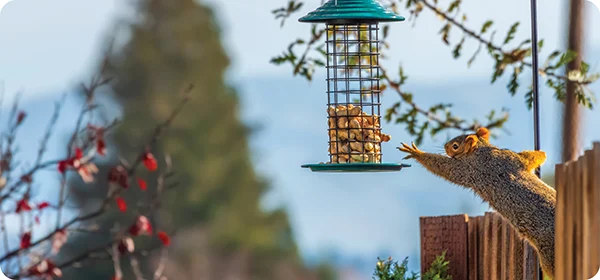
The persistent presence of wildlife at backyard bird feeders, while a testament to the abundance of food sources, can often lead to frustration for hobbyists. Squirrels, with their remarkable agility and problem-solving skills, and certain bird species, termed "nuisance" birds due to their flocking behavior and rapid consumption of seed, can quickly deplete feeders and deter desired avian visitors. This article delves into practical, expert-recommended strategies for managing these interactions, ensuring a more harmonious and sustainable backyard bird feeding experience. Drawing on insights from Wild Birds Unlimited, a leading authority in the field, we explore effective methods for deterring unwanted guests while continuing to attract and support native bird populations.
Understanding the Challenge: A Natural Food Source and Unintended Consequences
Backyard bird feeders, when stocked with nutrient-rich seeds and suet, represent a readily available food source. For wild animals, particularly squirrels and various bird species, this presents an easily exploitable opportunity. The instinct to forage and secure sustenance is a primary driver, and when feeders are unprotected, they become an attractive target. This natural behavior, while understandable from the animal’s perspective, can lead to significant challenges for bird enthusiasts who aim to observe and support specific bird species.
Squirrels, belonging to the rodent family, are notorious for their ability to access feeders. Their climbing prowess, combined with a seemingly innate understanding of mechanics, allows them to overcome many conventional feeder designs. Beyond simply consuming seeds, their persistent efforts can lead to damaged feeders and the displacement of smaller, more desirable birds. Similarly, certain bird species, such as starlings and house sparrows, can form large flocks that overwhelm feeders, consuming vast quantities of food in a short period and leaving little for native songbirds. This dynamic creates a situation where the intended beneficiaries of the feeders are effectively excluded.
The issue is not merely about resource competition; it’s about maintaining the ecological balance and ensuring that backyard feeding initiatives contribute positively to local wildlife. When feeders become dominated by a few aggressive species, it can negatively impact the diversity of birds visiting a yard and potentially stress local populations that rely on these supplemental food sources, especially during challenging weather conditions.
Strategic Deterrence: Baffling Squirrels for Feeder Protection
Squirrels, often characterized by their bushy tails and energetic demeanor, pose one of the most common challenges for bird feeder owners. Their ability to jump considerable distances and their tenacious nature necessitate specific protective measures. Fortunately, several well-established methods can effectively deter these agile mammals.
The Efficacy of Stovepipe Baffles
One of the most widely recommended and effective solutions for pole-mounted feeders is the use of stovepipe baffles. These smooth, metal cylinders, typically around six inches in diameter, are designed to prevent squirrels from climbing the feeder pole. To be maximally effective, a stovepipe baffle must be installed correctly. The general guideline is to position the baffle on the pole at least five feet above the ground. This height ensures that squirrels cannot simply jump over the baffle.
Furthermore, the placement of the feeder pole itself is crucial. It should be situated at least ten feet away from any potential launch points, such as trees, bushes, fences, or other structures. This distance prevents squirrels from leaping directly onto the feeder from an adjacent surface. When these conditions are met, a pole equipped with a stovepipe baffle effectively transforms any feeder hung upon it into a squirrel-proof bird feeder. The smooth, unclimbable surface of the baffle presents an insurmountable barrier to their ascent.
Overhead Protection for Hanging Feeders
For feeders that are hung from branches or hooks, a different approach is required. In these scenarios, the primary threat is squirrels descending from above. The solution lies in employing a domed squirrel baffle. These baffles, often made of metal or sturdy plastic, are designed to hang above the feeder. Their broad, downward-sloping surface prevents squirrels from climbing down the hanging chain or wire.
When utilizing a hanging feeder, such as a tube or hopper feeder, it is essential to position the domed baffle directly above the feeder. This ensures that any attempt by a squirrel to reach the feeder from the hanging mechanism is thwarted by the dome. This overhead barrier creates a protective canopy, making the feeder inaccessible from above.
Exclusion Cages: A Barricade Against Intruders
Another robust method for protecting feeders, particularly those susceptible to larger birds as well as squirrels, is the use of an exclusion cage. These cages are designed to retrofit existing feeders, essentially creating a protective barrier around the feeding ports. Exclusion cages come in a variety of sizes and mesh dimensions, allowing for customization to fit different feeder types and to target specific unwanted visitors.
The principle behind these cages is simple: the openings in the mesh are large enough to allow smaller birds, such as finches, chickadees, and titmice, to access the food, but too small for squirrels or larger nuisance birds like starlings to enter. This selective access ensures that the intended beneficiaries can feed freely while the larger, more intrusive animals are excluded. The strategic application of these cages can be a highly effective way to reclaim feeders for smaller songbirds.
Addressing "Nuisance" Birds: Tailoring Food and Feeder Choices
The term "nuisance birds" often refers to species that congregate in large numbers at feeders, consuming food rapidly and potentially driving away more desirable species. Identifying these birds and implementing strategies to discourage them while encouraging preferred visitors is key to a balanced backyard ecosystem.
The Power of Seed Selection
The type of birdseed offered plays a significant role in attracting certain species while deterring others. Some seeds are universally appealing, while others are favored by specific groups of birds. Understanding these preferences allows for strategic food selection.

For instance, cracked corn and millet are often favored by many of the birds considered "nuisance" species. By reducing or eliminating these seeds from your feeder offerings, you can make your feeders less attractive to these flocks. Conversely, safflower seed is a highly effective alternative. While many common nuisance birds tend to avoid safflower, it is a popular choice among many favored backyard birds, including cardinals, chickadees, and nuthatches. This simple substitution can dramatically shift the species composition at your feeders.
Pure suet cakes, as opposed to suet blends that may contain added ingredients, offer another avenue for species-specific attraction. Starlings, for example, are often less interested in pure suet. This makes it an excellent choice for attracting woodpeckers, nuthatches, and other cavity-nesting birds that are drawn to suet. By offering pure suet, you can provide a valuable food source for these desired birds while minimizing the consumption by larger, more aggressive species.
Feeder Design as a Selective Tool
Beyond food selection, the design of the feeders themselves can be engineered to favor smaller birds and exclude larger ones. This involves considering features such as perch length, cage dimensions, and even the responsiveness of feeding ports.
Weight-sensitive feeders represent a sophisticated solution. These feeders are designed with a mechanism that closes off the feeding ports when a bird of a certain weight lands on them. This effectively excludes heavier birds, such as starlings and grackles, while allowing lighter birds to feed unimpeded. The sensitivity can often be adjusted to fine-tune which birds are excluded.
Feeders equipped with mesh cages, similar to the exclusion cages mentioned earlier, are also highly effective. These cages surround the feeding ports, providing a barrier that allows smaller birds to pass through to reach the seed but prevents larger birds from accessing it. The size of the mesh is critical in determining which birds can enter.
Feeder perch design is another important consideration. Feeders with short perches, or even feeders with no perches at all, can make it difficult for larger birds to perch and feed comfortably. Smaller birds, on the other hand, are often more adept at clinging to the feeder or utilizing minimal perch space. By choosing feeders with designs that naturally favor smaller avian visitors, you can create a more exclusive feeding environment for your preferred species.
Expert Guidance and Resources for Continued Success
Navigating the complexities of backyard bird feeding often requires expert advice. Wild Birds Unlimited, with its extensive network of Certified Bird Feeding Specialists®, provides a valuable resource for individuals seeking to optimize their feeding practices. These specialists offer personalized recommendations tailored to local wildlife and specific backyard challenges.
Visiting a local Wild Birds Unlimited store allows enthusiasts to consult with knowledgeable staff who can guide them through the selection of appropriate feeders, baffles, and food types. This hands-on approach ensures that individuals are equipped with the most effective solutions for their unique situations.
In addition to in-store expertise, Wild Birds Unlimited offers a wealth of online resources. The "Nature Centered Podcast," particularly Episode 76 titled "Critter Solutions," provides further in-depth discussions and practical tips on managing wildlife at feeders. This podcast serves as an accessible platform for learning about best practices and staying informed about the latest developments in backyard ecology.
The Wild Birds Unlimited website also serves as a comprehensive hub for information, offering a wide array of products and educational content. This includes detailed descriptions of bird foods, feeder types, and predator baffles, along with articles and guides on various aspects of bird feeding and backyard habitat management.
Broader Implications: Fostering Biodiversity and Educating the Public
The strategies discussed for managing wildlife at bird feeders extend beyond mere personal enjoyment. They contribute to the broader goals of wildlife conservation and public education. By implementing effective deterrence methods, bird enthusiasts can ensure that their feeders become sustainable food sources that support a diverse range of native bird populations. This, in turn, can contribute to the health and resilience of local ecosystems.
The act of observing and interacting with nature in one’s own backyard fosters a deeper appreciation for the environment. When these interactions are managed responsibly, they become powerful educational tools, particularly for children, teaching them about the natural world and the importance of coexistence with wildlife.
Furthermore, the consistent availability of supplemental food sources, provided through well-managed feeders, can be critical for bird survival, especially during harsh winters or periods of drought. By ensuring that these food sources are accessible to a wide variety of native species, and not dominated by a few opportunistic ones, backyard feeding initiatives can play a genuine role in supporting avian populations.
The ongoing efforts by organizations like Wild Birds Unlimited to provide expert advice and resources empower individuals to become better stewards of their local environments. This collective action, fueled by informed choices and practical solutions, ultimately contributes to a healthier planet and a more engaged public, fostering a greater understanding and appreciation for the intricate web of life that surrounds us. The challenge of critter management at feeders, therefore, becomes an opportunity to learn, adapt, and contribute positively to the natural world.
