
When the author first picked up a field guide in 2005, the act of birding was burdened by a persistent, if unspoken, cultural stigma. It was widely perceived as an eccentric, solitary, and fundamentally uncool pursuit—a stereotype that had taken root in the collective consciousness long before the author ever set foot in the field. This perception, however, was not an organic development but rather a narrative construct, meticulously built and reinforced through decades of television and film portrayals. To understand why birding was relegated to the fringes of social acceptability, one must examine the fluctuating representation of birdwatchers in the media, a history that mirrors the changing tides of 20th and 21st-century American culture.
The Heroic Dawn: 1900–1945
At the turn of the 20th century, birding was not viewed as a hobby for the socially awkward, but rather as an extension of the nascent conservation movement. As the National Association of Audubon Societies began its work to curb the plume trade and protect declining avian populations, birds became a popular subject for early motion pictures. During the silent film era, the accessibility of bird life made it an ideal focus for filmmakers.
These early portrayals often positioned the birdwatcher as a moral guardian. Films like The Spirit of Audubon (1918) functioned as educational dramas that framed bird protection as a civic duty. This trend persisted into the era of "talkies." The 1944 British comedy The Tawny Pipit serves as a critical historical marker. While it introduced the now-infamous tropes of the birdwatcher—the tweed jacket, the sensible shoes, and the older, slightly bumbling demeanor—the film framed these characters as the heroes of the narrative. They were the protectors of nature against industrial and military encroachment. In this era, the birdwatcher was not a caricature but a steward, a necessary figure in a society beginning to grapple with the consequences of environmental loss.
The Golden Age of Visibility: 1946–1966
Following the conclusion of World War II, the United States experienced a period of unprecedented economic growth and suburban expansion. As American households gained more disposable income and leisure time, hobbies that allowed for exploration—facilitated by the construction of the interstate highway system and the availability of high-quality optics—saw a surge in popularity.
Television networks, scrambling to fill airtime, began incorporating birding into the fabric of popular culture. During this "Golden Age," birding appeared frequently in mainstream programming, from Woody Woodpecker and Rocky and Bullwinkle to Popeye. Significantly, these portrayals were largely neutral or comedic in a lighthearted sense. In the 1960 Dennis the Menace episode "Dennis’ Tree House," the neighborly obsession with spotting a rare warbler was treated as a relatable suburban eccentricity rather than a social defect. During these two decades, birding was simply one of many harmless pastimes. It had not yet become the punchline it would soon become.
The Hathaway Line: A Cultural Turning Point
The shift in the public perception of birding can be traced to a single, influential source: the debut of the character Miss Jane Hathaway on the hit sitcom The Beverly Hillbillies in 1966. Played by Nancy Culp, Hathaway was characterized by her prim, "spinster" aesthetic and her frequent, obsessive birdwatching activities.
The character became a cultural touchstone. Appearing in 246 episodes over nine seasons, Miss Hathaway solidified a specific, negative archetype: the birdwatcher as a social outlier. As noted by author Scott Weidensaul in his book Of a Feather, the character’s presence on such a high-rated show meant that millions of Americans were conditioned to associate binoculars, field guides, and khaki clothing with a lack of social viability. This period, which researchers have dubbed "The Hathaway Line," marked the transition of birding from a respected hobby to a shorthand for social ineptitude in scriptwriting.
The Bleak Years: 1967–2011
For the next four decades, the media reinforced this stigma. Despite the actual growth of the hobby—marked by the 1969 founding of the American Birding Association and the rise of high-profile field experts like Kenn Kaufman—the portrayal of birders in entertainment remained stagnant.
The media landscape of this era frequently utilized birding as a narrative tool to denote creepiness, mental instability, or sexual deviance. From Katherine Hepburn’s frantic birding in On Golden Pond (1981) to the use of birders as fodder for horror films like Zombie 5: Killing Birds (1988) and Don’t Go Into the Woods (1981), the hobby was consistently framed as a gateway to danger or madness. Furthermore, the rise of police procedurals in the 1980s and 90s saw the "nerdy birdwatcher" frequently cast as either a witness, a victim, or, in episodes of Murder, She Wrote and CSI, the perpetrator. The irony of this period was profound: as birding became a sophisticated, data-driven, and highly social subculture, the media continued to rely on the dated, derogatory imagery established in the mid-1960s.
The Renaissance: 2011–Present
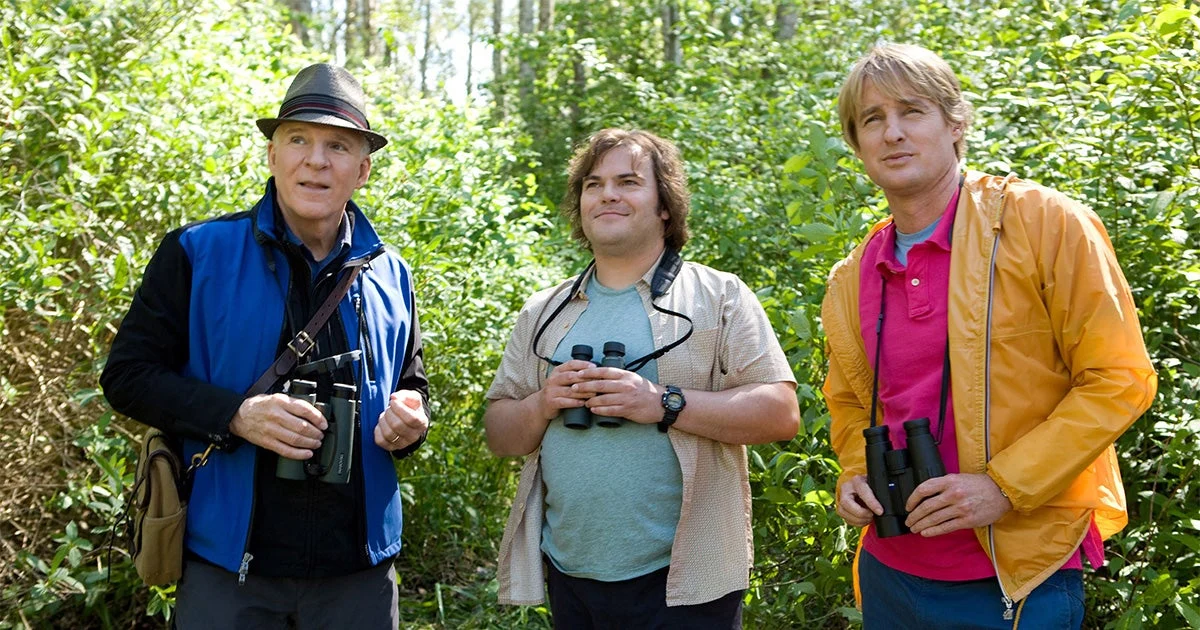
The turnaround began in the early 2010s, as the demographic profile of birders began to shift and the stigma began to lose its potency. The 2011 film The Big Year, starring Steve Martin, Jack Black, and Owen Wilson, acted as a significant catalyst for change. By portraying birders as multifaceted, relatable individuals rather than caricatures, the film signaled a shift in how Hollywood approached the subculture.
The subsequent decade saw a rapid normalization of birding. Television shows like The Residence (2025) and various streaming projects have integrated birding into the lives of protagonists who are both professionally successful and socially integrated. The rise of digital tools, such as the Merlin Bird ID app, has also transformed the hobby into a tech-forward activity, effectively stripping away the "tweed and bowtie" aesthetic of the past.
Perhaps the most definitive evidence of the hobby’s total cultural rehabilitation is its embrace by the Hallmark Channel. In films such as Adventures in Love & Birding, the birdwatcher is now the romantic lead, a trope that would have been unimaginable during the era of Miss Hathaway. Even in science fiction, as seen in the 2026 episode of Starfleet Academy, birding is now depicted as a valid form of human connection.
Implications and Future Outlook
The trajectory of birding in media reflects a broader societal movement toward environmental awareness and the destigmatization of "niche" interests. Data from the U.S. Fish and Wildlife Service suggests that birding remains one of the fastest-growing outdoor recreational activities in North America. This growth has been supported by a shift in media representation that aligns with modern realities: birding is now viewed as an accessible, inclusive, and scientifically grounded pursuit.
The implications of this shift are significant. As the media moves away from the "nerd" caricature, the barrier to entry for younger, more diverse generations continues to lower. The transition from the "Bleak Years" to the current "Renaissance" illustrates the power of narrative; by changing the story told about birders, the public perception of the hobby has fundamentally evolved. Birding has moved from the margins of social life to a mainstream activity that is not only tolerated but celebrated, proving that even the most deeply entrenched cultural stigmas can be dismantled through consistent, positive, and authentic representation.
