
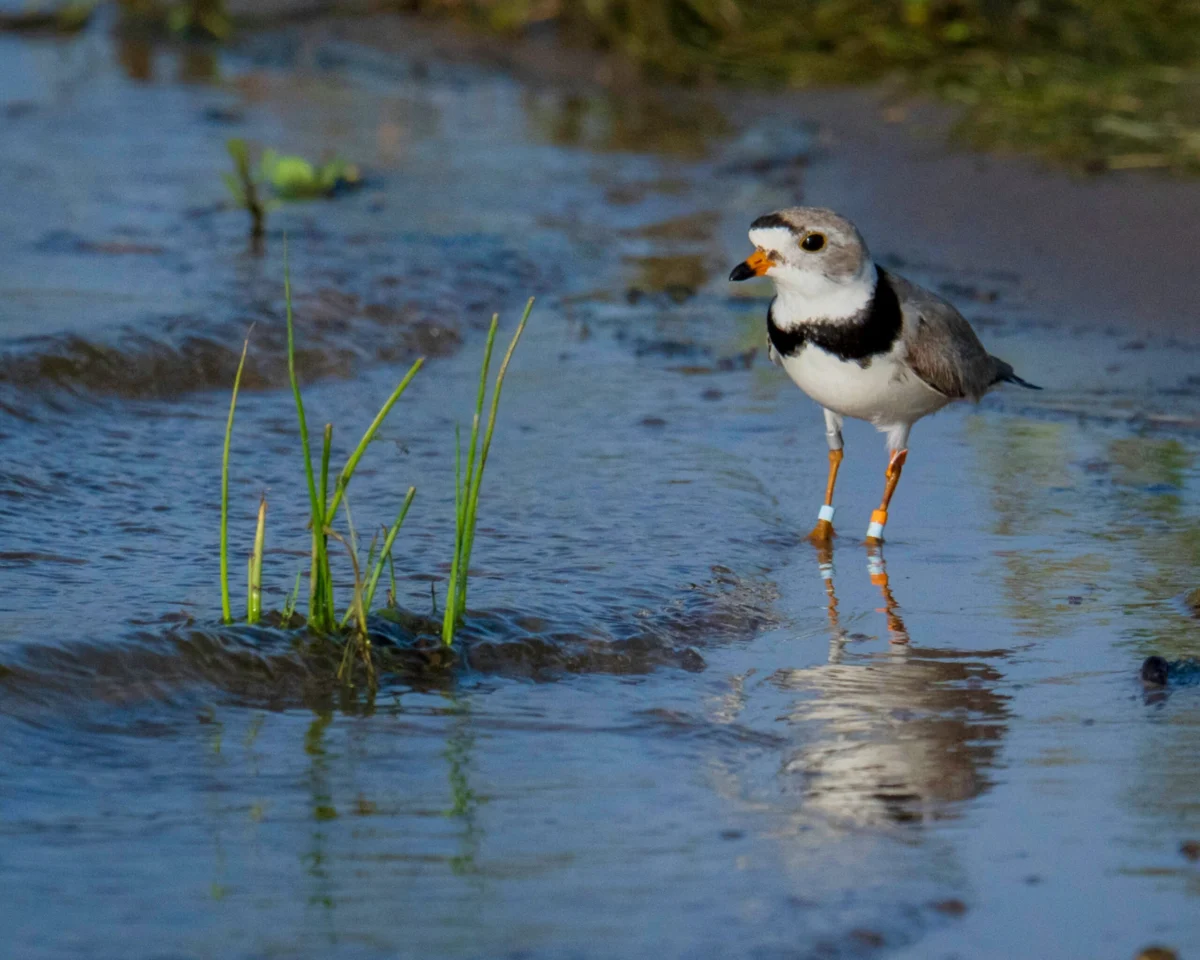
The recovery of the Great Lakes Piping Plover, once teetering on the precipice of total extinction, has reached a significant turning point as conservationists confirm the most successful breeding season since the species was federally listed as endangered in 1986. Data released by the Great Lakes Piping Plover Conservation Team indicates that 99 breeding pairs successfully nested across the region in 2026, producing a record-shattering 184 fledged chicks. This achievement marks the fifth consecutive year of population growth, signaling that intensive, multi-agency intervention is successfully reversing decades of decline for this elusive shorebird.
The trajectory of this recovery is particularly striking when contrasted with the mid-1980s. At that time, the entire population had plummeted to a mere 12 breeding pairs, all of which were confined to a narrow geographic range in northern Michigan. Today, the population is not only expanding numerically but is also reclaiming lost territory across the entire Great Lakes basin, reflecting the efficacy of modern conservation strategies that blend rigorous field science with landscape-level habitat restoration.
A Chronology of Recovery: From Near-Extinction to Resilience
The path to the 2026 record has been characterized by steady, incremental gains that have accelerated in recent years. In 2025, the population stood at 88 pairs; the jump to 99 in 2026 represents an 11-pair increase, the highest year-over-year growth in the modern era. This upward trend is the result of a coordinated effort that has matured significantly over the last four decades.
In the 1990s and early 2000s, recovery efforts were largely focused on immediate crisis management—protecting nests from predators and human interference through physical barriers. By 2010, the integration of the Great Lakes Restoration Initiative (GLRI) provided the financial and logistical backbone to scale up these efforts. This allowed for more sophisticated interventions, including the establishment of a formal captive-rearing program and broad-scale habitat restoration.
The 2026 season serves as the culmination of these long-term investments. Of the 101 nests documented throughout the basin, 84 successfully produced wild broods. While the natural mortality rate for shorebirds remains high due to environmental volatility, the survival rate of 1.6 wild fledglings per pair comfortably surpassed the established recovery target of 1.5. When combined with the 24 captive-reared fledglings reintroduced to the wild, the total output reached 184 young birds, averaging 1.9 fledglings per pair—a vital statistic that provides a buffer against the high-risk nature of Great Lakes coastal nesting.
The Strategic Importance of Captive Rearing
Captive rearing has transitioned from an experimental necessity to a pillar of the recovery strategy. The process is reserved for eggs that face imminent destruction, often due to the death of an adult or the extreme weather events that frequently impact Great Lakes shorelines. When a nesting parent disappears or a nest is threatened by rising lake levels and storms, field teams intervene to secure the eggs.
In 2026, the program at the University of Michigan Biological Station in Pellston processed 36 eggs, resulting in 26 hatches and 24 successful releases. This 66 percent success rate from egg to fledgling is a testament to the sophisticated veterinary and husbandry protocols developed by the 13 participating zoos. These captive-reared birds are released into environments populated by wild plovers, allowing them to integrate into the population and learn the necessary migratory and survival behaviors of their species. This strategy has proven essential in maintaining genetic diversity and preventing localized population crashes.
Habitat Restoration: The Return to Cat Island
A focal point of the 2026 success story is the return of Piping Plovers to Cat Island in lower Green Bay, Wisconsin. The island, which had been devoid of nesting plovers for 75 years, became a symbol of ecological reclamation this past season. Following an extensive multi-year project to rebuild the island’s topography and coastal integrity, two broods successfully fledged five chicks.
Tom Prestby, Wisconsin Conservation Manager at Audubon Great Lakes, noted that the return to Cat Island is emblematic of the broader strategy. "Seeing Piping Plovers return to Cat Island after decades of absence demonstrates what is possible when habitat restoration and long-term conservation investment come together," Prestby stated. The success at Cat Island reinforces the theory that if suitable, safe, and undisturbed habitat is created, the plovers will return to occupy it, provided the source population is healthy enough to facilitate dispersal.
Data-Driven Management and the Role of Banding
The scientific rigor applied to this recovery is facilitated by a comprehensive banding program led by the Smithsonian Migratory Bird Center. By tracking individual birds throughout their life cycles, researchers have moved beyond simple census counts to understanding the complex dynamics of survival. In 2026 alone, the team banded 43 adults and 204 chicks.
These bands provide a window into the life of the plover, from their wintering grounds along the Atlantic and Gulf coasts to their breeding sites in the Great Lakes. The data collected has been instrumental in identifying the primary threats to the species—ranging from predation by gulls and mammals to the encroachment of invasive vegetation that reduces the open, sandy habitat required for nesting. This granular level of data allows for real-time management adjustments, such as targeted predator control or the manual clearing of vegetation to maintain optimal nesting conditions.
Challenges and Future Recovery Targets
Despite the historic success of 2026, the Great Lakes Piping Plover remains an endangered species, and the recovery team cautions against complacency. The ultimate goal is to reach and sustain a population of at least 150 breeding pairs for five consecutive years. Crucially, that goal includes a requirement for 50 of those pairs to nest outside of the Michigan stronghold to ensure geographic redundancy.
While the population is currently at 99 pairs—roughly two-thirds of the target—the road ahead is fraught with environmental variables. Climate change, which influences both the frequency of severe storms and the stability of lake levels, remains a primary concern. Furthermore, the popularity of Great Lakes beaches for human recreation necessitates a delicate balance between public access and the protection of sensitive nesting sites.
Jillian Farkas, the U.S. Fish and Wildlife Service lead biologist for the program, emphasized that the human element of the recovery is as important as the biological one. "Local volunteers continue to play a vital role, contributing many hours of their personal time to monitoring, outreach, and education," Farkas said. The cooperation of the public, particularly in respecting fenced-off nesting zones, has been a major factor in the high survival rates of recent years.
Implications for Great Lakes Ecosystems
The resurgence of the Piping Plover serves as a bellwether for the health of the Great Lakes coastal ecosystem. These birds are highly sensitive to habitat quality, and their ability to thrive is directly linked to the availability of healthy, dynamic beaches and dunes. The investment in these habitats, funded in large part by the Great Lakes Restoration Initiative, has benefits that extend well beyond the plovers, supporting a wide range of native flora and fauna that rely on these coastal zones.
The success of the 2026 season provides a clear blueprint for endangered species recovery in the 21st century: a combination of aggressive, science-based intervention, long-term political and financial commitment, and robust community engagement. As the population edges closer to its 150-pair target, the focus will increasingly shift from crisis management to long-term sustainability. For now, the record-breaking season provides a compelling case study in how targeted, sustained conservation efforts can effectively pull a species back from the brink, ensuring that the Piping Plover remains a permanent fixture of the Great Lakes shoreline for generations to come.
