
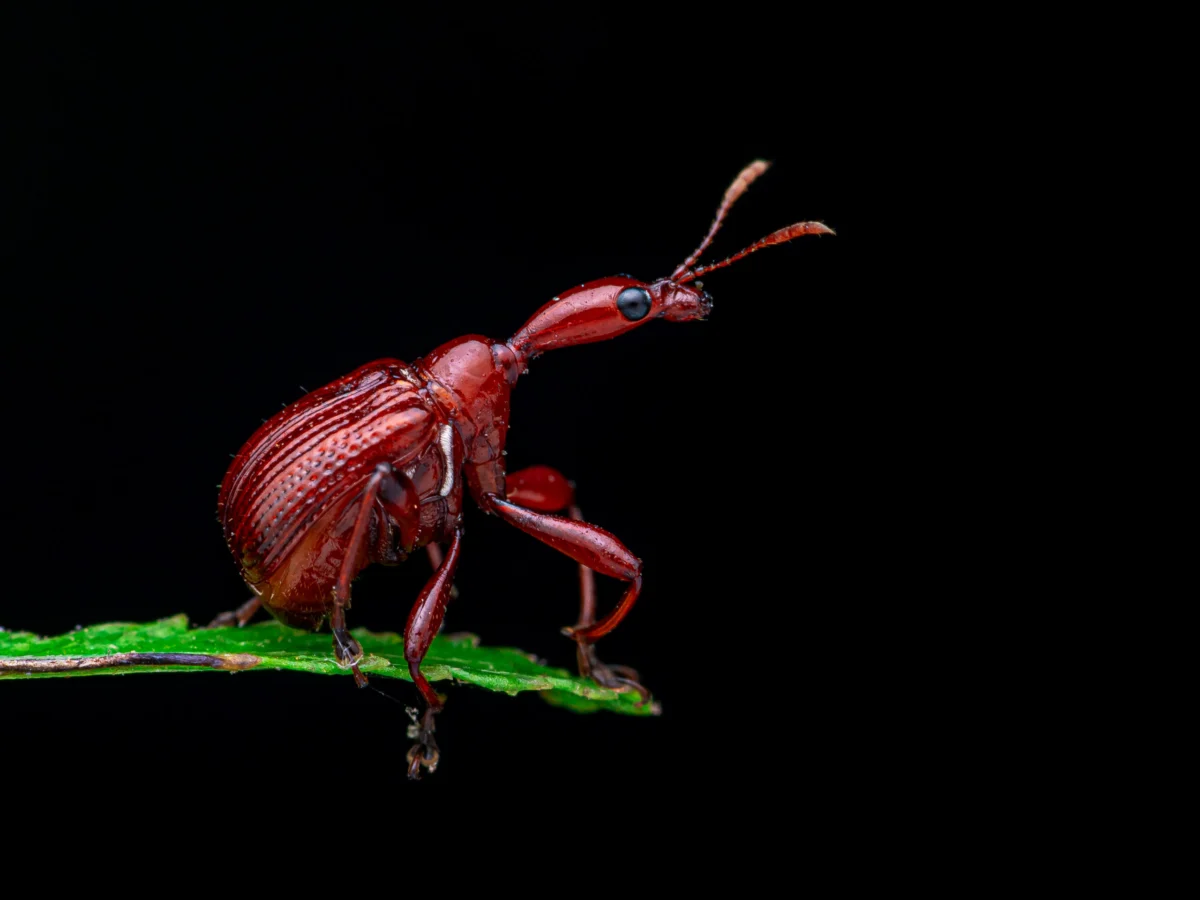
The intricate and often overlooked microscopic world of insects in Goalpara, Assam, has garnered international attention following the recent success of local nature photographer whose work was recognized in the prestigious 2025 Wildlife Photographer of the Year competition. Through the lens of macro photography, everyday environments—ranging from household window frames to backyard garden corners—reveal complex ecological behaviors, complex biological structures, and sophisticated survival strategies that typically escape the human eye. This growing field of visual documentation bridges the gap between entomology and art, offering critical insights into the fragile balance of local ecosystems.

The Evolution of a Microscopic Perspective
The photographic journey under discussion began in 2018 when the photographer acquired an entry-level Canon 1500D DSLR camera. Initially drawn to standard landscape and nature vistas, the focus shifted dramatically following a routine close-up image of a common fly. Subsequent digital magnification unveiled previously unseen anatomical details, including complex compound eye patterns, sensory micro-hairs, and intricate wing morphology.
This discovery catalyzed a permanent pivot toward macro photography, a specialized discipline requiring extreme magnification to render small subjects larger than life-scale. Operating primarily in Goalpara, Assam, the photographer demonstrated that biodiversity documentation does not require remote expeditions into untouched wilderness. Instead, high-impact wildlife imagery can be achieved in hyper-local settings—such as residential gardens, agricultural fields, local ponds, and domestic structures—proving that rich ecosystems thrive in close proximity to human habitation.

Patience, Observation, and Behavioral Documentation
Unlike traditional landscape or street photography, macro photography demands rigorous patience and extensive fieldcraft. Professional entomological photography often requires hours of stationary observation to understand subject behavior prior to capturing a single frame. Field notes indicate that certain behavioral sequences necessitate up to six hours of continuous monitoring across multiple days.
Among the various subjects documented, solitary wasps—specifically potter wasps and mud daubers—became a primary focus due to their complex architectural and parental behaviors. Documenting these insects involves tracking iterative processes, such as:

- Grain-by-grain construction of mud nests on vertical substrates.
- Targeted predation of specific insect species, including green caterpillars and spiders.
- Long-distance transportation of prey and construction materials, often exceeding the insect’s own body weight.
- Rigorous nest inspection routines prior to egg deposition.
These meticulous behavioral patterns culminated in the creation of the image titled Special Delivery, which captures a potter wasp in flight carrying a green caterpillar.
International Recognition and the 2025 Wildlife Photographer of the Year
The culmination of years of persistent observation materialized when Special Delivery was selected as a Highly Commended entry in the Behaviour: Invertebrates category of the 2025 Wildlife Photographer of the Year competition, hosted annually by the Natural History Museum in London.

Established in 1965, the Wildlife Photographer of the Year is widely regarded as the most prestigious event of its kind globally, attracting tens of thousands of entries from professional and amateur photographers across nearly 100 countries. The competition evaluates submissions based on originality, narrative strength, technical excellence, and ethical field practices.
The inclusion of an intimate invertebrate behavior captured in a residential setting in Assam highlights a broader shift in major natural history competitions. Judges increasingly favor images that reveal novel scientific behaviors and intimate ecological narratives over conventional, static macro portraits. Following this milestone, the photographer’s portfolio has received widespread acknowledgment from prominent international publications and conservation platforms, including Nature inFocus, National Geographic, the BBC, Discovery, and Sanctuary Asia.

Ecological Implications and Entomological Significance
The broader implications of macro photography extend far beyond aesthetic appreciation. Insects and other invertebrates form the foundational trophic levels of terrestrial ecosystems. Creatures such as potter wasps act as natural pest control agents by regulating caterpillar populations, while solitary wasps manage spider densities, and hymenopterans broadly contribute to essential pollination services.
Entomologists and conservation scientists note that public perception of insects is frequently skewed by fear, indifference, or the classification of certain species as agricultural pests. Visual documentation that emphasizes parental care, architectural engineering, and survival strategies plays an essential role in shifting public attitudes toward invertebrate conservation. As global insect populations face mounting pressures from habitat fragmentation, pesticide use, and climate change, micro-level storytelling provides a vital educational tool to underscore the interconnectedness of biological networks.

Technical Methodologies and Future Outlook
Achieving publishable macro photographs requires advanced technical mastery, particularly in managing extremely shallow depths of field, diffraction limits, and precise lighting conditions. Photographers in this genre frequently employ specialized macro lenses, ring flashes, twin-lite systems, and focus-stacking software—a digital processing technique that combines multiple images taken at different focus distances to achieve a sharp composite from front to back.
Experimental lighting techniques, such as rear-curtain flash sync or cross-polarization, are also utilized to reveal dynamic movement trails and iridescent structural coloration in subjects like leafhoppers and beetles.

Industry experts suggest that the democratization of digital photography equipment has enabled regional photographers from biodiversity hotspots like Northeast India to contribute significantly to global wildlife archives. By documenting endemic species and behavioral traits specific to the Indian subcontinent, local photographers provide valuable visual data that complements formal scientific research.
As the field continues to evolve, the core tenets established by practitioners in regions like Goalpara remain unchanged: rigorous observation, ethical treatment of live subjects, and a commitment to revealing the intricate complexities of the natural world that exist directly beneath our feet.
