
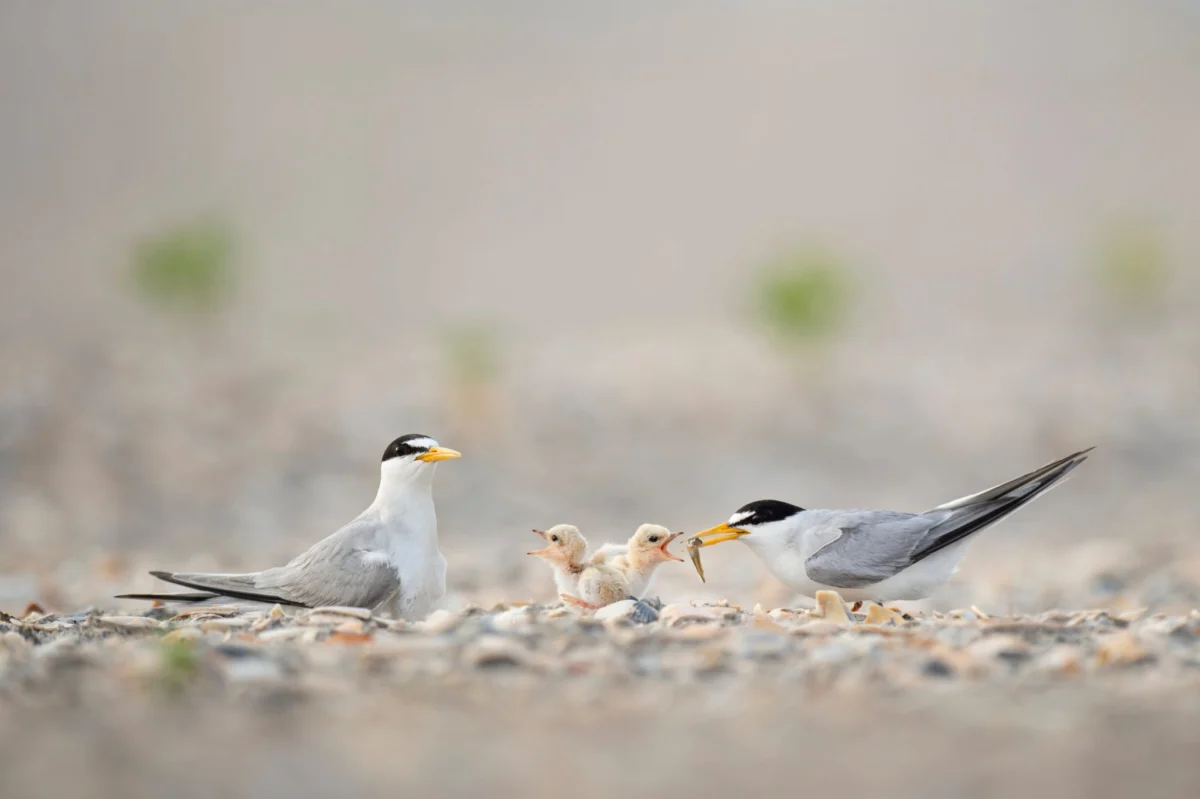
In the field of ornithology and environmental advocacy, the concept of a "mixed flock"—a collection of diverse species working in concert—serves as a powerful metaphor for effective international conservation. Just as different bird species bring unique foraging strategies and roles to a group, the modern conservation movement relies on the convergence of diverse generational perspectives to address the escalating climate crisis. As Caroline Herman, a former Communications Officer at BirdLife Europe and Central Asia and a prominent Belgian UN Youth Representative for Climate, transitions from her role within the BirdLife International partnership, she highlights a fundamental shift in the demographic makeup of environmental advocacy: the urgent need for robust youth representation in high-level policy spaces.
The rise in youth engagement with nature and biodiversity is not merely a hobbyist trend; it is a calculated response to the increasing digitization of modern life. As professional landscapes become tethered to screens and virtual interfaces, younger generations are actively seeking tangible connections to the physical, three-dimensional world. For Herman, who has built a career bridging the gap between grassroots activism and institutional policy, this movement is characterized by a drive to protect the living systems that sustain human life.

A Chronology of Advocacy and Policy Engagement
Caroline Herman’s career trajectory offers a roadmap for how younger voices are successfully infiltrating traditional environmental decision-making. Her tenure at BirdLife Europe and Central Asia was marked by a series of high-stakes campaigns that tested the efficacy of youth-led movements.
In 2025, the environmental sector saw a significant uptick in mobilization. Herman played a pivotal role in the #HandsOffNature campaign, which sought to defend existing environmental protections against legislative rollbacks. This campaign coincided with the broader, politically charged debate surrounding the European Union’s Nature Restoration Law. During this period, Herman observed that her youth demographic was a distinct asset. While established scientists and traditional civil society organizations provided the technical data, the youth movement injected the necessary urgency and moral pressure that compelled policymakers to maintain focus on long-term ecological goals.
This momentum continued into the 2025 United Nations Climate Change Conference (COP30) in Belém, Brazil. It was here that Herman and her colleagues facilitated a critical meeting between the Belgian Federal Minister of Climate, Jean-Luc Crucke, and young activists from South America. This interaction was designed to bypass abstract policy discussions and provide ministers with direct, unfiltered testimonies from those living on the front lines of climate-induced environmental degradation.

The Data Behind the Demographic Shift
The involvement of youth in climate policy is backed by evolving global data. According to the United Nations Department of Economic and Social Affairs, the world is currently home to 1.2 billion young people aged 15 to 24, accounting for 16 percent of the global population. This demographic is disproportionately affected by long-term climate trajectories, yet they remain systematically underrepresented in national and international legislative bodies.
Analytical studies from the Intergovernmental Panel on Climate Change (IPCC) indicate that the participation of young stakeholders in climate governance correlates with higher levels of public trust in institutional outcomes. When youth are included in the decision-making process, policy frameworks tend to exhibit greater "future-proofing"—an emphasis on sustainability metrics that extend beyond the standard four-to-five-year electoral cycle.
Herman’s work as a UN Youth Representative involves aggregating data from surveys and direct consultations with Belgian youth to ensure that their concerns—ranging from biodiversity loss to agricultural sustainability—are represented during complex treaty negotiations. This process of translating subjective concerns into policy-relevant inputs is a cornerstone of modern, representative conservation.

Bridging the Generational Divide
A recurring theme in Herman’s professional philosophy is the rejection of the "imposter syndrome" that often prevents younger professionals from speaking up in high-stakes environments. She notes that the environmental sector has historically been dominated by older demographics, creating a barrier to entry that can feel exclusionary.
However, the tide is changing. Herman advocates for a model of "shared expertise," where the technical knowledge of veteran scientists is complemented by the adaptive communication strategies and digital literacy of younger cohorts. She suggests that the most effective advocacy teams are those that view age not as a hierarchy, but as a spectrum of necessary skill sets. "You don’t want to get drained," Herman notes. "We need so many different people with so many different skill sets. Anybody can fit in. Look for that community around you."
This collaborative approach is essential for preventing activist burnout. By fostering environments where young people feel empowered to contribute their unique perspectives—rather than being relegated to tokenistic roles—organizations like BirdLife are able to sustain long-term advocacy campaigns that would otherwise falter under the weight of political stagnation.

Implications for Future Conservation Policy
The implications of increased youth representation are profound. As the global community approaches the 2030 sustainability targets, the inclusion of youth representatives in formal negotiations is no longer a "nice-to-have" but a strategic necessity. The institutionalization of youth voices in climate spaces ensures that current policies are evaluated against their impact on future generations.
Furthermore, the integration of diverse voices improves the quality of environmental storytelling. As Herman has demonstrated through her panel discussions and public advocacy, the narrative around conservation must shift from one of "doom and gloom" to one of collective agency. By utilizing social media and digital storytelling, the younger generation has successfully humanized abstract environmental issues, making them relatable to the broader public.
A Legacy of Connection
As Herman moves on from her formal role at BirdLife, her legacy remains rooted in the concept of connectivity. The "flock" she refers to is a global network of individuals, from local birdwatchers to international climate negotiators, who are united by a common commitment to the natural world.

The challenge for the coming decade will be to maintain this momentum. As environmental policies become increasingly complex and intertwined with global trade and security interests, the need for articulate, well-informed, and representative youth leaders will only grow. The success of the next generation of conservationists will depend on their ability to build bridges between the scientific community, the political establishment, and the general public.
In conclusion, the professional journey of Caroline Herman underscores a vital transition in the environmental sector. The movement is moving away from top-down, exclusionary structures toward a more inclusive, diverse, and representative model. By fostering these connections and ensuring that the voices of the young are heard in the halls of power, the international community can create a more robust and resilient framework for the protection of global biodiversity. As BirdLife and other conservation organizations continue to evolve, they serve as a testament to the idea that when diverse perspectives are unified, the collective impact is far greater than the sum of its individual parts. The future of conservation, it seems, will be defined by the quality of the flocks we build today.
